

Made in America Emergency Preparedness Act This bill establishes in the legislative branch the National Commission on United States Preparedness for National Emergencies and requires any medical, pharmaceutical, or emergency preparedness product deemed integral to a response to a national emergency to be manufactured and procured in the United States beginning on and after January 1, 2026. The commission must, among other things, examine and report on the COVID-19 pandemic in the United States in 2020 and the private sector response, investigate the origin of the COVID-19 virus and measures for mitigating the impacts of future physical and medical national disasters, determine what medical, pharmaceutical, and emergency preparedness products are deemed to be essential to emergency preparedness, and report on infrastructure or capability deficiencies in hospitals and medical centers. States must implement the commission's findings or lose access to federal emergency preparedness funds. The bill allows 100% tax expensing for qualified pharmaceutical and medical device manufacturing property (e.g., personal protective equipment) placed in service after 2020 and before 2027.
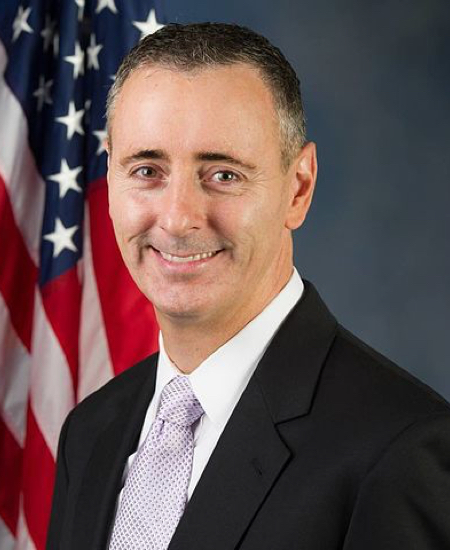
Rep. Brian K. Fitzpatrick
Sponsored bills
Clean Water Standards for PFAS Act of 2021 This bill directs the Environmental Protection Agency (EPA) to develop requirements and incentives to limit the discharge of perfluoroalkyl and polyfluoroalkyl substances (PFAS) into certain waters of the United States. PFAS are man-made and may have adverse human health effects. A variety of products contain the compounds, such as nonstick cookware or weatherproof clothing. Within two years, the EPA must publish water quality criteria for each measurable perfluoroalkyl substance, polyfluoroalkyl substance, and class of PFAS. The water quality criteria must determine how much of these substances can be present in water before it is likely to harm human health. Within four years, the EPA must publish a final rule that establishes, for each priority industry category specified in the bill, effluent limitations guidelines and standards for the discharge of each measurable perfluoroalkyl substance, polyfluoroalkyl substance, and class of PFAS. Under the Clean Water Act, effluent limitations restrict the quantities, rates, and concentrations of chemical, physical, biological, and other constituents which are discharged from point sources (e.g., a discernible source such as a pipe) into navigable waters, the ocean, or other specified waters. In addition, the EPA must award grants to owners and operators of publicly owned treatment works for implementing the effluent limitations guidelines and standards.
This resolution expresses support for the designation of Stroke Awareness Month.
LymeX Authorization Act This bill authorizes the Department of Health and Human Services to carry out prize competitions to accelerate innovation in the prevention, diagnosis, and treatment of Lyme disease. Lyme disease is a bacterial infection carried by ticks that can spread to joints, the heart, and the nervous system.
Organ Donation Clarification Act of 2021 This bill specifies that certain payments and pilot programs relating to organ donation do not violate the National Organ Transplant Act, which prohibits the exchange of valuable consideration for human organs. Specifically, it excludes additional types of reimbursements and payments related to organ donation from the definition of valuable consideration , such as costs for (1) dependent care; (2) certain medical expenses for up to 10 years after a donation; (3) paperwork or legal services; and (4) term life insurance policies, subject to some limitations. In addition, the federal government, states, or local governments may carry out pilot programs to evaluate the effects of removing disincentives or providing noncash benefits on the availability of organs for transplant, provided these programs meet ethical and other conditions.
This resolution calls on the people of the United States to observe Memorial Day to honor the men and women who died in the pursuit of freedom and peace.
This resolution honors, commends, and recognizes the women who served the United States in military capacities during World War II to aid the war effort. Additionally, the resolution honors the contributions of Congresswoman Edith Nourse Rogers for supporting the establishment of the Women's Army Auxiliary Corps and the Women's Army Corps.
This resolution condemns the rocket attacks by Hamas against Israel beginning the week of May 9, 2021. It also states that the United States must continue to invest in and support Israel's security and sovereignty.
Children Inflicted by Lyme Disabilities Act of 2021 or the CHILD Act of 2021 This bill expands the applicability of certain special education provisions to children with Lyme disease or other tick-borne diseases. (Lyme disease is the most common vector-borne disease in the United States. The disease is transmitted to humans through the bite of an infected blacklegged tick and, if left untreated, can spread to joints, the heart, and the nervous system.) Specifically, the bill defines child with a disability for purposes of the Individuals with Disabilities Education Act to include a child who needs special education and related services because the child has a health impairment resulting from Lyme disease or another tick-borne disease.
United States Army Rangers Veterans of World War II Congressional Gold Medal Act This bill provides for the award of a single Congressional Gold Medal to the U.S. Army Rangers Veterans of World War II in recognition of their dedicated service during World War II.