

Safe Schools Improvement Act This bill requires states to direct their local educational agencies (LEAs) to establish policies that prevent and prohibit bullying and harassment of elementary and secondary school students. In particular, these policies must prohibit bullying and harassment based on race, color, national origin, disability, religion, or sex. Sex includes sexual orientation, gender identity, and sex characteristics (including intersex traits). Further, LEAs must provide (1) students, parents, and educational professionals with annual notice of the conduct prohibited in their disciplinary policies; (2) students and parents with grievance procedures that target such conduct; and (3) the public with annual data on the incidence and frequency of that conduct at the school and LEA level. The Department of Education must conduct and report on an independent biennial evaluation of programs and policies to combat bullying and harassment in elementary and secondary schools. The National Center for Education Statistics must collect state data to determine the incidence and frequency of the conduct prohibited by LEA disciplinary policies.
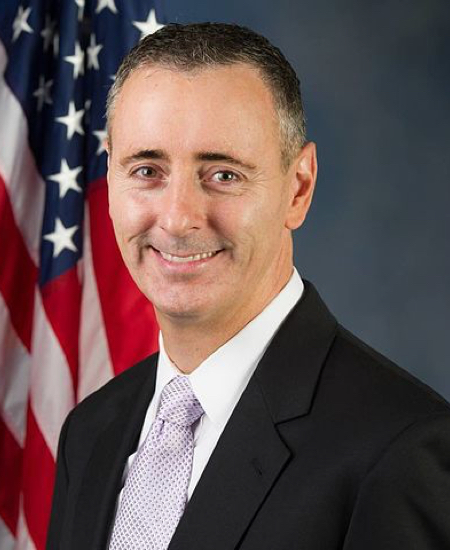
Rep. Brian K. Fitzpatrick
Sponsored bills
Maddy summaryThe NETWORKS Act imposes sanctions on foreign telecommunications companies (particularly those based in China) that produce fifth-generation or future mobile network technology and pose national security risks. It blocks U.S. transactions involving such companies' property after a 90-day delay, targeting vendors deemed "untrusted" under existing law. Exceptions cover humanitarian aid (food, medicine, medical supplies) and intelligence activities, while the President may temporarily waive sanctions for national security reasons. The bill directly affects global telecom vendors competing in U.S. markets, with no impact on consumers or standard network services. It aims to secure U.S. communications infrastructure by restricting business with companies linked to surveillance states.
Maddy summaryHR 1383 extends the Secure Rural Schools program, which provides payments to counties and states with federal land (like national forests) to support local schools and services. It reauthorizes these payments through fiscal year 2026, adding specific rules to ensure counties don’t receive duplicate payments for 2024 and 2025. The bill also extends related authorities for special projects on federal land and county fund expenditures through 2028-2029. This directly affects rural communities adjacent to federal lands that rely on these payments for education and infrastructure.
Maddy summaryHR 641 establishes an Interagency Committee led by the Office of Science and Technology Policy to coordinate federal soil carbon research and monitoring across agencies like Agriculture, Energy, EPA, and NOAA. The committee develops a strategic plan, oversees working groups focused on standardizing measurement methods, data management, and community engagement (especially with historically underserved agricultural groups), and submits annual progress reports to Congress. It aims to improve coordination of existing soil carbon sequestration research efforts and ensure recommendations incorporate input from soil science experts and agricultural communities. The bill does not create new programs or directly affect farmers but streamlines federal research coordination and reporting on soil carbon.
Maddy summaryThe Headwaters Protection Act of 2025 reauthorizes and updates the Water Source Protection Program under the Healthy Forests Restoration Act. It expands eligible partners to include acequia associations, stormwater/wastewater entities, land-grant mercedes, and water-delivery private groups, while requiring landowner consent for projects on adjacent non-Federal land within the same watershed. The bill prioritizes projects addressing drought, wildfire, and climate resilience, mandates 10% of annual funding ($30 million per year from 2025-2033) for partner capacity-building, and ensures projects protect water supply systems and forest health. It explicitly states the law does not override state water rights or authorize federal land acquisition.
Maddy summaryHCONRES 16 is a concurrent resolution scheduling a joint session of Congress in Philadelphia, Pennsylvania, on July 2, 2026. The session will commemorate the 250th anniversary (semiquincentennial) of the Declaration of Independence, which was approved in Philadelphia on July 4, 1776. This ceremonial gathering at Independence National Historical Park follows past congressional meetings held outside Washington, D.C., for historical milestones, such as the 1987 Constitution bicentennial event. The bill does not create new laws or alter policies - it solely directs the timing and location of a commemorative event.
Maddy summaryThis resolution symbolically recognizes polycystic ovary syndrome (PCOS) as a serious health condition affecting millions of women and girls in the U.S., highlighting its impacts on reproductive, metabolic, and mental health. It designates September as "PCOS Awareness Month" to promote public education, improve diagnosis rates, and support better management of related health issues like diabetes and cardiovascular disease. The resolution urges increased awareness and research but does not create new laws, funding, or programs. It directly affects individuals with PCOS, healthcare providers, and public health efforts focused on the condition.
Maddy summaryHR 1734 establishes a task force of financial regulators (including Treasury, Fed, and Consumer Financial Protection Bureau officials) to study deep fake threats to banking security. The task force must issue a report within one year detailing current protections used by banks and credit unions, standard definitions for AI terms like "deep fakes," risks of identity theft via AI fraud, and best practices for prevention. The report will also include regulatory recommendations to protect consumers from data theft and fraud. This procedural bill requires a study but does not enact new laws or directly affect consumers or institutions until recommendations are considered.
Maddy summaryThe Technology for Energy Security Act (HR 1752) extends a federal tax credit for investments in fuel cell technology. It changes the deadline for claiming this credit from January 1, 2025, to January 1, 2033, for projects starting construction after December 31, 2024. This directly affects businesses and individuals installing fuel cell systems by allowing them to claim the tax incentive for an additional eight years. The bill does not alter the credit amount but expands the timeframe for eligible projects.
Maddy summaryThis bill designates a specific stretch of Sumner Row Northwest (between 16th Street NW and L Street NW in Washington, D.C.) as "Alexei Navalny Way." It commemorates Russian opposition leader Alexei Navalny, who was imprisoned, poisoned, and died in custody after exposing corruption under Vladimir Putin's regime. The bill includes provisions for installing matching street signs at designated locations near the Russian ambassador's residence, honoring Navalny's activism and his death. This is a purely commemorative designation with no policy or funding changes.