

Maddy summaryThis bill establishes a federal pilot program to increase wages for child care workers through competitive grants to states and tribes. It requires grant recipients to use funds directly to supplement wages for eligible workers in licensed child care centers or home-based settings, paid quarterly, with up to 10% of funds allowed for administrative costs. The program must track impacts on worker retention, well-being, care quality, and affordability, and report results to Congress within two years. It targets low-wage workers in underserved areas, including those serving infants, toddlers, children with disabilities, or during nontraditional hours.
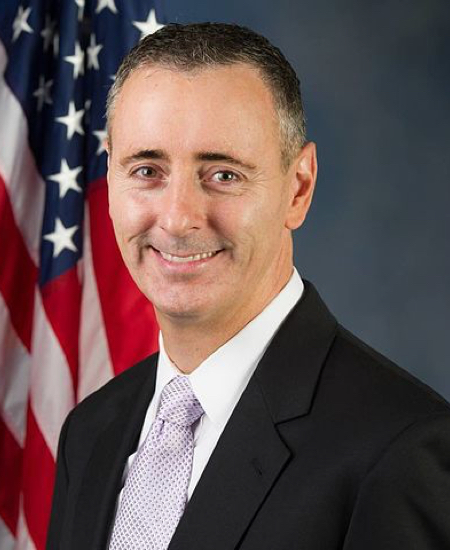
Rep. Brian K. Fitzpatrick
Sponsored bills
Maddy summaryHR 1827, the Child Care Availability and Affordability Act, increases tax benefits for families with child care needs and employers providing child care. It raises the employer child care credit from 25% to 50% of expenses with a maximum credit of $500,000 (up from $150,000), and creates a new household and dependent care credit allowing families to claim up to 50% of eligible child care expenses, with the credit amount reduced as income increases, up to $8,000 for multiple children. The bill directly affects working parents with children under 13 or dependents needing care, as well as employers offering child care benefits. Key provisions include expanded credit amounts, new definitions for qualifying care, and special rules for small businesses.
Maddy summaryThis bill adds a new tax provision (Section 139J) to the Internal Revenue Code, excluding interest income from certain rural and agricultural loans from taxable income for qualifying lenders. It directly affects banks, insurance companies, and farm credit entities that provide loans secured by rural or agricultural property (including qualifying single-family homes in rural areas), while excluding loans to foreign adversary entities (like those linked to China, Russia, or Iran). The law requires lenders to report on how this tax exclusion impacts loan interest rates, with a Treasury report due to Congress within five years. The policy change aims to reduce lenders' tax burden on these specific loans, potentially lowering costs for borrowers in rural communities.
Maddy summaryThis bill directs the National Institutes of Health (NIH) to expand research on triple-negative breast cancer (TNBC), a highly aggressive form disproportionately affecting African-American and Hispanic women. It requires the Centers for Disease Control and Prevention (CDC) to create public education materials about TNBC incidence, treatment options, and racial disparities, and directs health agencies to provide updated TNBC information to healthcare providers. The legislation specifically targets gaps in understanding TNBC prevalence, treatment costs, and prevention methods among minority women. It authorizes funding for these research and education efforts from fiscal years 2026 through 2031.
Maddy summaryThis bill amends the Federal Credit Union Act to increase the maximum loan amount credit unions can provide to small businesses from $50,000 to $100,000. It directly affects credit unions and small businesses seeking loans, as it raises the cap on individual business loans they can offer. The key provision changes Section 107A(c)(1)(B)(iii) of the law to reflect this higher limit. This adjustment aims to expand credit access for small businesses by giving credit unions more flexibility in loan sizing.
Maddy summaryThe Keep America's Waterfronts Working Act of 2025 establishes a federal Task Force to identify and address challenges facing working waterfronts, which are properties used for commercial fishing, boating businesses, aquaculture, and other water-dependent coastal activities. It creates a $50 million annual grant program (2025-2029) to help coastal states, tribal governments, and Native Hawaiian organizations develop and implement working waterfronts plans that preserve access to coastal waters and protect these businesses from threats like sea level rise and conversion to incompatible uses. The bill also authorizes a preservation loan fund to provide low-interest loans for waterfront preservation, with special provisions for disadvantaged communities. Covered entities must develop plans identifying threatened waterfront areas, prioritizing preservation needs, and ensuring public access. The law aims to protect working waterfronts through coordinated federal and local planning efforts.
Maddy summaryHR 1818, the Aviation Workforce Development Act, expands tax-advantaged 529 college savings plans to cover costs for aviation maintenance and commercial pilot training. It allows families to use 529 funds for tuition, fees, books, and equipment at qualifying schools - specifically aviation maintenance technician programs under FAA Part 147 rules or commercial pilot courses at FAA-certified flight schools (Part 61 or Part 141). The bill directly affects students pursuing these aviation careers by making their training more affordable through existing tax-advantaged savings accounts. The change applies to distributions made after the law's enactment date.
Maddy summaryHR 1771, the Improper Payments Transparency Act, requires federal agencies to include detailed explanations of improper payments in the President's annual budget. It directly affects executive agencies that already report improper payments under existing law (specifically under Chapter 33, Subchapter IV of the U.S. Code). The bill mandates agencies provide a narrative explaining *why* improper payment amounts and rates changed (or didn't change) for specific programs over the past three years, plus details on incomplete corrective actions and future steps to address these issues. This aims to increase transparency about government payment errors by making specific, factual data publicly available in the budget submission.
Maddy summaryThe Care Across Generations Act establishes a competitive grant program to fund multigenerational programs in long-term care facilities. It allows eligible facilities (like nursing homes or assisted living centers) to operate or partner with licensed childcare centers on-site, or coordinate activities between childcare and senior care programs. Facilities receiving grants must evaluate program effectiveness and report outcomes to the federal government, including impacts on both children and seniors. The bill aims to create integrated community spaces where childcare and senior care services coexist, directly benefiting facilities seeking to expand such services and the communities they serve.
Maddy summaryHR 1787 authorizes the U.S. Mint to produce commemorative coins honoring baseball legend Roberto Clemente, including $5 gold, $1 silver, and half-dollar coins, with specific specifications for weight, size, and metal content. The bill requires the coins to feature Clemente's image and commemorative inscriptions, and mandates a surcharge ($35 for gold, $10 for silver, $5 for half-dollar) paid to the Roberto Clemente Foundation for its educational, youth sports, and disaster relief programs. All coins must be minted in 2027, sold at face value plus surcharge and production costs, and will be legal tender. The bill focuses solely on the coin program, not broader policy changes.