

TAP Promotion Act This bill requires that pre-separation counseling under the Transition Assistance Program include a presentation that promotes the benefits available to veterans from the Department of Veterans Affairs (VA). The bill also requires the VA to annually report on the presentation to (1) identify veterans service organizations that participate, (2) provide the number of members of the Armed Forces who attend, and (3) provide any recommendations for changes to the presentation.
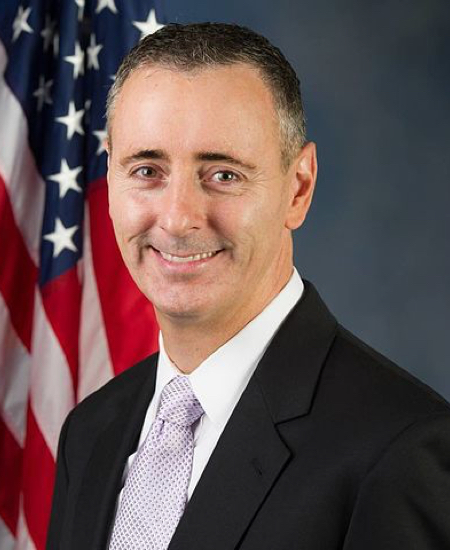
Rep. Brian K. Fitzpatrick
Sponsored bills
Maddy summaryThis bill expands transportation assistance for rural veterans by updating a Department of Veterans Affairs grant program. It allows grants to be awarded to county veterans service organizations and tribal organizations, in addition to existing recipients, and increases the maximum grant amount to $80,000 for organizations needing to purchase ADA-compliant vehicles. The bill defines "rural" using the USDA's Rural-Urban Commuting Areas (RUCA) system and removes fixed annual funding limits, allowing for flexible budgeting. It directly affects rural veterans who need transportation to healthcare facilities and the organizations that provide this service.
Maddy summaryHRES 254 is a non-binding resolution recognizing the 250th anniversary of the United States Marine Corps, to be observed on November 10, 2025. The resolution honors the Corps' founding at Tun Tavern in Philadelphia on November 10, 1775, its history of service in major conflicts, and its values of honor, courage, and commitment. It encourages public participation in commemorative events and local recognition of Marines' contributions to national defense.
Maddy summaryThis bill amends the tax code to allow charitable organizations (501(c)(3) nonprofits) to provide grants for college student housing without losing their tax-exempt status. It specifically permits grants to improve or maintain "collegiate housing property" (where most residents are full-time students at a nearby college) but excludes grants for fitness facilities. The change affects charities seeking to fund student housing infrastructure, clarifying that such grants qualify as charitable under existing tax rules. The policy change applies to grants made after the bill's enactment date.
Maddy summaryHR 2362, the VA Home Loan Awareness Act of 2025, requires lenders using the standard Uniform Residential Loan Application to add a specific disclaimer below the military service question. The disclaimer states: "If yes, you may qualify for a VA Home Loan. Consult your lender regarding eligibility." This affects all lenders nationwide that use this common mortgage application form. The bill also mandates a Government Accountability Office (GAO) study within 18 months to check if at least 80% of lenders are including the required disclaimer on the form.
Maddy summaryThe PHIT Act of 2025 allows taxpayers to deduct certain fitness-related expenses as medical costs on their federal tax returns. It directly affects individuals and families who pay for qualifying physical activity programs, such as gym memberships, fitness classes, or approved equipment. Key provisions include setting annual limits ($1,000 per person or $2,000 for joint returns), defining eligible fitness facilities (excluding golf courses or private clubs), and specifying that equipment must be used exclusively for physical activity. The bill amends the Internal Revenue Code to treat these expenses as deductible medical costs, effective for taxable years after its enactment.
Maddy summaryHR 2381, the SCREENS for Cancer Act of 2025, reauthorizes and updates the National Breast and Cervical Cancer Early Detection Program (NBCCEDP). It directly affects low-income, uninsured, or underinsured women across all 50 states, territories, and tribal communities by expanding access to breast and cervical cancer screenings, diagnostic services, and patient navigation support. Key provisions include updating program language to emphasize prevention alongside detection and control, adding specific strategies to reduce disparities, and appropriating $235 million annually for fiscal years 2026-2030. The bill also requires a GAO study by 2027 to assess program eligibility, service trends, and barriers to screening access.
Maddy summaryThe Safer Skies Act of 2025 requires specific smaller airlines to adopt enhanced security screening protocols currently used by larger carriers. It mandates that "covered air carrier operations" - defined as airlines operating under certain FAA rules, offering individual seats with public schedules, using planes with more than nine passenger seats, and not using TSA checkpoints - to follow the Aircraft Operator Standard Security Program (49 CFR §1544.101(a)) within 360 days of the bill's enactment. The Transportation Security Administration must revise its rules to enforce this requirement. This directly affects regional and private charter airlines that currently skip TSA checkpoint screening but serve the public with scheduled passenger flights.
Maddy summaryHR 2370, the Taiwan Travel and Tourism Coordination Act, directs the U.S. Assistant Secretary of Commerce for Travel and Tourism to coordinate with the State and Commerce Departments within 90 days to expand travel and tourism cooperation with Taiwan's authorities. Key provisions include identifying opportunities to enhance U.S.-Taiwan travel, strengthen mutual tourism industries through industry partnerships (e.g., hotels, attractions, air travel), preserve cultural heritage tourism, and coordinate visitor safety. The bill also requires a report within 270 days (and annually for five years) detailing cooperation efforts and challenges, plus a separate 180-day report analyzing preclearance facility feasibility in Taiwan and its impacts on trade, tourism, and security. This bill directly affects U.S. travel/tourism industry stakeholders and Taiwan's tourism authorities through formalized coordination mechanisms.
Maddy summaryHR 2366, the American Families United Act, amends immigration law to expand discretion for the Attorney General and Secretary of Homeland Security regarding family-related cases. It allows them to halt removal proceedings or grant relief for spouses and children of U.S. citizens if removal would cause "hardship" (with family separation presumed to constitute hardship), including special provisions for widows/orphans of deceased citizens. The bill also permits waiving certain inadmissibility grounds and excludes cases involving serious violations like terrorism or criminal offenses. This policy change directly affects noncitizens facing removal proceedings who have U.S. citizen family members, without creating new benefits but modifying existing discretionary authority.