

Maddy summaryHR 1613, the Protecting Mushroom Farmers Act, requires the federal Risk Management Agency to develop and research crop insurance policies specifically for mushroom farmers. The bill directs the agency to study insurance coverage for risks like pests (e.g., mushroom flies), fungal diseases, power outages, and extreme weather affecting growing media and production. Key provisions mandate streamlined paperwork to accommodate mushrooms' short growing cycles and multiple crop types within a single facility. The agency must submit a report to Congress within two years detailing research findings and recommendations for these new insurance policies. This bill directly affects commercial mushroom growers by aiming to create tailored insurance options for their unique production challenges.
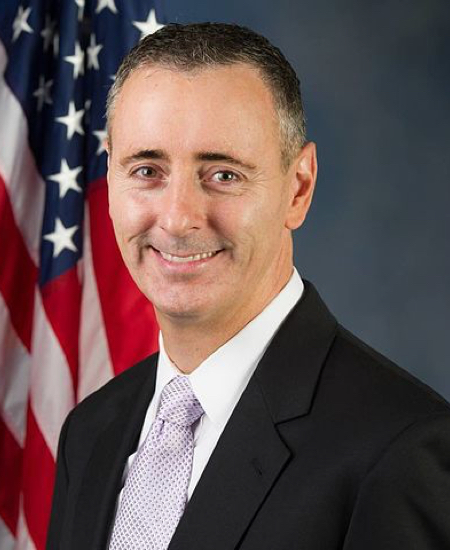
Rep. Brian K. Fitzpatrick
Sponsored bills
Maddy summaryHR 1565, the Voluntary Public Access Improvement Act of 2025, directs $150 million in federal funds (from the Commodity Credit Corporation) to support public access to wetland conservation areas between fiscal years 2025 and 2029. Specifically, $3 million of this funding must be used to create voluntary agreements with states and tribal governments, encouraging public access to lands protected under wetland reserve easements. This bill directly affects landowners with these easements and state/tribal entities managing conservation programs. It provides a concrete funding mechanism to improve public access without mandating access or changing landowner obligations. The focus is on using existing federal resources to facilitate voluntary partnerships for recreation and education on conservation lands.
Delivering for Rural Seniors Act of 2025 This bill directs the Food and Nutrition Service (FNS) to award competitive grants to state agencies under a home delivery pilot program for participants in the Commodity Supplemental Food Program (CSFP). As background, the CSFP works to improve the health of low-income persons at least 60 years of age by supplementing their diets with nutritious Department of Agriculture foods. Under the pilot program, a state agency must distribute grant funds to an eligible entity (i.e., a local agency or subdistributing agency) to operate projects that facilitate home delivery of commodities to CSFP participants. Grant funds may be used for costs associated with transportation and distribution of commodities to CSFP participants, staffing required to operate home delivery services, and home delivery outreach to CSFP participants or potential participants. A state agency must prioritize eligible entities that serve CSFP participants who reside in rural areas. A state agency must also submit an annual report to FNS about the project, including best practices regarding the use of home delivery to improve the effectiveness of the CSFP.
Maddy summaryThis bill establishes the Urban Waters Federal Partnership Program to improve coordination among federal agencies working on urban waterways. It designates specific urban areas (particularly overburdened or economically distressed communities) as "partnership locations," requiring each to have a local "Urban Waters ambassador" to coordinate projects. Key mechanisms include a federal steering committee (led by EPA) to guide priorities, a "Learning Network" for sharing best practices, and $10 million annually for program administration through fiscal years 2026-2030. The program aims to advance projects improving water quality, recreation, community engagement, and infrastructure in designated urban watersheds, while requiring annual congressional reports on progress.
Maddy summaryHR 2410 creates a 20% federal tax credit for developers converting older non-residential buildings (at least 20 years old) into affordable housing. The credit applies to qualified conversion costs, requiring that 20% of units be rent-restricted for residents earning 80% or less of the area median income for 30 years. It establishes a $12 billion national credit limit, with $3 billion reserved for conversions in economically distressed areas, and mandates state-level allocation plans prioritizing projects near transit and employment. The bill directly affects developers seeking tax incentives for downtown revitalization, not tenants or local governments.
Maddy summaryThis bill requires colleges receiving federal financial aid to prohibit events promoting antisemitism, using the International Holocaust Remembrance Alliance's 2016 working definition (including contemporary examples). It bans institutions from authorizing, funding, or otherwise supporting such events on campus. The policy change applies directly to all higher education institutions covered by the Higher Education Act of 1965. This amendment modifies existing federal funding requirements for colleges.
Maddy summaryThis bill creates a 10% federal tax credit for labor costs associated with installing energy-saving mechanical insulation on qualifying systems. It directly affects businesses or property owners in the U.S. that install insulation meeting specific energy efficiency standards (ASHRAE 90.1) on depreciable mechanical systems, such as HVAC or industrial equipment. The credit applies to labor costs paid or incurred after December 31, 2025, but expires after December 31, 2028. It is structured as part of the general business credit and does not cover material costs, only the labor for installation.
Maddy summaryHR 2429 requires the Secretary of Transportation to create and implement a 10-year campus modernization plan for the U.S. Merchant Marine Academy within 180 days. The bill directs the modernization of outdated facilities - including new training labs, a safety training pool, updated athletic facilities, and infrastructure upgrades like electrical systems and accessibility improvements - to support midshipmen training for maritime careers and national defense. It authorizes $1.02 billion in funding (starting in 2026) for phased construction and renovations over 10 years, prioritizing facilities needed for Coast Guard licensing exams, physical readiness, and campus safety. The plan directly affects the academy’s midshipmen, faculty, and operations by replacing aging infrastructure that currently hinders training.
Maddy summaryHR 2423, the Unfair Tax Prevention Act, amends the U.S. tax code to modify how the base erosion tax applies to certain foreign-owned businesses. It directly affects foreign-controlled entities operating under specific foreign tax systems that impose taxes based on ownership chains, such as those linked to foreign corporations. Key provisions include treating these entities as "applicable taxpayers" for tax purposes, changing a deadline from December 31, 2025, to the bill's enactment date, and counting 50% of their cost of goods sold as a tax benefit while excluding certain other tax rules. The changes apply to taxable years beginning after the bill becomes law.
Maddy summaryThis bill requires the VA and Department of Defense to provide stellate ganglion block therapy to eligible veterans and active-duty military members diagnosed with PTSD who have given informed consent after learning about the treatment's risks and benefits. It applies specifically to veterans enrolled in VA care and service members in the TRICARE program who meet the diagnosis and consent criteria. The bill mandates that VA and DoD update their joint clinical guidelines within 180 days to include this therapy option and its clinical indicators. The policy change takes effect 180 days after enactment, making this therapy a covered benefit through existing VA and military healthcare systems.