

Maddy summaryHR 2485, the Arts Education for All Act, requires states and school districts to integrate arts education into K-12 curricula and report on its availability. It mandates states to describe how they will support arts courses, increase certified arts educators (especially in high-need schools), and use arts to enhance teaching in core subjects like math and science (Section 202). Schools must track and report on arts course offerings, teacher qualifications, and student access - including disaggregated data by school poverty levels (Section 203). The bill also expands arts access in juvenile justice programs (Section 301) and funds research on effective arts education methods (Section 401). It directly affects public schools, arts educators, and youth in after-school and correctional settings.
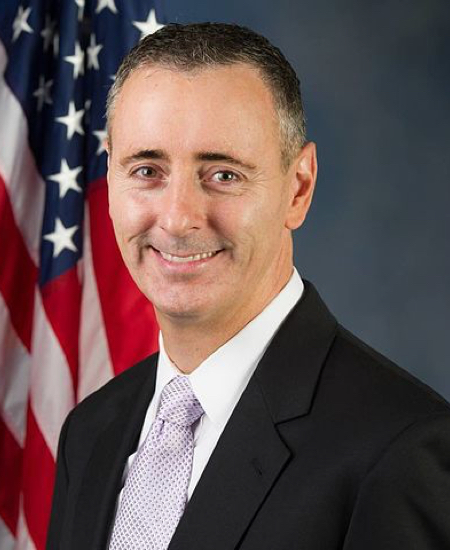
Rep. Brian K. Fitzpatrick
Sponsored bills
Maddy summaryHR 2509, the COMPLETE Care Act, creates Medicare payment incentives for primary care providers who integrate specific behavioral health services into their practice. It directly affects Medicare providers offering services identified by HCPCS codes 99484, 99492, 99493, 99494, G2214, and G0323 (covering models like Collaborative Care and Primary Care Behavioral Health) during 2027-2029. The bill increases Medicare payments for these services to 125-175% of standard rates (phasing down from 175% in 2027 to 125% in 2029) and waives budget neutrality rules to fund these higher payments. Additionally, it requires the HHS Secretary to provide technical assistance to primary care practices adopting these models by 2026, with dedicated funding for 2025-2029.
Maddy summaryHR 2494 requires the U.S. Department of Housing and Urban Development (HUD) to annually submit a report to Congress analyzing state and local strategies for promoting affordable housing. The bill directs HUD to use data from the existing regulatory barriers clearinghouse - which tracks state/local housing policies - to assess which approaches are working. The report must include an analysis of these strategies and specific policy recommendations Congress could use to support effective state and local efforts. This directly affects states and local governments by requiring them to provide data for the analysis, while Congress receives actionable insights to inform federal housing policy. The bill focuses on gathering and sharing existing state-level solutions rather than creating new federal mandates.
Maddy summaryHR 2077, the Helping Heroes Act, establishes the Veteran Family Resource Program within the Department of Veterans Affairs. The program requires the VA to appoint family coordinators at each Veterans Health Administration network within five years to help veterans and their families access VA benefits and community resources addressing social needs like housing, food, and mental health. Coordinators must assess family needs, build relationships, and connect veterans to services, including wellness programs for children. The VA must also conduct a survey of disabled veterans' families every five years to identify unmet needs and report program outcomes to Congress within two years of implementation. This bill directly affects veterans (especially those with disabilities) and their families by connecting them to support services through VA and community partnerships.
Maddy summaryThe Promoting Precision Agriculture Act directs the U.S. Department of Agriculture to develop voluntary, private-sector-led standards for precision agriculture equipment within two years. These standards will focus on improving connectivity between farm technologies (like GPS systems, sensors, and data software), addressing cybersecurity concerns, and supporting the use of advanced networks and AI in farming. The bill requires the Government Accountability Office (GAO) to assess these standards every two years for eight years, checking if they were developed with industry input and effectively encourage adoption. The primary beneficiaries are U.S. farmers and agricultural technology companies, aiming to make farming more efficient by reducing waste of resources like water, fertilizer, and fuel.
Maddy summaryHR 1906, the Rural Wellness Act, extends a deadline for rural development funding to 2029 and requires that 17% of funds prioritize projects offering behavioral and mental health services like prevention, treatment, and recovery. It directs grant administrators to give preference to rural community facilities providing these services and employing staff trained in mental health care. The law applies to programs under the Consolidated Farm and Rural Development Act and the Rural Development Act of 1972. This affects rural communities seeking health facility grants and changes how funding is allocated to address mental health needs.
Maddy summaryHR 1923, the Modernizing Wildfire Safety and Prevention Act of 2025, establishes training programs for wildfire professionals and improves retirement benefits for firefighters. It creates a National Smoke Monitoring and Alert System to protect public health during wildfire events and requires payment for wildfire recovery programs within 90 days of application approval. These provisions directly affect federal firefighters, wildfire response organizations, and communities in wildfire-prone areas. The bill also includes mechanisms for workforce development, casualty assistance, and data sharing to enhance wildfire management and public safety.
Maddy summaryThis bill establishes special base pay rates for wildland firefighters employed by the Forest Service or Department of the Interior, increasing their base pay by specific percentages (from 1.5% to 42%) based on their grade. It creates "incident response premium pay" at 450% of hourly rate for firefighters deployed to respond to qualifying wildfire incidents, with a yearly maximum of $9,000. The bill also provides for paid rest and recuperation leave following wildfire incident response. These provisions replace temporary pay increases that were previously authorized under other legislation and directly affect wildland firefighters who perform duties related to wildland fires.
Maddy summaryHR 1858, the Flooding Prevention, Assessment, and Restoration Act, requires the Secretary of Agriculture to conduct a national study on flood risks to agricultural lands within two years, analyzing economic losses, downstream effects, and existing data on various flood types. The bill expands watershed restoration authority by allowing the Secretary to implement long-term protective measures beyond immediate repairs if they are cost-effective and benefit watershed health. It also increases federal funding for rehabilitating aging structural flood measures from 65% to 90% of project costs. This legislation directly affects agricultural producers and watershed management programs by mandating new assessments and modifying funding thresholds for flood prevention infrastructure.
Save America's Forgotten Equines Act of 2025 or the SAFE Act of 2025 This bill permanently prohibits the slaughter of equines (e.g., horses and mules) for human consumption. (Current law prohibits the slaughter of dogs and cats for human consumption. This bill extends the prohibition to equines.) Specifically, this bill prohibits a person from knowingly (1) slaughtering an equine for human consumption; or (2) shipping, transporting, possessing, purchasing, selling, or donating an equine to be slaughtered for human consumption or equine parts for human consumption. The bill subjects a violator to a fine. The bill applies to conduct in or affecting interstate or foreign commerce or within the special maritime and territorial jurisdiction of the United States. However, it does not apply to an activity carried out by an Indian for a religious ceremony. As background, in recent years, the appropriations acts have prohibited the Department of Agriculture (USDA) from using federal funds to inspect horses before they are slaughtered for human consumption. Therefore, there are currently no USDA-inspected horse slaughter facilities in the United States.