

Maddy summaryThe Kids Online Safety Act (HR 7891) would require major online platforms (with high revenue or user numbers) to implement safety features for children and teens, including default protective settings, parental controls, and age verification. It would mandate platforms to report annually on risks to minors and their safety measures, and prohibit advertising harmful products (like tobacco, alcohol, or gambling) to minors. The bill directly affects social media platforms, online video games, and video streaming services that are used by minors, with the goal of preventing mental health harms, compulsive usage, and cyberbullying.
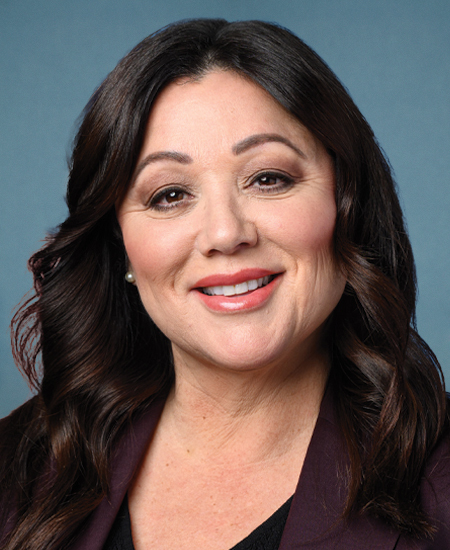
Rep. Lori Chavez-DeRemer
Sponsored bills
Maddy summaryHR 9639, the AI Ads Act, amends the Federal Election Campaign Act to prohibit using AI-generated content (like deepfakes or synthetic media) in campaign materials as fraudulent misrepresentation of campaign authority or fraudulent fund solicitation. It directly affects political campaigns, candidates, committees, and anyone creating campaign ads by requiring that AI-generated content cannot falsely claim to represent a candidate, party, or committee. The bill updates existing rules to explicitly include "content generated in whole or in part with artificial intelligence" within the definitions of fraud under Sections 322(a)(1) and 322(b)(1). This ensures that misleading AI-generated ads - such as those falsely attributing a statement to a candidate - would be treated as illegal fraud under current campaign finance law.
Maddy summaryThis bill amends VA law to add a specific representative from the National Association of State Veterans Homes (NASVH) to the Geriatrics and Gerontology Advisory Committee. The new member must hold a professional nursing home administration license and will consult with the NASVH president on matters related to the association. The change directly affects the VA committee's composition, ensuring input from state veterans home organizations on geriatric care policies.
Maddy summaryThe Preventing the Financing of Illegal Synthetic Drugs Act (HR 1076) requires the Government Accountability Office (GAO) to study how criminal groups finance synthetic drug trafficking into the U.S., including the use of social media platforms and payment apps like CashApp. The study will examine business models, money laundering tactics, government efforts to disrupt these networks, and overlaps with human trafficking. It must be completed within one year of enactment, with findings reported to Congress. This bill does not change existing laws but aims to provide data to inform future policy decisions on combating illicit drug finance.
Maddy summaryHR 9561, the Pay Our Border Patrol and Customs Agents Act of 2025, ensures that U.S. Border Patrol Agents and Customs and Border Protection officers working during a government shutdown receive their salaries. It appropriates funds from the Treasury (not regular appropriations) to cover their pay during any lapse in discretionary funding in fiscal year 2025. This bill directly affects these specific federal employees who are required to work during shutdowns but would otherwise face pay delays. It is a procedural measure focused solely on payment mechanisms, not on changing work requirements or policy.
Maddy summaryThis bill adds the Secretary of Agriculture to the Committee on Foreign Investment in the U.S. (CFIUS) for transactions involving agricultural land, biotechnology, or agriculture-related infrastructure (like transportation, storage, or processing). It requires the Secretary to notify CFIUS about transactions where a foreign person from China, North Korea, Russia, or Iran acquires U.S. agricultural assets, as defined by existing law. CFIUS then decides whether to review such transactions or take other action. The provisions apply only to transactions involving those four countries and sunset once they are removed from the official list of "foreign adversaries" in federal regulations.
Maddy summaryHRES 1437 is a ceremonial resolution designating the week beginning September 9, 2024, as "National Hispanic-Serving Institutions Week." It recognizes Hispanic-serving institutions (HSIs) - colleges and universities with at least 25% Hispanic enrollment - and their role in educating low-income students, advancing economic mobility, and serving 31.7% of all undergraduate students. The resolution calls for the public and organizations to observe this week with ceremonies and activities during Hispanic Heritage Month. It does not create new laws, allocate funding, or change existing policies - it is purely a symbolic gesture of recognition.
Maddy summaryHR 8282, the "Illegitimate Court Counteraction Act," imposes U.S. sanctions on foreign individuals or entities supporting the International Criminal Court (ICC) in investigating or prosecuting "protected persons." Protected persons include U.S. military personnel, officials, and allied personnel (from non-ICC member countries) who are not under ICC jurisdiction. The bill requires the President to block assets and deny visas to targeted foreign persons and their immediate family members within 60 days of the ICC attempting such actions. It mandates congressional notification of sanctions and allows termination if the ICC ceases all such efforts against protected persons. The law focuses on restricting U.S. economic and travel access to ICC supporters targeting specific U.S. and allied personnel.
Maddy summaryThis bill requires the Council on Environmental Quality to annually publish detailed reports starting in 2024, tracking how the National Environmental Policy Act (NEPA) impacts federal projects. The reports will include data on lawsuits challenging NEPA compliance (listing agencies and case outcomes), the length of environmental impact statements (page counts over 5 years), and timelines for completing environmental reviews (over 10 years). These reports must be publicly available with underlying data, directly affecting federal agencies that manage NEPA reviews and providing transparency for Congress and the public. The bill focuses on collecting factual data about NEPA's implementation, not changing the law itself.
Maddy summaryThis symbolic resolution expresses congressional support for designating September 29, 2024, as "Veterans of Foreign Wars of the United States Day" to honor the organization's 125th anniversary. It requests the President issue a proclamation encouraging government agencies and the public to observe the day with ceremonies, though it creates no new laws or policy changes. The resolution recognizes the VFW's historical service to veterans but does not directly affect any individuals or programs.