

Maddy summaryThis bill requires the Transportation Security Administration (TSA) to develop and update guidance within 90 days (and every five years) to prevent contamination of breast milk, baby formula, and related cooling items during airport security screening. The guidance must be created with input from maternal health organizations and ensure hygienic handling during re-screening or additional testing. It also mandates a DHS Inspector General audit within one year to review compliance and assess how screening technologies affect these items' processing. The bill directly affects breastfeeding parents traveling with infants by standardizing secure handling of essential items.
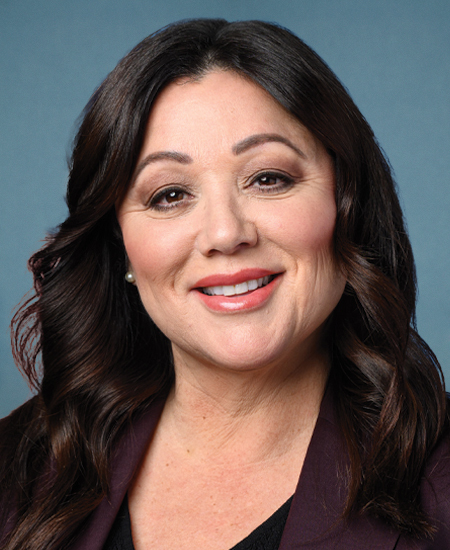
Rep. Lori Chavez-DeRemer
Sponsored bills
Maddy summaryHR 1719, the Honoring Our Fallen Heroes Act of 2023, establishes a presumption that certain cancers diagnosed in public safety officers (like police and firefighters) are work-related if linked to their duties. It defines 22 specific cancers (including lung, mesothelioma, and WTC-related cancers) as "exposure-related," allowing officers or their families to receive benefits without proving direct work connection, provided they were diagnosed within 15 years of leaving active service. The bill also creates a process for adding new cancers to the list based on scientific evidence, requiring the Bureau to review petitions and make decisions within 180 days. This applies to deaths or disabilities occurring on or after January 1, 2023, directly affecting officers who developed covered cancers during service.
Maddy summaryThe DISPOSE Act authorizes the U.S. government to partner with Colombia, Mexico, and Peru to safely destroy chemicals used in illegal drug production. It requires the State Department, in coordination with Justice and Defense, to create a detailed implementation plan within 90 days - including timelines, budgets, and measurable goals - and provide annual progress reports to Congress on chemical destruction efforts. The initiative aims to prevent these chemicals from re-entering drug manufacturing, free storage space for future seizures, and reduce environmental harm from hazardous waste.
Maddy summaryHRES 1489 is a symbolic House resolution designating the week of September 23-27, 2024, as "National Clean Energy Week." It expresses congressional support for recognizing clean energy's role in economic growth (citing 8.35 million jobs in the sector) and encourages voluntary actions like public awareness, investment in clean energy technologies, and supporting local clean energy jobs. The resolution does not create new laws, funding, or obligations - it only formally endorses the week-long observance to highlight clean energy’s economic and environmental benefits. It directly affects no specific group but aims to raise national awareness of the clean energy sector.
Maddy summaryHRES 1479 is a symbolic resolution expressing the U.S. House of Representatives' support for "National Hydrocephalus Awareness Month" (September) and "World Hydrocephalus Day" (September 20). It does not create new laws or alter funding but formally endorses awareness efforts for hydrocephalus, a condition affecting approximately 1 million people in the U.S. The resolution highlights the condition's impact - including high medical costs, shunt-related complications, and challenges in pediatric-to-adult care - while calling for continued research support. It directly affects awareness campaigns led by organizations like the Hydrocephalus Association and Pediatric Hydrocephalus Foundation.
Maddy summaryThis bill requires the FAA to update regulations within two years to encourage pilots and air traffic controllers to seek and disclose mental health care, based on recommendations from a task group. Key provisions include annual reviews to expand approved medications for mental health conditions, recruit additional aviation medical examiners (with $13.74 million annually for 2025-2028), and fund a public awareness campaign ($1.5 million yearly) to destigmatize mental health support in aviation. It also mandates reporting on clinical research and National Transportation Safety Board recommendations related to aviation mental health. The bill directly affects aviation medical examiners, pilots, air traffic controllers, and FAA oversight processes.
Maddy summaryThe Federal Lands Amplified Security for the Homeland (FLASH) Act authorizes the construction of navigable roads on Federal lands along the southern border to improve U.S. Customs and Border Protection access, while establishing policies to reduce trash accumulation and address environmental damage from unauthorized border crossings. The bill requires agencies to develop protocols for mitigating wildfire risks through vegetation management, prohibits Federal funds from being used to provide housing for unauthorized immigrants on Federal lands, and includes provisions to address illegal cannabis cultivation and pesticide use. It mandates annual reports on waste collection and environmental impacts, and authorizes $16 million annually for initiatives to address contamination from trespass cannabis cultivation on covered Federal lands. The legislation directly affects land management operations on approximately 50 million acres of Federal lands administered by the National Park Service, Bureau of Land Management, Fish and Wildlife Service, and Forest Service along the southern border.
Maddy summaryHRES 1466 is a non-binding resolution expressing support for designating September 15-21, 2024, as "National Adult Education and Family Literacy Week." It does not create new programs but aims to raise public awareness about the importance of adult foundational education, workforce skills, and family literacy programs. The resolution encourages public support for existing initiatives that help adults improve literacy, numeracy, and digital skills, which the text notes benefit economic stability, parental involvement in children’s education, and workforce readiness for millions of adults. It specifically highlights challenges like low literacy among 43 million adults, unemployed individuals, and incarcerated populations.
Maddy summaryThis bill amends the definition of "chronically homeless" under the McKinney-Vento Homeless Assistance Act to better support people in transitional housing. It changes how shelter time is counted - allowing either continuous shelter for one year or cumulative shelter for one year over three years - instead of requiring four separate stays. Crucially, it adds that individuals in transitional housing programs who've lived there fewer than 90 days remain considered chronically homeless if they met the prior criteria before entering the program. The bill requires the Department of Housing and Urban Development to update federal regulations within 180 days to reflect these changes.
Maddy summaryThis bill amends existing law to expand eligibility for mental health services under the Public Health Service Act. It redefines "covered institution" to include both career and technical education (CTE) schools (as defined by the Perkins Act) and traditional colleges (as defined by the Higher Education Act). This change ensures CTE schools - previously excluded - can now access federal funding for student mental health and substance use disorder services that were previously only available to traditional colleges. The bill does not create new programs but adjusts terminology to include CTE schools under existing service provisions.