

Maddy summary# Summary of Proposed Higher Education Act Amendments This document outlines significant proposed amendments to the Higher Education Act of 1965, primarily as part of the "College Cost Reduction Act." The key elements include: ## Accreditation Reform - Major overhaul of accreditation standards, requiring accrediting agencies to demonstrate independence from trade associations - New requirements for accrediting agencies to assess student achievement outcomes, including median value-added earnings relative to median total price charged - Introduction of an "Alternative Quality Assurance Experimental Site Initiative" to test non-accredited institutions - Protections for religious institutions, including a new process for appealing accreditation decisions related to religious mission - Removal of "litmus tests" that would require institutions to support specific political viewpoints ## Student Success Initiatives - Establishment of "Postsecondary Student Success Grants" to increase participation, retention, and completion rates for high-need students - Focus on evidence-based practices, with tiered requirements (tier 1, 2, and 3 reforms) - Mandatory inclusion of high-need student populations (low-income, first-generation, military-connected, etc.) - Requirements for institutions to report on completion rates, retention rates, and student demographics ## Regulatory Changes - Repeal of numerous existing regulations including: * Closed school discharges * Borrower defense to repayment * Pre-dispute arbitration * False certification requirements * Ability-to-benefit rules * Financial responsibility regulations - New restrictions on incentive compensation for recruiters - Changes to third-party servicer definitions and regulations ## Transfer and Credit Policies - New requirement that institutions cannot deny transfer credit based solely on the source of accreditation - Requirements for transparent transfer policies - Changes to reverse transfer policies ## Other Key Provisions - Modifications to the National Advisory Committee on Institutional Quality and Integrity (NACIQI) - New definitions for "total price" and "value-added earnings" - Changes to the process for institutions to change accrediting agencies - New requirements for institutions to report on student outcomes The overall focus of these proposed amendments is to reduce regulatory burden on institutions, promote transparency, improve student outcomes (particularly for high-need students), modernize accreditation processes, and protect religious institutions' rights in accreditation decisions.
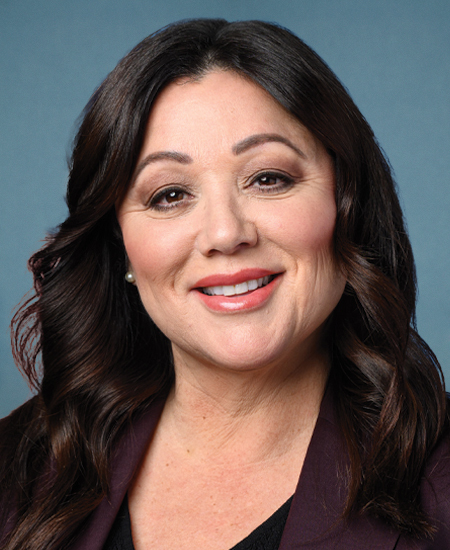
Rep. Lori Chavez-DeRemer
Sponsored bills
Maddy summaryThe CAP Act of 2024 establishes a national system to standardize "compostable" claims on consumer product packaging (like food containers and household items). It requires independent certification groups to be accredited by recognized bodies before they can authorize compostable claims, ensuring claims are accurate and not misleading. The law defines "compostable" as packaging breaking down in industrial or home compost within a reasonable timeframe, and sets strict rules for labeling. Manufacturers must comply by January 1, 2028, and the Environmental Protection Agency (with coordination from the FTC) will enforce these standards, while allowing states to maintain stricter rules.
Maddy summaryThe Fix Our Forests Act creates a new system for managing wildfire risk on federal lands by designating "firesheds" (landscape-scale areas with high wildfire risk) and establishing a central coordination center called the Fireshed Center. It streamlines environmental reviews for vegetation management projects in these areas, requires public tracking of wildfire risk and management activities through a Fireshed Registry, and limits legal challenges to these projects. The bill affects federal land management agencies (like the Forest Service and Bureau of Land Management), communities in wildfire-prone areas, and utility companies managing vegetation near power lines. It also includes provisions for community wildfire risk reduction programs and research on new wildfire management technologies, aiming to accelerate risk reduction while maintaining transparency about where and how these projects are implemented.
Maddy summaryHRES 1566 is a symbolic House resolution honoring all U.S. veterans on Veterans Day 2024. It recognizes the service and sacrifice of the estimated 15.8 million veterans living in the U.S. as of 2023, including those who served in conflicts from World War II to post-9/11. The resolution calls on the American public to observe Veterans Day to acknowledge veterans' role in preserving national freedom. As a non-binding resolution, it has no direct policy impact but formally expresses congressional recognition of veterans' contributions.
Maddy summaryThis resolution (HRES 1558) is a symbolic House of Representatives measure supporting October as "National Domestic Violence Awareness Month." It does not create new laws or allocate funding but formally expresses the House's support for raising awareness about domestic violence and its impacts, and urges continued backing for existing programs that address domestic violence. The resolution cites statistics on domestic violence prevalence (e.g., 24 people per minute affected by intimate partner violence) to underscore the importance of the observance. It directly affects public awareness efforts but does not change policies or directly impact individuals.
Maddy summaryThis bill modifies how disability benefits are treated for homeless disabled veterans seeking housing assistance. It excludes certain disability payments (under Chapter 11 or 15 of Title 38, U.S. Code) from income calculations when determining eligibility for HUD-assisted housing programs, including the supported housing program under Section 8(o)(19) and housing on Department property. Specifically, it ensures these benefits are not counted toward income for housing eligibility, though they still count for "adjusted income" definitions. The bill directly affects disabled veterans applying for HUD housing assistance who receive these specific disability benefits. It makes a concrete change to income calculation rules without altering benefit amounts or creating new funding.
Maddy summaryThis bill establishes minimum safety standards for railroad bridges and requires railroad carriers to provide detailed inspection reports classifying bridges as poor, fair, or good condition, including repair timelines and costs for bridges in poor condition. It mandates railroad carriers to post visible signs identifying bridge ownership and a contact number for public safety concerns, and creates a public database showing basic bridge condition information without detailed technical specifications. The bill also establishes a safety concern reporting system for the public and authorities, and requires the Department of Transportation to conduct randomized bridge inspections to verify reported conditions. Railroad carriers that fail to meet safety requirements face civil penalties, including weekly fines for continued operation of unsafe bridges.
Maddy summaryHRES 1537 is a non-binding House resolution condemning Hamas' October 7, 2023, attacks on Israel, which killed over 1,200 people and took 251 hostages, including 7 Americans still held captive. It calls on Hamas to immediately surrender, cease attacks, and release all hostages unconditionally, while reaffirming Israel's right to self-defense. The resolution also urges international organizations to condemn Hamas' actions and address the global surge in antisemitism following the attacks. As a symbolic statement, it does not create new laws or alter policy but expresses congressional position. The bill specifically references the ongoing captivity of seven U.S. citizens: Edan Alexander, Itay Chen, Sagui Dekel-Chen, Gadi Haggai, Judith Weinstein Haggai, Omer Neutra, and Keith Siegel.
Maddy summaryThis resolution (HRES 1528) expresses the U.S. House of Representatives' support for recognizing September 29, 2024, as "International Day of Awareness of Food Loss and Waste." It does not create new laws or policies but acknowledges the significance of addressing food waste through existing efforts. The resolution highlights that food waste causes massive economic losses ($1 trillion annually), contributes to climate change (8-10% of global GHG emissions), and worsens global hunger - impacting billions. It aligns with the U.S. government's 2024 National Strategy to reduce food loss and waste by 50% by 2030. The resolution solely aims to raise public awareness on this issue without imposing new requirements.
Maddy summaryHR 9814, the Rural Homeownership Continuity Act of 2024, simplifies the process for rural homeowners to transfer FHA-guaranteed mortgages when selling their homes. It requires the Secretary of Housing and Urban Development to create a rule within one year establishing a process allowing a qualified buyer to assume the existing loan, while fully relieving the original borrower and any co-borrowers or guarantors of liability. This directly affects rural homeowners using the Doug Bereuter Section 502 Single Family Housing Loan Guarantee Program who wish to sell their property without remaining responsible for the mortgage. The key provision eliminates the seller's ongoing financial obligation upon a successful transfer to a qualified buyer.