

Maddy summaryThe Stand with Ukraine Act of 2024 establishes a framework for sustained U.S. security assistance to Ukraine in response to Russia's invasion. It endorses a 10-year bilateral security agreement and directs the U.S. government to provide military equipment, training, and security assistance to strengthen Ukraine's defense capabilities against Russian aggression. Key provisions include treating Ukraine as a major non-NATO ally for defense transfers, fast-tracking military sales through the Foreign Military Sales program, and creating mechanisms to prioritize defense article transfers. The bill also includes specific support for Ukraine's recovery, reconstruction, and demining efforts following the conflict. This legislation directly affects U.S. foreign policy implementation, military assistance programs, and Ukraine's ability to build a credible defense against Russian threats.
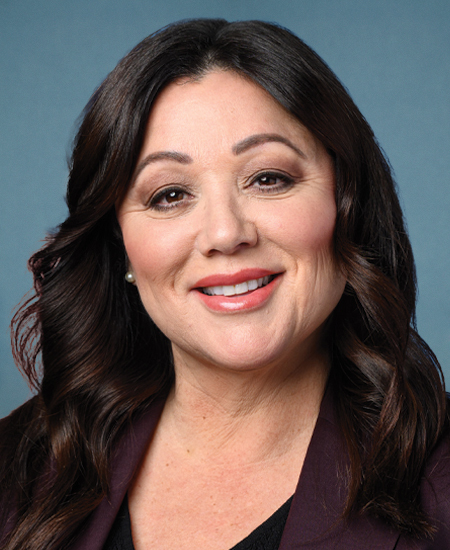
Rep. Lori Chavez-DeRemer
Sponsored bills
Maddy summaryHRES 1423 expresses the U.S. House of Representatives' support for designating the week of September 21-28, 2024, as "National Estuaries Week." The resolution highlights estuaries' economic and ecological importance, noting they support over 3.5 million jobs, contribute $476 billion to the U.S. GDP, and provide critical services like flood control and water filtration. It does not create new laws or funding but aims to raise public awareness about protecting estuaries, which face threats like pollution and habitat loss. The resolution acknowledges ongoing restoration efforts by federal, state, tribal, and community partners.
Maddy summaryHR 9479 would create a refundable tax credit for individuals with medical expenses related to in vitro fertilization (IVF). The credit covers up to $30,000 annually in qualified IVF costs (such as medical procedures), minus any credits claimed in prior years. It applies to expenses for the taxpayer or their spouse (for joint filers) and prevents double benefits by reducing other deductions for the same expenses. This policy change would take effect for expenses paid after the bill's enactment.
Maddy summaryHR 7920, the AG VETS Act, creates a federal grant program to help military veterans enter or grow in farming and ranching. It authorizes $5 million annually (2025-2029) for competitive grants to eligible groups like land-grant universities, state agriculture departments, nonprofits, and community organizations. These grants fund training programs, curriculum development, workshops, and field experiences focused on farm business management. Recipients must match federal funds dollar-for-dollar, and the program directly supports veterans seeking agricultural careers through hands-on education.
Maddy summaryThis bill, officially titled the "Spotted Wing Abatement Trust Act of 2024" (though nicknamed the "SWAT Act"), creates a $6.5 million fund within the USDA to address the spotted wing drosophila fruit fly pest. It directly affects fruit growers of berries, cherries, and stone fruits by funding research and mitigation efforts to combat this invasive species, which causes an estimated 20% revenue loss across targeted crops. The fund will support cooperative agreements and grants for research and pest control activities over five years (enactment year plus four subsequent years). The bill does not change existing regulations but allocates specific federal funding to address a documented agricultural threat.
This resolution supports the designation of National FFA Week. It also (1) recognizes the important role of the National FFA Organization (Future Farmers of America) in developing the next generation of globally conscious leaders who will change the world; and (2) celebrates the 10th anniversary of the Give the Gift of Blue program, which has donated more than 17,000 FFA blue jackets to FFA members in need.
Maddy summaryThis bill requires the USDA to improve data collection for organic dairy farmers. It mandates the Secretary of Agriculture to track costs of organic feedstuffs (like corn, soybeans, and pasture), establish a monthly survey of organic milk prices paid to farmers (covering major production regions), and publish updated reports with organic milk data equivalent to conventional milk reports. The data collected will include regional organic milk production volumes, feed prices, and the average price farmers receive for their milk. These reports will help organic dairy farmers, processors, and policymakers understand market conditions and production costs.
Maddy summaryThis bill amends the Department of Veterans Affairs' procurement rules to ensure women-owned small businesses receive equal priority in contracting preferences. It requires the VA to treat preferences for women-owned small businesses the same as other small business preferences under federal procurement law. Specifically, it adds a new provision (Section 8(m) of the Small Business Act) to VA procurement guidelines, mandating that all such preferences be afforded "the same degree of priority." This directly affects VA contracting officers and women-owned small businesses seeking federal contracts with the VA.
Maddy summaryHR 9374, the Stand with Israel Act, prohibits U.S. federal funds from being used to support the United Nations or its entities if they restrict Israel's full participation as a member state. The bill specifically blocks funding for any UN body that expels, downgrades, or suspends Israel's membership or limits its ability to participate equally with other nations. This affects U.S. government contributions to the UN, requiring the Department of State and other agencies to halt funding for such UN actions. The key mechanism is a new provision in the UN Participation Act that mandates this funding restriction whenever Israel's UN participation is impaired.
Maddy summaryThe Safer Skies Act of 2024 requires certain smaller airlines to adopt the federal security screening program currently used by larger carriers. Specifically, it mandates that airlines operating passenger planes with more than 9 seats (that do not use TSA checkpoints, offer individual seats in advance with public schedules) must comply with the Aircraft Operator Standard Security Program within 360 days of enactment. The Transportation Security Administration must revise its rules to enforce this new requirement. This directly affects regional carriers that currently skip standard airport security screenings but serve passengers under these specific operational conditions. The bill extends existing security standards to cover these previously exempt airlines without creating new security protocols.