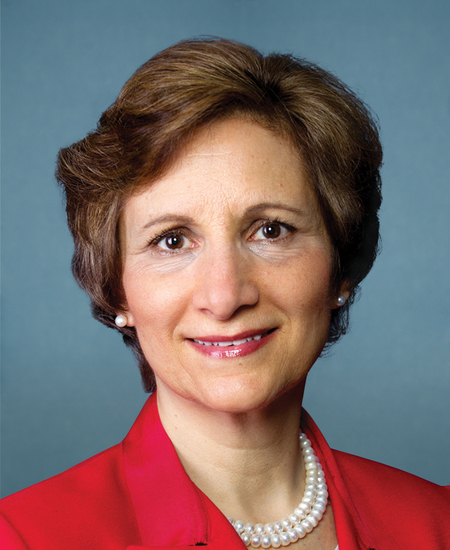
Photo of Suzanne Bonamici
D United States House · District 1 · Oregon On the 2026 ballot

Rep. Suzanne Bonamici

Compare
Total votes
2,837
all sessions
Attendance
97%
72 missed
Near the chamber average
With party
98%
of cast votes
Near the chamber average
Bipartisan score
1%
crosses aisle rarely
Near the chamber average
Sponsored
2,314
bills & resolutions
Higher than 94% of chamber peers
Committees
6
assignments
2,314 bills and resolutions

Sponsored bills

Total
2,314
Primary
182
Co-sponsor
2,132
This page
2,314
matching current filters
Co-sponsor HR 8523
In committee · United States House · Co-sponsor
REDUCE Act

Maddy summaryHR 8523 (the REDUCE Act) requires electricity transmission organizations to allow aggregators of retail customers to submit bids based on their flexible electricity demand into power markets. This applies specifically to customers of utilities that distributed over 4 million megawatt-hours in the previous fiscal year. The law mandates that transmission organizations update their rules to permit this bidding within 12 months of enactment, following federal guidelines. The bill aims to expand how demand flexibility - like adjusting electricity use - can participate in grid management and pricing.

In committee May 31, 2024 1 co-sponsor
Co-sponsor HR 8544
In committee · United States House · Co-sponsor
Fair Repair Act

Maddy summaryThe Fair Repair Act requires original equipment manufacturers (OEMs) of digital electronic devices - such as smartphones, computers, and tablets - to provide independent repair shops and device owners with necessary repair documentation, parts, and tools on fair and reasonable terms. It prohibits OEMs from using tactics like parts pairing, false alerts, or extra fees to block third-party repairs, reduce device functionality, or restrict access to repair information. The law applies to consumer electronics but explicitly excludes motor vehicles (cars, motorcycles, etc.) and medical devices. Enforcement would be handled by the Federal Trade Commission and state attorneys general, with penalties for violations.

In committee May 31, 2024 1 co-sponsor
Co-sponsor HR 8525
In committee · United States House · Co-sponsor
George Floyd Justice in Policing Act of 2024

Maddy summaryThe George Floyd Justice in Policing Act of 2024 establishes a National Police Misconduct Registry to track complaints and disciplinary actions against officers, requiring all federal, state, and local law enforcement agencies to report use-of-force incidents with racial, gender, and age data. It bans chokeholds and carotid holds in police encounters, prohibits no-knock warrants in drug cases, and reforms qualified immunity to make it harder for officers to avoid accountability for misconduct. The bill mandates body cameras for federal officers, requires independent investigations of officer-involved shootings, and creates new data collection systems to monitor racial profiling and use-of-force patterns. It also includes provisions for civilian oversight boards, improved officer training on de-escalation and implicit bias, and restrictions on military equipment transfers to local police departments. This law affects all law enforcement agencies receiving federal funding under programs like Byrne and COPS grants.

In committee May 31, 2024 1 co-sponsor
Primary HRES 1233
In committee · United States House · Lead sponsor
Supporting the goals and ideals of National Honor Our LGBT Elders Day.

Maddy summaryHRES 1233 is a symbolic resolution supporting National Honor Our LGBT Elders Day. It does not create new laws or allocate funds but encourages federal, state, and local entities to observe the day through programs raising awareness about health disparities and unique challenges faced by LGBTQ+ older adults. The resolution specifically urges healthcare providers to offer culturally competent care and calls for prioritizing the health and human rights of LGBTQ+ elders in government and aid efforts. It directly affects LGBTQ+ elders by highlighting their needs, though it has no binding legislative effect.

In committee May 24, 2024 0 co-sponsors
Co-sponsor HR 619
In committee · United States House · Co-sponsor
NAPA Reauthorization Act

Maddy summaryThis bill reauthorizes the National Alzheimer's Project Act through 2035 (extending the previous deadline of 2025) and adds new requirements to promote healthy aging and reduce Alzheimer’s risk factors. It mandates the program to provide information on healthy behaviors that may lower cognitive decline risk and expands the advisory group to include representatives from agencies like the Department of Justice, FEMA, and Social Security Administration, plus experts with diverse clinical trial experience. The bill directly affects Alzheimer’s research, care programs, and the federal advisory group overseeing national efforts. Key changes include requiring annual evaluations instead of initial ones and adding a focus on reducing health disparities in Alzheimer’s initiatives.

In committee May 24, 2024 1 co-sponsor
Co-sponsor HR 8323
In committee · United States House · Co-sponsor
Comprehensive Addiction Resources Emergency Act of 2024

Maddy summary# Summary of Legislative Text This is a comprehensive legislative proposal focused on addressing substance use disorder through public health approaches, with significant funding and program requirements. Key elements include: 1. **Major Funding Programs:** - **Subtitle A (Local Grants):** $3.0 billion annually (2024-2033) for local entities to provide prevention, treatment, and recovery services - **Subtitle B (State/Regional Grants):** $4.6 billion annually (2024-2033) for state-level programs - **Subtitle C (Other Grants):** $1.0 billion annually (2024-2033) for specific entities and underserved populations - **Subtitle D (Innovation/Training):** $1.5 billion annually (2024-2033) for training, research, and capacity building 2. **Key Program Requirements:** - Mandates for evidence-based treatment services across multiple levels of care - Requirements for cultural competency, particularly for Native American communities - Specific focus on harm reduction, prevention, and recovery support - Provisions for naloxone distribution and overdose reversal programs 3. **Regulatory Changes:** - New certification requirements for covered manufacturers, distributors, and dispensers of Schedule II controlled substances - Penalties for failure to submit certifications or submitting false certifications - Creation of a "Comprehensive Addiction Resources Fund" for penalty revenues 4. **Focus Areas:** - Prevention services (including trauma-informed approaches) - Early intervention services - Recovery support services - Harm reduction programs - Workforce development for treatment providers - Special attention to underserved populations (rural communities, racial minorities, formerly incarcerated individuals) 5. **Funding Priorities:** - 10% of funds for Native American communities - Specific requirements for cultural competency and language access - Mandated data collection and reporting systems This legislation represents a significant shift toward public health approaches to substance use disorder, emphasizing prevention, treatment, and recovery support rather than punitive measures, with substantial funding commitments over a decade.


In committee May 17, 2024 1 co-sponsor
Co-sponsor HR 8426
In committee · United States House · Co-sponsor
Public Service Freedom to Negotiate Act of 2024

Maddy summaryThe Public Service Freedom to Negotiate Act of 2024 establishes federal minimum standards for collective bargaining rights for public employees and supervisory employees. The Federal Labor Relations Authority will determine if each state's laws "substantially provide" for these rights, and if not, federal standards will apply to that state. These standards include the right to self-organization, collective bargaining, recognition of labor organizations, and procedures for resolving disputes. The bill preserves existing collective bargaining agreements and excludes certain employee categories like emergency services workers from some provisions.

In committee May 16, 2024 1 co-sponsor
Primary HR 8423
In committee · United States House · Lead sponsor
Elder Pride Act of 2024

Maddy summaryHR 8423, the Elder Pride Act of 2024, creates a new grant program under the Older Americans Act to support LGBTQI older adults and other protected-class older adults living in rural areas. The bill authorizes $5 million annually for grants to states, tribes, nonprofits, or community organizations to fund specific activities like reducing isolation, improving cultural competency among service providers, expanding non-discrimination policies (including for gender identity and intersex traits), and providing sexual health services (including HIV care). Grants must supplement, not replace, existing state or local funding for these services. The program requires grantees to partner with local organizations and report annually on activities to Congress.

In committee May 16, 2024 0 co-sponsors
Co-sponsor HR 681
In committee · United States House · Co-sponsor
READ Act Reauthorization Act of 2023

Maddy summaryThe READ Act Reauthorization Act of 2023 extends the authorization period for the Reinforcing Education Accountability in Development Act (commonly known as the READ Act) from five to ten fiscal years. This change allows U.S. international education programs, administered by agencies like USAID, to operate without annual reauthorization for a longer period. The bill directly affects programs providing educational support in developing countries, such as teacher training and literacy initiatives. The key mechanism is amending Section 4(a) of the existing law to adjust the funding duration, ensuring continued program stability.

In committee May 16, 2024 1 co-sponsor
Co-sponsor HR 8407
In committee · United States House · Co-sponsor
Domenic and Ed’s Law

Maddy summaryHR 8407, "Domenic and Ed's Law," amends the Higher Education Act to allow parents who took out federal student loans for their children to have those loans forgiven if their child becomes permanently disabled or dies. The bill expands existing loan forgiveness provisions to include these two specific circumstances, directly affecting parents with outstanding federal education loans. Key provisions require the child's disability to be determined as permanent and total by the Secretary or the child's death, with no requirement that the disability or death occurred after the loan was taken out. This change applies to all parent loans, regardless of when the loan was received or when the disability or death occurred.

In committee May 15, 2024 1 co-sponsor
Showing 881 to 890 of 2,314 bills
Previous 1 … 88 89 90 … 232 Next