Maddy summaryThis bill would authorize the U.S. government to confiscate Russian sovereign assets held in U.S. jurisdiction and use those funds to support Ukraine's reconstruction and humanitarian needs following Russia's invasion. It prohibits releasing these blocked assets until Russia fully compensates Ukraine or agrees to an international compensation mechanism. The bill establishes a "Ukraine Support Fund" to hold confiscated assets and requires regular congressional reporting on how these funds are allocated for Ukraine's recovery. It also includes provisions for international coordination with allies on sanctions and asset management related to Russia's invasion of Ukraine.
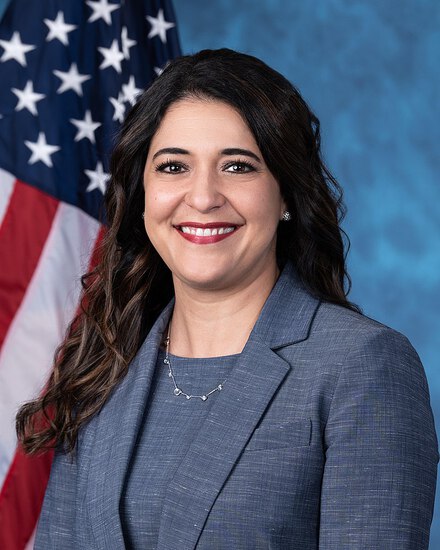
Rep. Stephanie I. Bice
Sponsored bills
Maddy summaryHRES 798 is a House resolution condemning support for Hamas, Hezbollah, and other terrorist organizations at colleges and universities. It states such support may create a hostile environment for Jewish students, faculty, and staff, citing incidents like blaming Israel for the October 7 Hamas attack. The resolution urges the Secretary of Education to direct the Office for Civil Rights to investigate and take action where appropriate. This non-binding resolution expresses the House's position but does not create new law or policy changes.
Maddy summaryHRES 830 is a non-binding House resolution condemning the Chinese Communist Party for its role in the U.S. fentanyl crisis. It urges the Biden administration to take six specific actions: impose sanctions on Chinese entities supplying fentanyl precursors, designate Chinese financial institutions evading U.S. sanctions, sanction Chinese officials linked to fentanyl trafficking, develop a plan to counter precursor shipments, and add China to a U.S. drug transit country list. The resolution focuses on holding China accountable for inaction on fentanyl precursor production in provinces like Hebei and suspended U.S.-China counternarcotics cooperation. It does not create new law but serves as a policy recommendation to the executive branch.
Maddy summaryThe Combatting Fentanyl Poisonings Act of 2023 authorizes federal grants to state/local law enforcement and nonprofit organizations to address fentanyl-related harms. It provides funding for law enforcement to target social media platforms used for selling controlled substances (including education on counterfeit fentanyl risks) and for nonprofits to run public awareness campaigns about fentanyl dangers, including naloxone training and support for families affected by fentanyl deaths. Grants under section 509(a) are capped at $50,000 per nonprofit, with strict limits prohibiting funds for harm reduction supplies (except naloxone). The bill reserves $10 million for law enforcement grants and $2 million for public awareness grants under this act.
This resolution condemns the release of $6 billion in sanctioned Iranian funds and urges the immediate rescission of the waiver that allowed for the transfer of such assets. It also condemns potential violations of the Taylor Force Act, which prohibits U.S. foreign assistance from directly benefiting the Palestinian Authority except for certain humanitarian purposes.
This resolution urges the President to demand the release of all hostages in Gaza. The resolution also urges the President to maintain all applicable sanctions on Iran and to use all other coercive and diplomatic resources to secure the release of Americans wrongfully detained in Gaza.
Maddy summaryHRES 771 is a non-binding resolution expressing the U.S. House of Representatives' support for Israel following Hamas' October 7, 2023, attack. It condemns Hamas' actions, affirms Israel's right to self-defense, and calls for the immediate release of hostages. The resolution also urges enforcement of existing laws restricting aid to terrorists and sanctions against Iran for supporting Hamas. It does not create new policies or allocate funds, as it is a symbolic statement of congressional support.
Maddy summaryHRES 768 is a symbolic House Resolution expressing congressional support for Israel following Hamas' October 7, 2023 attacks. It condemns Hamas' actions, reaffirms Israel's right to self-defense, and calls for the immediate release of hostages. The resolution references the U.S. commitment to Israel's security through existing military aid programs, including the 2016 U.S.-Israel Memorandum of Understanding, and emphasizes enforcement of laws like the Taylor Force Act to prevent U.S. aid from reaching terrorist groups. As a symbolic resolution, it does not create new policy but serves as a statement of congressional support for Israel.
Maddy summaryThis bill, HR 5920 (Student Loan Marriage Penalty Elimination Act of 2023), changes how married couples can deduct student loan interest on their federal taxes. It amends the tax code to allow each spouse to claim a separate $2,500 deduction limit for student loan interest, instead of a single combined limit for the couple. This directly affects married couples filing jointly who pay student loan interest and qualify for the deduction. The change applies to tax years beginning after December 31, 2022, and ensures the deduction aligns with the tax treatment for individual filers.
Maddy summary# Summary of Immigration and Border Control Legislative Proposal This document is a comprehensive legislative proposal aimed at reforming U.S. immigration policy with a strong emphasis on border security, limiting asylum access, and accelerating the return of migrants. ## Key Provisions by Section: ### Title I: Asylum Reform and Border Protection - **Safe Third Country**: Requires aliens to seek protection in countries they transit through before applying for asylum in the U.S. - **Credible Fear Interviews**: Changes to how credible fear is determined. - **Asylum Eligibility**: Adds specific requirements for asylum claims, including restrictions on criminal activity, gang affiliation, and "generalized disapproval" of organizations. - **Employment Authorization**: Limits work authorization for asylum seekers and requires 180 days before eligibility. - **Asylum Fees**: Requires application fees of at least $50. ### Title II: Border Safety and Migrant Protection - **Detention Facilities**: Requires reopening of specific ICE detention facilities that closed after January 20, 2021. - **Mandatory Detention**: Limits parole and release of certain aliens, requiring return to contiguous countries. ### Title III: Preventing Uncontrolled Migration Flows - **Western Hemisphere Cooperation**: Requires negotiating agreements with Mexico, Honduras, El Salvador, and Guatemala for processing asylum claims and returning migrants. ### Title IV: Ensuring United Families at the Border - **Family Detention**: Changes to family detention policies, removing presumptions against detaining children with parents. ### Title V: Protection of Children - **Unaccompanied Children**: Requires faster repatriation of unaccompanied children to their home countries unless they are trafficking victims or have a credible fear of return. - **Findings**: Documents current crisis with over 350,000 unaccompanied children encountered since Biden took office. ### Title VI: Visa Overstays Penalties - **Increased Penalties**: Expands penalties for visa overstays with higher fines and potential imprisonment. ### Title VII: Immigration Parole Reform - **Restricts Parole Authority**: Limits parole to specific circumstances (urgent humanitarian reasons, significant public benefit, or specific categories like Cuban nationals). - **Case-by-Case Basis**: Requires individual consideration rather than class-based eligibility. - **Parole Duration**: Limits parole to 1 year (with possible 1-year extension). ## Overall Theme This proposal represents a significant shift toward stricter border control, reduced access to asylum, accelerated removal processes, and increased cooperation with other countries to process asylum claims before migrants reach the U.S. border. The document emphasizes "operational control" of borders and aims to reduce the number of migrants entering the U.S. unlawfully.