Better Empowerment Now to Enhance Framework and Improve Treatments Act of 2021 or the BENEFIT Act of 2021 This bill requires the Food and Drug Administration (FDA) to consider relevant patient-focused drug development data, such as data from patient preference studies and patient-reported outcome data, in the risk-benefit assessment framework used in the process for approving new drugs. After a new drug application has been approved, the FDA's public statement about how it used patient experience data shall include a description of how such data was considered in the risk-benefit assessment framework.
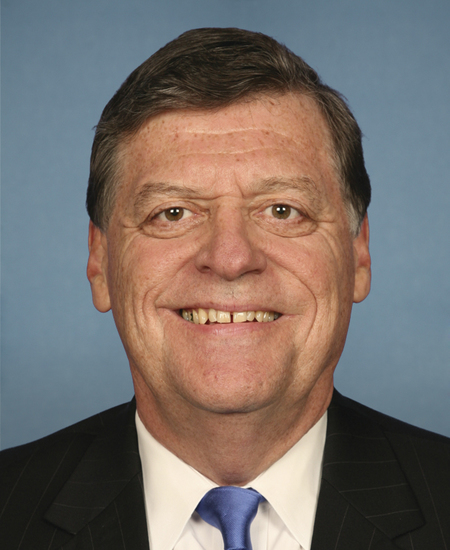
Rep. Tom Cole
Sponsored bills
This bill provides supplemental FY2021 appropriations to the National Guard for its response to the events at the U.S. Capitol on January 6, 2021. The bill designates the funding as emergency spending, which is exempt from discretionary spending limits.
Social Determinants Accelerator Act of 2021 This bill establishes the Social Determinants Accelerator Interagency Council to increase coordination among health and social service programs and provide technical assistance to increase the impact of such programs. The council must also assist the Centers for Medicare & Medicaid Services to award up to 25 grants to state, local, or tribal health or human services agencies for social determinants accelerator plans. These plans must address at least one health and one social outcome for a specified target population.
Assuring Regular Consultation to Have Indigenous Voices Effectively Solicited Act This bill establishes requirements for tribal consultation prior to the sale or transfer of certain federal civilian real property. Federal civilian real property generally refers to federal real property assets, including public buildings, occupied and improved grounds, leased space, or other physical structures under the custody and control of a federal agency. Specifically, a federal agency must consult with tribal governments prior to the sale or transfer of certain federal civilian real property if the proposed sale or transfer would affect a tribe's access to federal agency services. Further, the bill prohibits the property from being sold or transferred if the sale or transfer would substantially reduce or eliminate a tribe's access to these services.
This bill repeals the joint resolution of March 9, 1957, that provided for the use of certain funds to promote peace and stability in the Middle East.
This bill repeals the January 14, 1991, resolution authorizing the use of military force against Iraq.
Global Health Security Act of 2021 This bill directs the United States to implement a strategy to strengthen global health security, including by requiring the President to create the Global Health Security Agenda Interagency Review Council to implement the Global Health Security Agenda. The agenda is an initiative launched by nearly 30 nations to address global infectious disease threats. The council's responsibilities include (1) providing policy recommendations on agenda-related goals, objectives, implementation, and other international efforts to strengthen pandemic preparedness and response; (2) helping federal agencies with implementation; and (3) reviewing the progress and challenges in achieving U.S. commitments, including assistance to help other countries meet agenda targets. The bill also directs the federal agencies involved with the agenda to prioritize its implementation and to take certain steps to achieve that goal. The President shall coordinate a strategy for responding to global health security emergencies and submit a report on the implementation of this strategy. Additionally, the Department of State should seek to enter into negotiations with donors, relevant United Nations agencies, and other multilateral stakeholders to establish a Fund for Global Health Security and Pandemic Preparedness that (1) closes gaps in global health security and pandemic preparedness; and (2) builds capacity in eligible partner countries related to global health security, infectious disease control, and pandemic preparedness. The fund should provide grants, technical assistance, and innovative funding mechanisms to achieve its purposes.
Broadband for Rural America Act This bill modifies and consolidates Department of Agriculture (USDA) programs for expanding broadband internet in rural areas. Specifically, the bill modifies a program that provides grants, loans, and loan guarantees to support broadband expansion in rural areas. Modifications include revising the criteria used to prioritize applications and projects and changing the name of the program to the ReConnect Rural Broadband Program. Additionally, the bill terminates on June 30, 2022, a Department of Agriculture (USDA) COVID-19 response program that supports broadband expansion in rural areas for distance learning and telemedicine. Any remaining program funds available after the termination date shall be used for the ReConnect Rural Broadband Program. The bill also expands coordination requirements that apply to the Department of Commerce, USDA, the Federal Communications Commission (FCC), and the National Telecommunications and Information Administration. This includes requiring the use of specified FCC maps when assessing a community's access to broadband.
Excellence in Mental Health and Addiction Treatment Act of 2021 This bill increases the number of states that may participate in two-year Medicaid demonstration programs that improve access to community mental health services. It also provides for additional grants to certified community behavioral health clinics.
Energy Poverty Prevention and Accountability Act This bill addresses energy poverty (i.e., insufficient access to affordable energy) in at-risk communities. An at-risk community is a community that is low-income, minority, rural, elderly, or Native American. The Department of the Interior must report on (1) barriers to the ability of at-risk communities that live on or near federal land or tribal land to access reliable and affordable energy, including how the presence of adequate energy transmission infrastructure affects such access; and (2) actions that it and the Forest Service may take to reduce such barriers. In addition, certain executive actions may not be carried out until Interior conducts energy poverty studies for such actions. The Congressional Budget Office must report on how a bill or resolution will affect the cost of energy for at-risk communities. The Government Accountability Office must (1) analyze federal energy and environmental laws and regulations, and state renewable portfolio standards, to determine how such laws, regulations, and standards affected electricity prices, home heating prices, gasoline prices, motor vehicle prices, natural gas prices, and household appliance prices in at-risk communities; and (2) develop criteria to determine whether an at-risk community is experiencing energy poverty. The Office of Management and Budget must review and publish each applicable energy regulation to determine if any regulation imposes, relative to the general population, disproportionate costs on at-risk communities.