

Active Forest Management, Wildfire Prevention and Community Protection Act This bill establishes forest management, forest conservation, and wildfire prevention programs and activities. The bill establishes a collaborative prescribed fire program, an incentive program for large, cross-boundary prescribed fires, a program to remove or treat bark beetle-killed or infested trees, the Restoration and Resilience Partnership Program, and Forest Reserve Revenue Areas to generate revenue for counties. The bill also provides for, among other things the removal of certain trees or parts of those trees that come within 500 feet of an electric power line as hazard trees, the selection and implementation of landscape-scale forest restoration projects, removing the maximum term limits on stewardship end result contracting projects, study of only two alternatives (action vs. nonaction) in proposed collaborative forest management activities, the balancing of the long- and short-term effects of forest management activities on the affected ecosystem while considering injunctive relief, categorical exclusions from certain environmental requirements for specified forest management activities, and the expansion of the fire regime areas outside the wildland-urban interface for which a collaborative restoration project may be conducted.
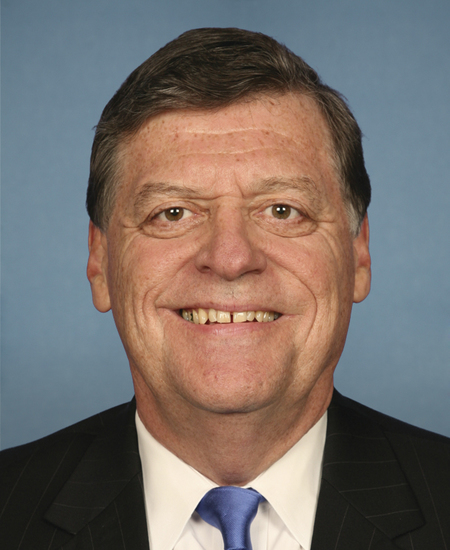
Rep. Tom Cole
Sponsored bills
This resolution recognizes the 75th anniversary of the Fulbright Program, which promotes international goodwill through the exchange of students in the fields of education, culture, and science.
Promoting Access to Diabetic Shoes Act This bill allows a nurse practitioner or physician assistant to fulfill documentation requirements for coverage, under Medicare, of special shoes for diabetic individuals. Under current law, such requirements may be satisfied only by a physician.
Alexander Lofgren Veterans in Parks (VIP) Act This bill makes the America the Beautiful-National Parks and Federal Recreational Lands Pass available, without charge, to members of the Armed Forces, veterans, and Gold Star Families. The pass covers the entrance fee and standard amenity recreation fee for all federal recreational lands and waters.
Tribal Labor Sovereignty Act of 2021 This bill excludes Indian tribes and tribal enterprises and institutions on tribal land from requirements for employers under the National Labor Relations Act (NLRA). (Currently under the NLRA, employers may not engage in unfair labor practices and must allow employees to form unions, engage in collective bargaining, and take collective action.)
This bill redesignates as the Nancy Reagan Memorial Park the Gravelly Point Park located along the George Washington Memorial Parkway in Arlington County, Virginia.
Extending Tribal Broadband Priority Act of 2021 This bill requires the Federal Communications Commission (FCC) to, within 30 days, establish a new tribal priority window for the 2.5 gigahertz band, through which tribes in rural areas may apply for unassigned spectrum. The new window is subject to the same terms and conditions as the tribal priority window that was adopted by the FCC on July 10, 2019, and that closed on September 2, 2020.
ABLE Employment Flexibility Act This bill permits employers to make tax-exempts contributions to ABLE (Achieving Better Life Experience) accounts in lieu of making contributions to existing tax-exempt defined contribution retirement plans. An ABLE account is established to pay the expenses (e.g., food, education, housing, transportation, employment training and support, and health care expenses) of a designated beneficiary who is disabled.
This resolution denounces socialism and opposes the implementation of socialist policies in the United States.
Urban Indian Health Providers Facilities Improvement Act This bill expands the authority of the Indian Health Service (IHS) to make funds available for urban Indian organizations to renovate, construct, or expand urban Indian health facilities. Specifically, the bill authorizes the IHS to (1) make funds available for renovations even if the renovations are not minor, and (2) make funds available for purposes other than assisting the organizations in meeting certain accreditation standards.