This concurrent resolution authorizes the Speaker of the House and the Majority Leader of the Senate to assemble the House and the Senate outside the District of Columbia whenever the public interest warrants it.
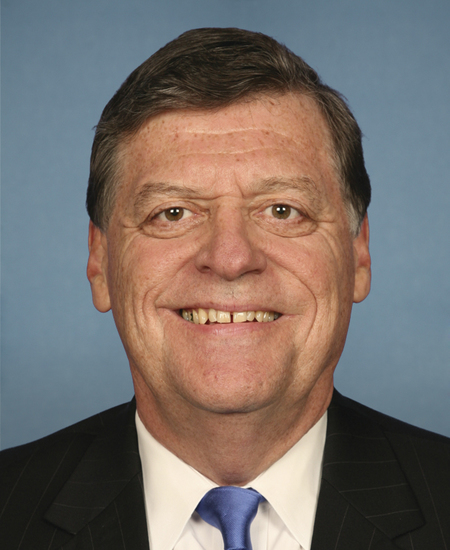
Rep. Tom Cole
Sponsored bills
Life at Conception Act This bill declares that the right to life guaranteed by the Constitution is vested in each human being at all stages of life, including the moment of fertilization, cloning, or other moment at which an individual comes into being. Nothing in this bill shall be construed to authorize the prosecution of any woman for the death of her unborn child.
Permanently Repeal the Estate Tax Act of 2023 This bill repeals the federal estate tax, effective for estates of decedents dying after December 31, 2022.
Maddy summaryHJRES 8 proposes a constitutional amendment to permanently set the Supreme Court's size at nine justices. The bill would require any future changes to the Court's composition to follow this specific number, locking in the current structure. It does not alter the existing Court size (which has been nine since 1869) but aims to prevent future adjustments through legislative action. The amendment must be ratified by three-fourths of state legislatures within seven years to take effect. This is a procedural proposal focused on constitutional structure, not a direct policy affecting citizens or programs.
Maddy summaryHRES 6 is a procedural resolution establishing the standard meeting schedule for the U.S. House of Representatives during the first session of the 118th Congress. It sets specific daily meeting times: 2 p.m. on Mondays, noon on Tuesdays (or 2 p.m. if no legislative business occurred the previous Monday), noon on Wednesdays and Thursdays, and 9 a.m. on all other weekdays. This resolution directly affects House operations and scheduling but does not alter legislative policy or impact constituents. The schedule applies unless changed by a separate House vote.
Maddy summaryThis bill establishes nationwide recognition for valid concealed carry permits. It allows permit holders from any state to carry concealed handguns in states that either issue such permits or don't ban concealed carry, provided they carry a photo ID and their valid permit. Key provisions include making presentation of a valid permit and ID prima facie evidence of compliance, shifting the burden of proof to prosecutors if challenged, and requiring courts to award attorney fees to successful defendants. It does not override state laws prohibiting concealed carry on private property or government lands, nor does it affect restrictions on federal lands like national parks.
Safeguard Tribal Objects of Patrimony Act of 2021 This act prohibits the exportation of Native American cultural items and archaeological resources that were illegally obtained; provides for the return of such items, including voluntary returns; and establishes and increases related criminal penalties. Specifically, the act makes it a federal crime to export, attempt to export, or otherwise transport from the United States Native American cultural items and archaeological resources without obtaining an export certification. U.S. Customs and Border Protection must detain any item requiring an export certification that does not have one. The act requires the Department of the Interior and the Department of State to each designate a liaison to facilitate and hold trainings and workshops on the voluntary return of human remains and cultural items. Additionally, Interior must refer individuals and organizations to Indian tribes and Native Hawaiian organizations to facilitate the voluntary return of human remains and cultural items; convene an interagency working group; and convene a Native working group consisting of representatives of Indian tribes and Native Hawaiian organizations to provide advice on issues concerning the return of, and illegal trade in, human remains and cultural items. The act also increases the maximum criminal penalties for violating the Native American Graves Protection and Repatriation Act. In particular, the act increases from 5 years to 10 years the maximum prison term for an individual convicted of a second or subsequent violation of selling, purchasing, using for profit, or transporting for sale or profit human remains or cultural items that were illegally obtained.

This act directs the Speaker of the House of Representatives and the President pro tempore of the Senate to arrange for the posthumous award of a Congressional Gold Medal to commemorate Glen Doherty, Tyrone Woods, J. Christopher Stevens, and Sean Smith, four Americans killed in the September 11, 2012, attack on the U.S. consulate in Benghazi, Libya. (Stevens was the U.S. Ambassador to Libya at the time, Smith was an officer in the Foreign Service, and Doherty and Woods were both government contractors and former Navy SEALs.) After the medal has been awarded, it shall be given to the Central Intelligence Agency Museum.
Cardiovascular Advances in Research and Opportunities Legacy Act This act addresses research, education, and awareness concerning valvular heart disease and its treatment. This disease is caused by damage to or disease affecting any valve that controls blood flow in the heart. The National Institutes of Health may conduct or support research on the disease in consultation with the National Heart, Lung, and Blood Institute (NHLBI). The NHLBI must also conduct a workshop on mitral valve prolapse, which occurs when the valve between the chambers of the left side of the heart seals improperly. The Department of Health and Human Services (HHS) must develop best practices to treat valvular heart disease. HHS may also carry out other projects to increase education and awareness of the disease.
This resolution expresses that the House of Representatives is committed to building upon the 20 years of success of the George McGovern-Robert Dole International Food for Education and Child Nutrition Program, complementing humanitarian assistance efforts and development programs through the continued implementation of the McGovern-Dole Program to address global food insecurity and create conditions for peace and stability, and supporting U.S. farmers, millers, shippers, and commodity groups that provide agricultural commodities for use in the McGovern-Dole Program to help combat global malnutrition and food insecurity and advance global education.