

Maddy summaryThis bill requires the General Services Administration to provide secure firearm storage facilities at the official duty stations of federal judges upon their request. It also mandates that agencies employing administrative judges must provide similar secure storage at their principal duty stations. The provisions apply only to firearms lawfully possessed by these judges, not to new firearm ownership rules. The bill directly affects federal and administrative judges who own firearms, ensuring they have secure storage options at work. It makes no changes to gun ownership laws but creates a new administrative service for judge safety.
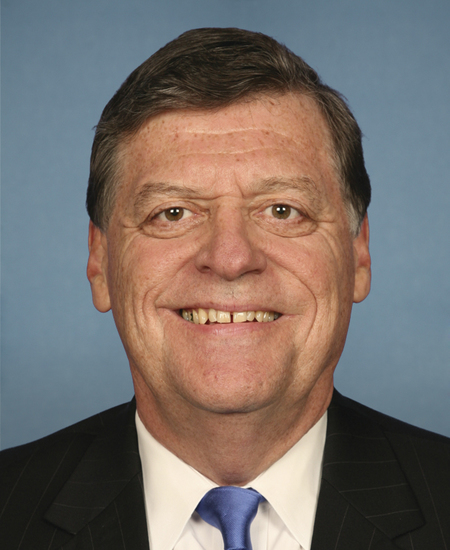
Rep. Tom Cole
Sponsored bills
Maddy summaryHR 781, the GIG Act, clarifies the definition of an independent contractor under federal law. It adds specific factors the Secretary of Labor must consider when determining if a worker is an independent contractor, such as whether the worker has substantial control over their work, can earn profits or losses based on their initiative, and whether their services require specialized skills performed continuously. The bill explicitly states that the Secretary cannot consider unmet contractual terms or unrelated services when making this determination. This directly affects workers classified as independent contractors and the businesses that hire them, by establishing a clearer, more objective standard for classification. The change aims to reduce misclassification disputes under the Fair Labor Standards Act.
Prohibition of Agricultural Land for the People's Republic of China Act This bill requires the President to prohibit nonresident aliens, foreign businesses, and agents associated with China's government from (1) purchasing agricultural (including ranching) real estate located in the United States, or (2) participating in Department of Agriculture programs that are unrelated to food and safety regulatory requirements.
Maddy summaryHRES 78 adjusts membership limits for four specific House committees and subcommittees. It increases the total members for the Permanent Select Committee on Intelligence (from 22 to 25) and the Select Committee on China Competition (from 16 to 24), while also raising limits for two subcommittees focused on government weaponization and the coronavirus pandemic. The changes include updated rules for how many members can be from the same party and how many minority leader consultations are required for appointments. This resolution directly affects the staffing structure of these committees, altering their composition without changing their policy functions.
Maddy summaryHR 683 (PASS Act of 2023) expands the Committee on Foreign Investment in the United States (CFIUS) review process to cover foreign investments in U.S. agriculture businesses, agricultural biotechnology, and private farmland. It mandates that the President block transactions involving foreign entities from China, Russia, Iran, or North Korea that would give them control over U.S. agricultural operations or land used for farming. The bill allows limited presidential waivers for national security reasons but requires a 30-day review period before any waiver. Additionally, it requires the Secretary of Agriculture to submit biannual reports to Congress on risks posed by foreign ownership in U.S. agriculture.
Maddy summaryHR 656, the "Head Start for Our Future Act," amends the Higher Education Act to update a funding provision. It replaces the phrase "literacy training" with "child development and early learning (including Head Start programs and Early Head Start programs)" in Section 441(c)(1). This change explicitly directs funds under that section toward early childhood development services, including existing Head Start and Early Head Start programs. The bill does not create new funding but clarifies that these programs qualify for related support.
Maddy summaryThis symbolic House resolution (HRES 72) recognizes independent workers, contractors, and freelancers for their economic contributions to the U.S. It highlights their role in the growing flexible work economy and acknowledges the benefits of flexible work arrangements, such as freedom in hours and locations. The resolution does not create new laws or alter existing policies - it solely serves as a formal acknowledgment of these workers' significance to the economy. It references their $1.35 trillion economic contribution in 2022 and their growing share of the workforce (39% of U.S. workers).
Maddy summaryHR 564 redirects unspent funds from the American Rescue Plan Act of 2021 (ARP) to reduce the federal deficit. It requires all unobligated ARP funds - money allocated but not yet spent - to be sent to the Treasury's general fund upon the bill's enactment. This action directly affects federal budget accounting by canceling unused appropriations rather than creating new programs or aiding specific groups. The bill does not alter existing laws or services but focuses solely on reallocating existing, unspent federal funds. It is a procedural budget measure with no direct impact on taxpayers or beneficiaries of the ARP.
Maddy summaryThe Educational Choice for Children Act creates tax credits for individuals and corporations that contribute to scholarship granting organizations providing education scholarships. Individuals can claim a credit up to $5,000 or 10% of their income, while corporations can claim up to 5% of taxable income. The scholarships are available to students from households with income up to 300% of the area median income, and can be used for private school tuition, tutoring, and other educational expenses at elementary and secondary schools. The bill includes strict requirements for scholarship organizations to verify income, conduct audits, and prevent misuse of funds, while also prohibiting government control over these organizations and protecting private and religious schools from discrimination in the program. It establishes a $10 billion annual cap on the total tax credits available.
Maddy summaryThis bill requires healthcare providers to give the same medical care to infants born alive during abortions as they would to any newborn, and to immediately admit such infants to a hospital. It mandates reporting of non-compliance to law enforcement and imposes penalties including up to 5 years in prison for violations. Women who undergo abortions can file civil lawsuits seeking money damages for injuries, three times the abortion cost, and punitive damages if care standards are not met. The bill also clarifies that abortion includes intentionally killing an unborn child or terminating pregnancy without specific exceptions (e.g., after viability to preserve life or removing a dead fetus).