

Maddy summaryThis bill directs the Health and Human Services Secretary to fund research on early detection and treatment of uterine fibroids, with a focus on reducing health disparities. It authorizes grants to states for screening programs (including advanced imaging), patient navigation services, and public education campaigns - prioritizing areas with socially vulnerable populations at higher risk. States receiving funds must implement evidence-based strategies to improve access to early intervention. The bill also requires regular reports to Congress on grant outcomes and research findings related to fibroid treatment disparities and related conditions like Asherman’s Syndrome.
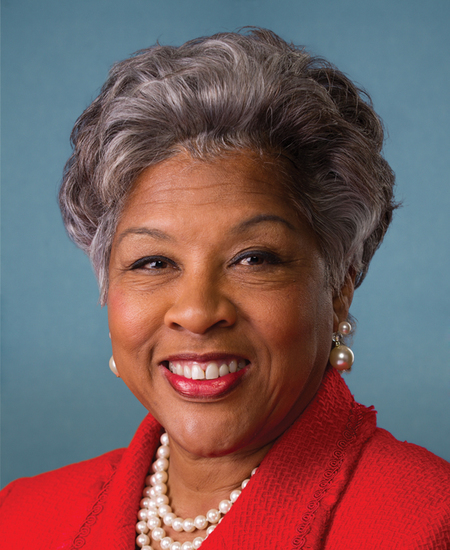
Rep. Joyce Beatty
Sponsored bills
Payment Choice Act of 202 3 This bill requires retail businesses to accept cash as a form of payment for on-site sales of $500 or less, and it prohibits them from charging cash-paying customers a higher price compared to customers not paying with cash. Businesses covered by this bill are those engaged in the business of selling or offering goods or services at retail to the public that accept in-person payments at a physical location. The bill provides for enforcement through preventative relief, damages, and civil penalties.
Maddy summaryHRES 1180 is a non-binding resolution recognizing the importance of diversity, equity, and inclusion (DEI) efforts in medical education. It affirms that a diverse medical workforce better serves the nation's diverse patient populations and supports medical schools in fostering inclusive environments to improve health equity. The resolution highlights existing disparities in health outcomes and representation, such as Black and Hispanic patients experiencing higher rates of chronic conditions compared to White patients, and notes that current medical school demographics (e.g., 10.8% Black or African American matriculants in 2023) do not reflect U.S. population diversity. It does not create new laws or funding but symbolically endorses DEI initiatives as essential for enhancing patient trust, clinical learning, and equitable care delivery.
Maddy summaryHR 8231, the James Earl Jones Congressional Gold Medal Act, authorizes a Congressional Gold Medal to be awarded to actor James Earl Jones in recognition of his distinguished career in theater and film, and his role in advancing inclusion and equal opportunities for people of all backgrounds in the entertainment industry. The Treasury will strike the medal with an image and inscription of Jones, and may produce and sell bronze duplicates to cover costs, with proceeds deposited into the U.S. Mint's public enterprise fund. This bill serves as a ceremonial honor with no new legal requirements or policy changes.
Maddy summaryThe CROWN Act of 2024 prohibits discrimination based on hair texture or style commonly associated with race or national origin, such as braids, locs, cornrows, twists, or afros. It directly affects individuals - particularly people of African descent - who face workplace, school, housing, or public accommodation discrimination due to natural or protective hairstyles. The bill expands existing federal civil rights laws (like Title VI, the Fair Housing Act, and Title VII) to explicitly include hair-based discrimination, requiring compliance in federally funded programs, housing, employment, and public spaces. It clarifies that grooming policies targeting these hairstyles violate anti-discrimination protections without creating new legal standards.
Maddy summaryThe Free Credit Scores for Consumers Act of 2024 requires consumer reporting agencies (like credit bureaus) to provide consumers with free credit scores and educational credit scores, along with detailed explanations of how scores are calculated and key factors affecting them. The bill mandates clear disclaimers explaining that consumers have multiple credit scores and that educational scores differ from those used by lenders, and expands circumstances under which consumers can access free scores (such as when disputing information or after identity theft). Lenders must provide consumers with copies of any credit reports and scores used in underwriting before signing loan agreements, with no cost to the consumer. This legislation aims to increase transparency about credit scoring systems and reduce consumer confusion about how credit scores work.
Maddy summaryThis bill requires the Consumer Financial Protection Bureau (CFPB) to assess how lenders use educational data in credit decisions. Specifically, the CFPB must evaluate: (1) whether lenders consider factors like college attendance, majors, or test scores when determining creditworthiness, (2) how algorithmic underwriting processes may create bias, and (3) whether policies prevent discriminatory outcomes. The CFPB must publish annual findings and lender lists publicly and submit reports to Congress detailing risks and recommendations. This directly affects lenders (defined as "covered persons" under existing law) that use educational data in credit underwriting, aiming to identify potential discrimination against protected groups.
Maddy summaryThis resolution symbolically recognizes April 11-17, 2024, as the seventh annual "Black Maternal Health Week." It highlights the disproportionately high maternal mortality and morbidity rates faced by Black women in the U.S., citing data showing Black women are 2-3 times more likely to die from pregnancy-related causes than White women. The resolution emphasizes systemic racism, healthcare inequities, and barriers like limited access to care as key factors contributing to these disparities. It calls for policy action - including support for the Black Maternal Health Momnibus Act - but does not create new laws or allocate funding.
Maddy summaryHR 8141, the Azerbaijan Sanctions Review Act of 2024, requires the President to review whether 44 specific Azerbaijani officials meet criteria for U.S. sanctions under the Global Magnitsky Act and related laws. The bill targets military commanders, judges, prosecutors, and security officials linked to alleged human rights violations, including torture of prisoners of war and suppression of political dissent. Within 180 days of enactment, the President must submit a detailed determination to Congress on whether sanctions should be imposed on these individuals. The review is based on findings of Azerbaijan’s alleged war crimes, arbitrary detentions, and failures to uphold international legal obligations. This bill focuses on procedural review, not immediate sanctions.
Maddy summaryThe Broadcast VOICES Act creates a new tax certificate program to encourage broadcast station ownership by socially disadvantaged individuals (defined as women or people who have faced racial/ethnic prejudice). It requires the Federal Communications Commission to submit biennial reports to Congress on the number of minority and women-owned broadcast stations and to provide recommendations for increasing such ownership. The program establishes rules including a $50 million limit on qualifying sales, a 2-3 year minimum holding period for stations owned by socially disadvantaged individuals, and tax benefits treating qualifying sales as "involuntary conversions" for tax purposes. The bill also creates a tax credit for contributions to entities training socially disadvantaged individuals in broadcast management. The tax provisions of the bill will expire 16 years after enactment.