

Maddy summaryThe HEIRS Act of 2024 establishes grant programs to help homeowners resolve ownership issues with "heirs' property" - residential land passed to multiple heirs without a will, held as shared ownership. It provides $30 million annually (2025-2035) to states and local governments that adopt the Uniform Partition of Heirs Property Act, covering costs like title reports, legal fees, and estate planning. Additionally, it allocates $10 million yearly (2025-2029) for direct assistance through HUD-approved counselors and nonprofits, prioritizing minority and low-to-moderate-income homeowners in high-need neighborhoods. The law requires housing counselors to explain heirs' property risks and available solutions, aiming to clarify ownership and prevent displacement.
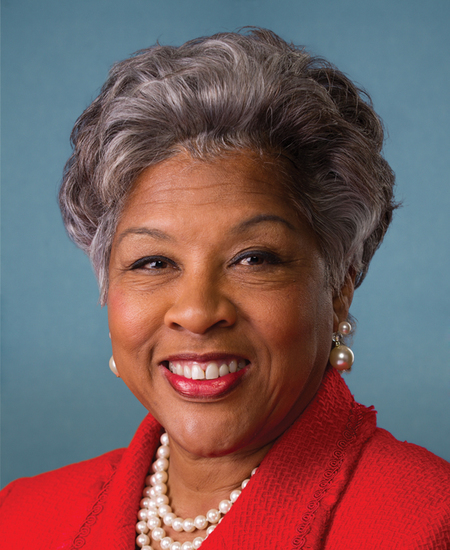
Rep. Joyce Beatty
Sponsored bills
Denying Infinite Security and Government Resources Allocated toward Convicted and Extremely Dishonorable Former Protectees Act or the DISGRACED Former Protectees Act This bill removes Secret Service protection from any individual who is convicted and sentenced for a federal or state felony.
Maddy summaryHR 8061, the Crime Victims Fund Stabilization Act of 2024, ensures stable funding for the Crime Victims Fund by directing certain False Claims Act collections into it from 2024 through 2029. Specifically, it adds a provision requiring that amounts collected under the False Claims Act (excluding whistleblower rewards and government reimbursement for damages) be deposited into the fund during this period. This directly affects crime victims who rely on the fund for services like counseling and emergency aid, as it prevents potential shortfalls in funding. The bill makes a concrete policy change by redirecting specific federal civil penalties into the fund, rather than altering the fund's existing purposes or eligibility rules.
Maddy summaryHRES 1154 is a symbolic resolution supporting "Financial Literacy Month" to raise public awareness about the importance of personal financial education. It calls on the Federal Government, states, schools, businesses, and communities to observe the month with programs highlighting how financial literacy helps individuals manage money, credit, and debt. The resolution references statistics on financial challenges (like 37% of adults struggling with emergency expenses) but does not create new laws or funding. As a non-binding resolution, it has no direct effect on policy or affected individuals.
Maddy summaryHR 3303, the Maternal Health for Veterans Act, requires the Department of Veterans Affairs (VA) to annually report on maternity care coordination programs and maternal health outcomes for veterans receiving care through VA facilities or VA-contracted providers. The bill mandates the VA to collect data on maternal outcomes - including disparities affecting high-risk demographic groups - and submit recommendations to Congress by September 2028. It authorizes $15 million annually (2024-2028) for VA maternity care coordination programs, supplementing existing funding without reducing current resources. The law directly affects veterans using VA maternity services, aiming to improve care through data-driven strategies.
Maddy summaryHRES 1142 is a non-binding House resolution recognizing the 10th anniversary of Boko Haram's 2014 kidnapping of 276 Chibok schoolgirls in Nigeria and urging the Nigerian government to intensify efforts against Boko Haram. It specifically calls on Nigeria to prioritize recovering abducted women and girls, account for missing persons, reduce stigma against survivors, and allow family reunifications. The resolution also urges the U.S. government to implement existing anti-terrorism strategies and track missing persons for inclusion in annual reports. This resolution directly affects the Nigerian government and the remaining 98+ Chibok girls still held captive, alongside other victims of Boko Haram's violence. It does not create new law but formalizes a call for coordinated action to address ongoing captivity and conflict in Nigeria's northeast region.
Closing the Digital Divide for Students Act of 2024 This bill expands the public housing utility allowance for households with children who qualify for free and reduced price school lunch to include the cost of high-speed internet service, including the cost of renting or purchasing equipment necessary to access such service and a one-time installation fee.
Maddy summaryThis bill directs the U.S. Treasury to instruct the U.S. representative at the International Monetary Fund (IMF) to immediately review and suspend IMF surcharges on member countries. It specifically targets the 200-300 basis point fees applied to IMF loans exceeding certain thresholds, which the bill states constitute up to 39% of debt payments for some nations like Ecuador and Egypt, and will cost Ukraine an estimated $1.5 billion in surcharges from 2024-2028. The review requires a 365-day analysis of surcharge impacts on national budgets (including health, education, and food security), effectiveness in reducing IMF credit risk, and potential unintended consequences like pushing countries toward predatory loans. The bill mandates this review be completed and results published within a year, with surcharges suspended during the process.
Maddy summaryThe STAMP Act of 2024 bans state and local governments from taxing menstrual products. It prohibits taxes on items like pads, tampons, menstrual cups, discs, and period underwear that meet industry standards. The law directly affects consumers purchasing these products and state/local governments that previously imposed such taxes. It takes effect 120 days after enactment, removing tax burdens on menstrual products nationwide.
Maddy summaryHCONRES 101 is a symbolic resolution introduced in the U.S. House of Representatives on March 22, 2024, by multiple cosponsors. It recognizes that people with disabilities face daily barriers accessing federally funded facilities and reaffirms support for the existing Americans with Disabilities Act (ADA) and Architectural Barriers Act of 1968. The resolution pledges to prioritize "universal and inclusive design" in future federal infrastructure projects but does not create new legal requirements or alter current accessibility standards. As a concurrent resolution, it has no binding effect and serves only to express congressional support for accessibility goals.