

Let Experienced Pilots Fly Act of 2023 This bill raises the mandatory retirement age for pilots engaged in commercial aviation operations from 65 to 67 years of age, unless the operation takes place in (1) the territorial airspace of a foreign county where such operations are prohibited by the foreign country, or (2) international airspace where such operations are not in compliance with the Annexes to the Convention on International Civil Aviation. The Federal Aviation Administration must also submit a report to Congress on further increasing the age limitation for pilots engaged in commercial aviation operations.
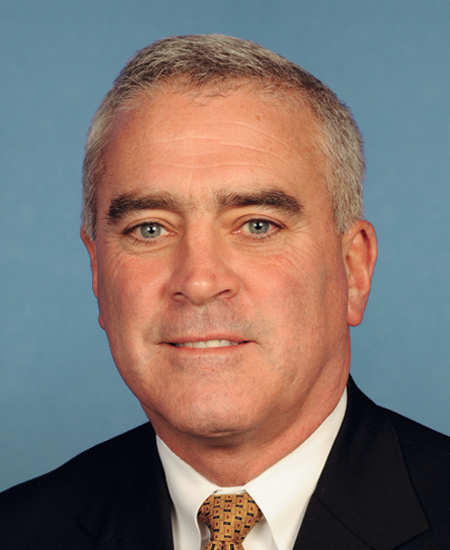
Rep. Brad R. Wenstrup
Sponsored bills
Maddy summaryHR 1622 prohibits federal agencies (like the Education Department and Treasury) from canceling student loans on a large scale, except for existing programs under the Higher Education Act of 1965. It blocks agencies from modifying loan terms, forgiveness, or repayment without explicit congressional approval, and repeals certain existing loan forgiveness provisions. The bill also prevents using tax data to administer unapproved student loan cancellation plans. This directly affects how federal agencies manage student debt relief and limits new forgiveness initiatives.
Maddy summaryHCONRES 28 is a symbolic resolution expressing Congress's view that tax-exempt fraternal benefit societies - organizations providing life, health, and accident benefits to members - have long delivered critical community support. It states these societies, with about 7 million members nationwide, generate significant annual value through charitable work and volunteer activities (estimated at over $3.8 billion yearly). The resolution affirms that their tax-exempt status under Section 501(c)(8) of the tax code is essential for sustaining their volunteer-driven model and relieving pressure on government safety programs. As a non-binding expression of congressional sentiment, it does not alter existing laws or create new obligations.
Maddy summaryH.J. Res. 30 seeks to block a Department of Labor rule that would have required retirement plan managers (like those handling 401(k)s) to follow strict "prudence and loyalty" standards when selecting investments and voting on company matters. The rule, published in December 2022, aimed to protect retirement savings by ensuring fiduciaries prioritize participants' interests. This resolution, if passed, would prevent the rule from taking effect, avoiding new compliance requirements for retirement plan managers and sponsors. It directly affects retirement plan administrators and the millions of participants in these plans.
This resolution supports the preservation of the stepped-up basis tax rule that allows recipients of inherited assets such as land, equipment, or buildings to adjust the cost basis of the assets to reflect their fair market value. The resolution opposes any efforts to impose new taxes on family farms or small businesses and recognizes the importance of generational transfers of farm and family-owned businesses.
Maddy summaryHR 1141, the Natural Gas Tax Repeal Act, repeals a specific provision (Section 136) of the Clean Air Act that established an incentive program for reducing methane emissions and waste in natural gas systems. This bill directly affects natural gas producers and operators who previously participated in or were subject to the methane emissions reduction program. The key mechanism is the removal of this incentive program, eliminating federal requirements and financial incentives related to methane waste reduction for the natural gas industry. The bill also rescinds unobligated funds allocated for this program. This is a policy change removing a regulatory incentive, not a tax repeal.
Maddy summaryThe BNA Fairness Act (HR 1732) changes federal tax rules to exclude the basic needs allowance from taxable income for active-duty military members. This specifically affects service members who receive the basic needs allowance under 37 U.S.C. §402b, making this benefit fully tax-free. The bill amends the Internal Revenue Code to add the allowance as a qualified military benefit under Section 134(b). The change applies to tax years beginning after the bill's enactment date, providing immediate tax relief for affected service members.
Maddy summaryHR 1680, the Black Sea Security Act of 2023, mandates the U.S. government to develop a coordinated strategy for security and economic engagement with Black Sea states (Turkey, Romania, Bulgaria, Moldova, Ukraine, and Georgia). The bill requires an interagency strategy within 180 days, focusing on enhancing security cooperation with NATO, bolstering economic ties, supporting democratic resilience, and improving regional connectivity. Key mechanisms include assessing military presence options, diversifying energy partnerships, countering economic coercion from Russia and China, and strengthening infrastructure through initiatives like the Three Seas Initiative. The strategy aims to deepen U.S. engagement without creating new funding or altering existing authorities for affected countries.
Maddy summaryThe PHIT Act of 2023 allows individuals and families to deduct certain fitness expenses as medical costs on their federal taxes. It covers gym memberships, fitness classes, and specific equipment used exclusively for exercise (like home workout gear), with a yearly limit of $1,000 ($2,000 for joint returns). Expenses for activities like golf, hunting, or non-exercise-focused facilities (e.g., private clubs) are excluded, and equipment must be used solely for physical activity. This directly affects taxpayers who pay for qualifying fitness programs, making these costs partially tax-deductible under revised IRS rules.
Maddy summaryHR 1388 authorizes the minting of commemorative coins to honor the 1865 Sultana steamboat disaster, the deadliest maritime tragedy in U.S. history. It specifies three coin types ($5 gold, $1 silver, and half-dollar) with defined weights and compositions, to be sold at face value plus surcharges ($35, $10, and $5 per coin, respectively). All surcharges collected will fund the Sultana Historical Preservation Society for museum development, including exhibits, artifact preservation, and facility construction. The coins are legal tender but intended for collectors, with sales limited to a one-year period starting January 2023.