

Maddy summaryHR 3855 establishes the National Digital Reserve Corps within the General Services Administration to recruit digital and cybersecurity professionals for temporary assignments to federal agencies. It requires participants to commit to a 3-year service term (minimum 30 days annually) with annual compensation capped at $10,000, while agencies receive support for needs like cybersecurity, data management, and digital project development. The program authorizes $30 million for implementation, mandates GSA to manage recruitment and assignments, and requires annual congressional reports tracking reservist numbers, agency requests, and assignment outcomes. Covered agencies include major departments like the U.S. Postal Service and the Executive Office of the President.
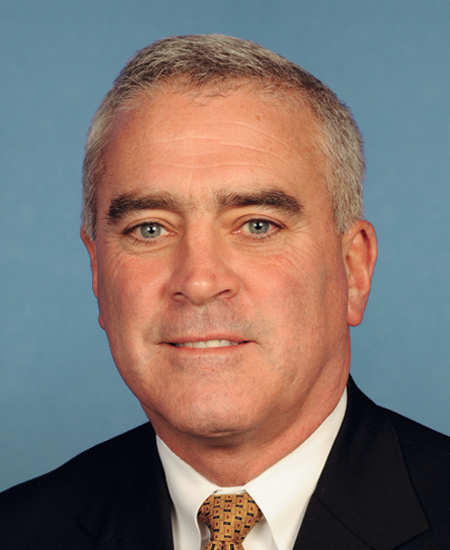
Rep. Brad R. Wenstrup
Sponsored bills
Maddy summaryHR 3808 extends the visa cap for Afghan allies from 38,500 to 58,500, covering Afghan nationals who worked with U.S. forces or international missions in Afghanistan (e.g., interpreters, translators) under the 2009 Afghan Allies Protection Act. It requires the State Department to create a strategy within 180 days to improve processing efficiency, including reviewing staffing, data collection, and appeal procedures for pending applications. The bill also adds provisions for reimbursing applicants' medical exam costs, allowing virtual interviews for visa applications, and ensuring denials include appeal options. These changes directly affect Afghan allies awaiting visas and aim to accelerate their resettlement in the U.S.
Retail Revitalization Act of 2023 This bill amends tax rules for real estate investment trusts (REITs). It increases (1) the share of equity investments a distressed retail tenant may receive from a REIT from 10% to 50%, and (2) the equity share for regular tenants from 10% to 30%. The bill also allows taxable REIT subsidiaries to accept equity in a retail tenant's businesses as a form of rent, subject to certain restrictions.
Maddy summaryHR 3678, the Pay Less at the Pump Act, terminates the Hazardous Substance Superfund financing rate effective January 1, 2023, and changes how advances from the Superfund are repaid. Specifically, it ends the requirement to apply a specific financing rate to the Superfund after 2022 and modifies repayment rules to require quarterly payments from unobligated funds until fully repaid. The bill directly affects the Superfund program and entities receiving advances from it, altering its financial structure. Note: The bill’s title is misleading - the legislation does not address fuel prices or gasoline costs at the pump. It focuses solely on Superfund financing terms, with effective dates specified in the text.
Maddy summaryThis bill requires the Treasury Secretary to report quarterly on foreign countries imposing "extraterritorial" or "discriminatory" taxes targeting U.S. businesses. It mandates progressively higher tax rates (starting at 5% and increasing to 20% over time) on income and payments from foreign individuals and corporations in those countries. The U.S. government can also restrict federal procurement from such entities and consider these taxes in trade negotiations. These measures directly affect foreign businesses operating in the U.S. or conducting transactions with U.S. entities. The policy aims to counter foreign tax policies that the U.S. views as unfair under international tax norms.
Stop Our Scourge Act of 2023 or the SOS Act of 2023 This bill directs the Department of Homeland Security to designate illicit fentanyl as a weapon of mass destruction and requires the Office of National Drug Control Policy to conduct an assessment regarding that substance. Specifically, the office must assess foreign manufacturing of illicit fentanyl, the tools and capabilities across federal agencies to address trafficking of that substance, the capabilities of the Mexican military to conduct counterdrug missions with respect to that substance, the capacities and willingness of China to take specified actions with respect to that substance, and illicit fentanyl being trafficked into the United States from Mexico.
Maddy summaryHR 3165, the Military Housing Transparency and Accountability Act, requires the military to create a new database tracking complaints about housing units occupied by service members and their families who do not own their housing. It mandates an annual report to Congress summarizing all complaints, categorized into specific types like mold or lead hazards (physiological), security issues (psychological), safety risks, and maintenance problems (timeliness and quality). This directly affects military members and their dependents living in government-provided housing. The bill aims to improve transparency by making complaint data publicly available and requiring the military to report on actions taken to resolve issues.
Maddy summaryThis bill requires that AM radio receivers be included as standard equipment in all new motor vehicles (such as cars and trucks) sold in the United States, with a rule to be issued by the Department of Transportation within one year. The rule must ensure AM radio is easily accessible on the dashboard and allows manufacturers to use digital AM radio technology instead of traditional AM. During the one-year period between the bill's enactment and the rule's effective date, manufacturers must clearly label vehicles without AM radio. The bill also directs a study to evaluate whether an alternative system could deliver emergency alerts as reliably as AM radio across the country, especially during crises.
Affordable Homeownership Access Act This bill exempts from certain mortgage licensing and registration requirements a person (other than a depository institution) who engages in owner financing. Owner financers (1) originate a limited number of residential mortgage loans in a year, and (2) only originate residential mortgages with respect to property owned by the owner financer.
National Law Enforcement Officers Remembrance, Support and Community Outreach Act This bill directs the Department of Justice (DOJ) to establish a National Law Enforcement Officers Remembrance, Support, and Community Outreach Program. The bill further directs DOJ to award a grant under the program to the National Law Enforcement Officers Memorial Fund for the expenses associated with community outreach, public education, and officer safety and wellness programs operated by the of the National Law Enforcement Officers Memorial Fund and National Law Enforcement Museum.