

Maddy summaryThis bill, the Veteran Care Improvement Act of 2023, establishes new standards for when veterans can receive care from private providers instead of the Department of Veterans Affairs (VA). It requires the VA to allow veterans to seek community care if they cannot get an in-person appointment within 30 days for primary care or 60 days for specialty care at a VA facility within a 30 or 60-minute drive, respectively. The legislation also mandates that the VA notify veterans of their eligibility for community care within two business days, provide information about telehealth options, and explain reasons for denied care requests along with appeal instructions. Additional provisions include requiring the VA to conduct outreach to inform veterans about community care options, mandate the use of value-based reimbursement models for community care, and establish a pilot program to improve care administration through scheduling improvements and provider incentives. The bill also extends the deadline for health care entities to submit claims under the prompt payment standard from 180 days to one year, and requires the VA Inspector General to assess VA medical center performance in implementing community care programs within three years of enactment.
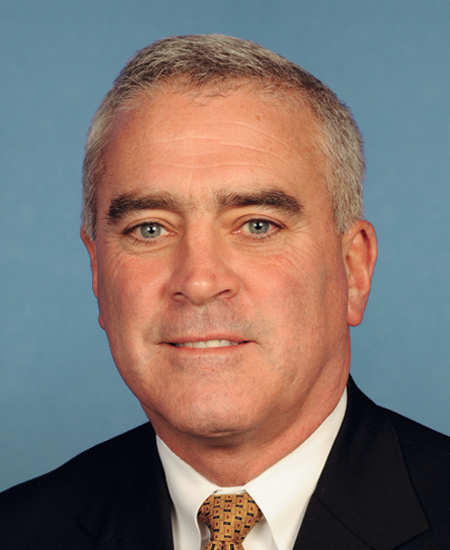
Rep. Brad R. Wenstrup
Sponsored bills
Maddy summaryHR 4690, the Gray Zone Defense Assessment Act, requires the U.S. government to assess and improve its capacity to counter "gray zone" state-led actions - such as disinformation, cyberattacks, or economic coercion - below the threshold of military conflict. The bill mandates two key reports: a presidential review within 180 days evaluating U.S. interagency capabilities to identify and respond to such campaigns, and a State Department report detailing its capacity to coordinate responses to adversaries like China, Russia, and Iran. These reports must include recommendations for better coordination, resources, and thresholds for action, with classified and unclassified summaries for Congress. The law aims to strengthen the U.S. government’s whole-of-government approach to countering gray zone tactics that challenge national interests without triggering direct military conflict.
Maddy summaryThe Afghan Adjustment Act creates a pathway for certain Afghans who directly supported U.S. missions in Afghanistan during the 20-year U.S. military presence to adjust to lawful permanent resident status (green card holders). It specifically targets Afghans who worked with U.S. forces or agencies, including military personnel, security personnel, and their families, who received "Chief of Mission approval" for special immigrant status. Key provisions include new vetting requirements (in-person interviews and biometric screening), exemption from immigration numerical limits, $20 million annually for implementation, and a task force to develop resettlement strategies. The bill also establishes a new category of special immigrant visas for at-risk Afghan allies and sets a two-year application deadline after guidance is published.
Maddy summaryHJRES 44 is a congressional resolution seeking to block a 2021 rule by the Bureau of Alcohol, Tobacco, Firearms, and Explosives (ATF). The rule classified firearms with stabilizing braces as "short-barreled rifles," which would have required additional licensing and regulation. This resolution uses a specific legal process (under Title 5, U.S. Code) to formally disapprove the ATF rule, meaning the rule would no longer be in effect. It directly affects firearm owners, manufacturers, and dealers who would have been subject to the rule’s requirements.
Maddy summaryHR 277 would require Congress to approve major federal regulations before they take effect. Major rules are defined as those with significant economic impact ($100 million+ annually), major cost increases for consumers or industries, or significant adverse effects on competition, employment, or innovation. Agencies must submit detailed information about these rules to Congress, including cost-benefit analyses, before they can take effect. Congress would have 70 session days to approve the rule with a joint resolution; if they don't act within that timeframe, the rule would not take effect. This would increase congressional oversight of federal regulations and require more detailed information about proposed rules before they become law.
Foreign Adversary Gain-of-Function Research Prevention Act of 2023 This bill prohibits the use of federal funds by foreign adversaries for gain-of-function research involving pathogens that could cause a pandemic. ( Gain-of-function research is defined as research that enhances the pathogenicity or transmissibility of a pathogen in mammals.) Specifically, the bill prohibits federal funds from being used to support gain-of-function research involving potential pandemic pathogens by China, Russia, Iran, North Korea, or any other designated foreign adversary. Entities that violate the bill's requirements may not receive any funds from the Department of Health and Human Services (HHS) for three years and, for the following three years, may not receive any additional HHS funds unless they agree to give advance notice about how they intend to use the funds.
Maddy summaryHRES 499 is a symbolic House resolution expressing support for designating June 12, 2023, as "Women Veterans Appreciation Day." It honors women veterans' service throughout U.S. military history, highlighting their current representation in the armed forces (17% active duty as of 2021) and their growing numbers in the veteran population. The resolution does not create new policies or funding but formally recognizes women veterans' contributions through a commemorative designation. This is a procedural resolution with no binding legal effect, solely serving to acknowledge their service.
Maddy summaryHR 3982, the Methane Reduction and Economic Growth Act, creates a new tax credit for businesses capturing methane from mining operations. It directly affects mining facilities that capture at least 2,500 metric tons of methane annually from underground, abandoned, surface mines, or related activities, requiring the methane to be used for energy (with minimal leaks) or injected into compliant pipelines. The credit replaces carbon capture provisions in the tax code, defining "qualified methane" as methane captured at the source and verified for use or storage. The credit applies to methane captured after December 31, 2022, for facilities beginning construction before January 1, 2033.
Maddy summaryThis bill raises the threshold for businesses to report payments to independent contractors and vendors from $600 to $5,000 annually. It directly affects small businesses and self-employed individuals who receive payments below the new $5,000 level, reducing their reporting burden. The bill also adds an inflation adjustment mechanism to keep the threshold updated annually, rounding increases to the nearest $100. These changes apply to payments made after December 31, 2023, under tax code sections governing Form 1099 reporting and backup withholding.
Maddy summaryThe Neighborhood Homes Investment Act creates a new tax credit for developers who rehabilitate or build affordable homes in distressed communities. The credit is calculated based on the difference between rehabilitation costs and the sale price, with homes required to be sold at affordable prices to qualified homeowners with incomes up to 140% of the local median family income. The bill targets specific "qualified census tracts" defined by high poverty rates, low homeownership, and below-average home values. Developers must ensure homes are sold to qualified homeowners who use them as primary residences for at least five years, with additional safeguards to prevent program abuse and ensure fair housing practices.