

This resolution condemns Iran for the 1988 massacre of political prisoners. It also urges the Biden Administration and U.S. allies to publicly condemn the massacre and to pressure Iran to provide information to the families of the victims.
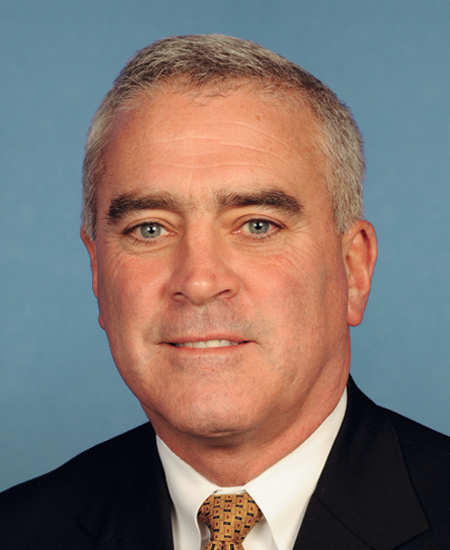
Rep. Brad R. Wenstrup
Sponsored bills
Maddy summaryThis bill would expand employee ownership opportunities by making it easier for S corporations to adopt Employee Stock Ownership Plans (ESOPs). It extends tax deferral benefits for selling company stock to ESOPs, establishes a Treasury Department office to provide technical assistance for ESOP adoption, and amends small business laws to ensure ESOP-owned businesses remain eligible for small business programs. The bill also creates a new "Advocate for Employee Ownership" position within the Department of Labor to promote employee ownership and assist with related issues. These changes would directly affect S corporations considering or already using ESOPs, as well as employees who would become partial owners of their companies through these plans.
Maddy summaryThis bill expands employee ownership in S corporations by extending tax deferral for selling company stock to employee ownership plans (ESOPs), creating a Treasury Department office to provide education and technical assistance for ESOPs, and amending small business rules to maintain eligibility for government programs after ESOP ownership exceeds 49%. It establishes a new Labor Department "Advocate for Employee Ownership" to coordinate federal efforts, educate stakeholders, and recommend policy improvements. The bill directly affects S corporations using ESOPs, their employees who become owners, and small businesses that might lose government program access due to ESOP acquisitions. Key provisions include tax incentive extensions, new support offices, and updated small business classification rules.
Maddy summaryThis bill authorizes the U.S. President to sell up to two nuclear-powered attack submarines (Virginia-class) from the U.S. Navy inventory to Australia over a 15-year period to support the AUKUS security partnership. It requires Australia to cover all costs, including repairs performed at U.S. shipyards, and mandates detailed certifications to Congress on national security impacts, U.S. industrial capacity, and Australia's ability to operate the submarines. The bill also requires annual reports for 15 years on submarine transfers, defense service exports, and production schedules. This directly affects Australia's naval capabilities and U.S.-Australia defense cooperation under the AUKUS framework.
Maddy summaryThis bill directs the U.S. Treasury to mint commemorative coins marking the Marine Corps' 250th anniversary in 2025. It authorizes three coin types: $5 gold coins (max 50,000), $1 silver coins (max 400,000), and half-dollar coins (max 750,000), with surcharges of $35, $10, and $5 respectively. The surcharge proceeds will fund the Marine Corps Heritage Center's educational programs, with no net cost to taxpayers as the Treasury must recover all minting costs through the surcharges. The coins can only be issued during 2025, and the Treasury must ensure all costs are covered before distributing funds to the Heritage Foundation.
Strategy To Oppose Purposeful CCP Aggression at the United Nations Act of 2023 or the STOP CCP at UN Act of 2023 This bill requires actions to address efforts by China to expand its influence on the United Nations. Specifically, the bill requires the Department of State to establish the Office of Multilateral Strategy, which must implement a strategy to counter China at the United Nations. The office must report on its work to Congress. The State Department must also increase the number of U.S.-sponsored junior professional officers at the United Nations to match or exceed the number of such officers sponsored by China. Furthermore, the State Department and the U.S. Permanent Representative to the United Nations must report to Congress annually about China's actions to expand its influence on the United Nations, including through coercion, intimidation, and other illegitimate means.
Publish Overdose and Suicide Tracking For American Safety Today Act of 2023 or the POST FAST Act of 2023 This bill requires the Centers for Disease Control and Prevention to publish data about suicides and drug overdoses in the United States for a given month within 60 days of the end of that month.
Maddy summaryHR 592 requires the Department of Veterans Affairs (VA) to obtain specific certifications before expanding or continuing its electronic health record system at VA facilities. For existing facilities, the VA must certify the system achieves 99.9% monthly uptime for four consecutive months and completes all pre-enactment system improvements. For new facility implementations, the VA must certify the system build is accurate, staff/infrastructure are ready, and implementation won’t harm patient safety, wait times, or care quality. This bill directly affects VA hospitals and the Veterans Health Administration by setting concrete technical and operational requirements before system changes can proceed.
Maddy summaryHR 4709, the U.S.-Israel Anti-Killer Drone Act of 2023, amends a reporting requirement in the National Defense Authorization Act to enhance U.S.-Israel cooperation on countering Iranian drone threats. The bill requires the Secretary of Defense to submit a report within 180 days detailing the status of joint efforts to develop and deploy counter-drone technologies, including assessments of current capabilities and proposed policy changes. It also increases funding for this cooperation from $40 million to $55 million annually. The bill directly affects U.S. and Israeli military operations by mandating formal coordination to address Iran’s growing arsenal of armed drones, which have been used against U.S. allies like Israel and Saudi Arabia. This is a procedural bill focused on improving existing coordination, not on new weapons or sanctions.
Maddy summaryHR 4721, the Main Street Tax Certainty Act, makes a permanent the 20% tax deduction for eligible small business owners under Section 199A of the tax code. This provision directly affects pass-through business owners (like S-corps, partnerships, and sole proprietorships) who qualify for the deduction. The bill achieves this by removing the temporary expiration language (subsection (i)) from the existing tax code provision. The key change is ending the need for annual congressional extensions of this deduction, providing long-term tax certainty for small businesses.