

Maddy summaryThis bill creates a National Counterterrorism and Counternarcotics Center within the intelligence community to coordinate efforts against transnational criminal organizations, particularly those involved in illicit fentanyl trafficking. It requires the intelligence community to prioritize disrupting fentanyl trafficking in its planning, mandates annual briefings to Congress on these efforts, and adds new criminal penalties for providing material support for fentanyl production and distribution. The bill also expands definitions of "material support" and "covered synthetic drugs" to better address fentanyl and new psychoactive substances. The law directly affects the intelligence community, federal law enforcement agencies, and international partners working to disrupt transnational criminal networks.
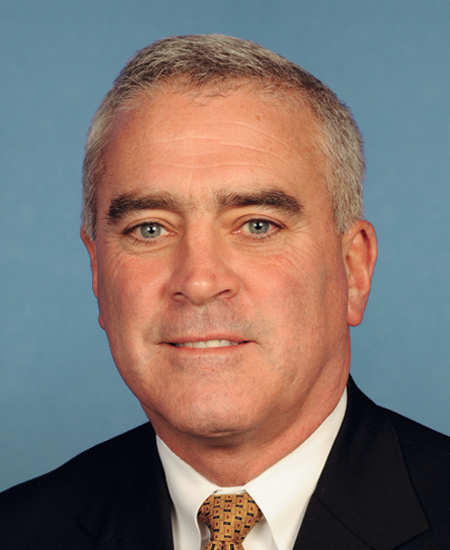
Rep. Brad R. Wenstrup
Sponsored bills
Maddy summaryHJRES 166 is a joint resolution seeking congressional disapproval of a Department of Labor rule that would have changed overtime exemption standards for certain salaried workers. The rule, published in April 2024, aimed to redefine how executive, administrative, professional, outside sales, and computer employees are classified for overtime pay under federal law. If enacted, this resolution would block the rule from taking effect, preserving the existing classification system for these workers.
Maddy summaryThe S Corporation Modernization Act of 2024 modernizes key rules for S corporations. It increases the passive investment income limit from 25% to 60%, allowing more flexibility for S corporations that might otherwise lose their status. The bill also permits nonresident aliens to be S corporation shareholders with new tax treatment rules, allows IRAs to own S corporation stock, and creates a deduction for shareholders inheriting S corporation stock that can be amortized over 15 years. These changes aim to make S corporation rules more adaptable to current business practices and ownership structures.
Maddy summaryHR 192 prohibits noncitizens from voting in all District of Columbia elections, including for public office and ballot initiatives. It directly affects noncitizen residents of Washington D.C. who currently have voting rights under the repealed Local Resident Voting Rights Amendment Act of 2022. The bill's key mechanism is repealing that 2022 amendment, restoring the requirement that only U.S. citizens may vote in DC elections. This changes the voting eligibility rules for noncitizens living in the District. The law would take effect upon enactment, removing noncitizens from the voter rolls for all local elections.
Maddy summaryHR 5403, the CBDC Anti-Surveillance State Act, prohibits the Federal Reserve from issuing or facilitating central bank digital currency (CBDC) directly or indirectly to individuals through financial institutions. It specifically bans Federal Reserve banks from offering digital products to individuals, maintaining individual accounts, or using CBDC for monetary policy implementation. The bill also clarifies that its restrictions do not apply to existing physical cash or private, permissionless digital payment systems. This bill directly affects the Federal Reserve's ability to develop or deploy a government-run digital dollar. The law aims to prevent the Federal Reserve from creating a digital currency that could enable transaction tracking or government oversight of personal financial activity.
Maddy summaryHCONRES 109 is a non-binding congressional resolution expressing that assisted suicide (sometimes called "death with dignity") poses risks to vulnerable people, including the elderly, disabled, and those with depression. It highlights flaws in state laws allowing assisted suicide, such as lack of mandatory psychological screening, no safeguards against coercion, and insufficient oversight of lethal medication use. The resolution urges the federal government to prioritize expanding access to palliative and hospice care instead of endorsing policies that facilitate assisted suicide. It does not change any laws but affirms Congress’s stance on supporting comprehensive end-of-life care options.
Maddy summaryHJRES 152 is a congressional resolution seeking to block an Environmental Protection Agency (EPA) rule on managing coal ash waste from power plants, specifically for older disposal ponds (legacy CCR surface impoundments). The rule, published on May 8, 2024, established requirements for electric utilities to handle coal ash, including safety standards for existing disposal sites. If passed, this resolution would prevent the EPA rule from taking effect, removing the compliance requirements for utilities. This directly affects electric utilities that manage coal ash and the EPA's regulatory authority over waste disposal practices.
Maddy summaryThis bill requires five specific U.S. intelligence agencies (CIA, DIA, FBI, NSA, and ODNI) to submit detailed reports to Congress by June 30, 2025, about how they address biotechnology threats. Each report must describe gaps in their intelligence work, explain how they share threat information with federal agencies, foreign governments, and private industry/academia, and assess their consultation with outside biotechnology experts. The law directly affects these intelligence agencies and Congress, mandating transparency about their biotechnology threat assessment capabilities. It does not create new programs or funding but establishes a reporting mechanism to identify weaknesses and improve information sharing. The focus is on documenting current practices, not prescribing new policies.
Maddy summaryThis resolution (HRES 616) condemns the Taliban's ongoing human rights abuses in Afghanistan, specifically targeting women, girls, religious minorities (including Hazaras and Sikhs), and ethnic groups. It expresses support for Afghans who assisted U.S. missions and calls for the U.S. government to halt Taliban violence and address systemic repression. Key mechanisms include urging the State Department to assess potential crimes against humanity, developing strategies to support human rights defenders, and expediting refugee processing for Afghans with Special Immigrant Visas. The resolution does not impose new legal requirements but formalizes congressional stance and policy guidance. It directly affects U.S. foreign policy implementation toward Afghanistan.
Maddy summaryThe Awning Safety Act of 2023 requires the Consumer Product Safety Commission (CPSC) to create new safety standards for fixed and freestanding retractable awnings within 18 months of the bill's enactment. These standards aim to prevent deaths or serious injuries caused by awnings unexpectedly opening - particularly while users remove bungee tie-downs for the cover. The law directs the CPSC to define which awning types fall under the rule and treats the resulting standard as a formal safety rule under existing consumer product safety laws. This directly affects awning manufacturers, retailers, and consumers who use these products, focusing on a specific operational hazard during maintenance.