

Steel Upgrading Partnerships and Emissions Reduction Act or the SUPER Act of 2021 This bill requires the Department of Energy (DOE) to establish programs to reduce greenhouse gas emissions from the production of iron, steel, and steel mill products. Specifically, DOE must establish a program of research, development, demonstration, and commercial application of advanced tools, technologies, and methods for low-emissions steel manufacturing. DOE, in collaboration with industry partners, institutions of higher education, and DOE's national laboratories, must also support an initiative for the demonstration of low-emissions steel manufacturing.
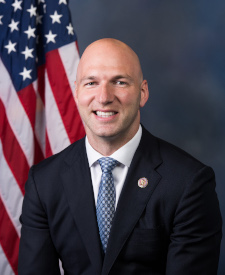
Rep. Anthony Gonzalez
Sponsored bills
Accelerating Access to Critical Therapies for ALS Act This bill establishes grant programs to address neurodegenerative diseases, such as amyotrophic lateral sclerosis (also known as ALS or Lou Gehrig's disease), and contains other related provisions. The Department of Health and Human Services (HHS) shall award grants to eligible entities for scientific research utilizing data from expanded access to investigational ALS treatments for individuals who are not otherwise eligible for clinical trials. The Food and Drug Administration (FDA) shall award grants to public and private entities to cover the costs of research and development of drugs that diagnose or treat ALS and other rare neurodegenerative diseases. HHS shall also establish the Public-Private Partnership for Neurodegenerative Diseases between the National Institutes of Health, the FDA, and at least one eligible entity (generally, an institution of higher education or a nonprofit organization). The partnership shall support the development and regulatory review of drugs that address ALS and other rare neurodegenerative diseases. The FDA shall publish on its website a five-year action plan for fostering the development of drugs that improve or extend the lives of people living with rare neurodegenerative diseases. The Government Accountability Office must report to Congress about the grants provided under this bill, including an analysis of the impact of such grants on research and development of treatments for ALS.
This bill posthumously provides for the award of a Congressional Gold Medal in commemoration of the 13 service members who died on August 26, 2021, while stationed at Hamid Karzai International Airport in Afghanistan.
FDIC Board Accountability Act This bill revises provisions related to the board of directors of the Federal Deposit Insurance Corporation. Specifically, the bill removes the director of the Consumer Financial Protection Bureau from the board as a voting member and requires the appointment of an individual with demonstrated primary experience working in or supervising small depository institutions. Further, the bill limits the term length of a board member to twelve years.
Stillbirth Health Improvement and Education for Autumn Act of 2021 or the SHINE for Autumn Act of 2021 This bill authorizes grants and establishes other programs to improve data collection on stillbirths. Specifically, the Department of Health and Human Services (HHS) may award grants for surveillance and data collection on stillbirths, and HHS must issue guidelines for health departments and vital statistics units concerning the collection of stillbirth data. HHS must also develop educational awareness materials about stillbirths and make them publicly available. Furthermore, HHS must implement a fellowship program to provide training in perinatal autopsy pathology and otherwise support research on stillbirths and fetal autopsies. The bill also requires HHS to issue a report with educational guidelines on stillbirths and stillbirth risk factors.
Ocean Shipping Reform Act of 2021 This bill revises provisions related to ocean shipping policies and is designed to support the growth and development of U.S. exports and promote reciprocal trade in the common carriage of goods by water in the foreign commerce of the United States. Among other provisions, the bill sets forth requirements for operating a shipping exchange involving ocean transportation in the foreign commerce of the United States; requires ocean common carriers to report to the Federal Maritime Commission (FMC) each calendar quarter on total import and export tonnage and the total loaded and empty 20-foot equivalent units per vessel that makes port in the United States; requires the FMC to publish and annually update all its findings of false certifications by ocean common carriers or marine terminal operators and all penalties assessed against such carriers or operators; revises annual reporting requirements for the FMC on foreign laws and practices to include practices by ocean common carriers; prohibits ocean common carriers and marine terminal operators from retaliating or discriminating against shippers because such shippers have patronized another carrier, or filed a complaint; directs the FMC to establish rules prohibiting ocean common carriers and marine terminal operators from adopting and applying unjust and unreasonable demurrage and detention fees; authorizes the FMC to initiate investigations of an ocean common carrier's fees or charges and apply enforcement measures, as appropriate; directs the Department of Transportation to seek to enter into an agreement with the National Academy of Sciences to study the U.S. supply chain industry, including data constraints that impede the flow of maritime cargo and add to supply chain inefficiencies; and provides authority for the FMC to issue an emergency order requiring ocean common carriers or marine terminal operators to share directly with relevant shippers, rail carriers, or motor carriers information relating to cargo throughput and availability.
This resolution states that the Chinese government is responsible for ongoing abuses against the Uyghurs and other ethnic and religious minority groups and that these abuses constitute genocide and crimes against humanity. The resolution also condemns such genocide and crimes against humanity and calls on the President to take certain actions to put an end to these atrocities.
Accelerating Nuclear Innovation through Fee Reform Act This bill prohibits the Nuclear Regulatory Commission from charging fees to review applications for advanced nuclear reactor licenses.
Employee Retention Tax Credit Reinstatement Act This bill provides for a reinstatement of the employee retention tax credit through 2021. The credit was established to compensate employers whose businesses were negatively impacted by the COVID-19 pandemic for wages paid to their employees.
Disclosing All Spending That Ensures Relief Act or the DISASTER Act This bill requires federal agencies to track and disclose on a centralized website certain data on funding, outlays, and financial damages relating to disasters and emergencies.