

The COVID-19 Hospital and Health Provider Loan Conversion Act of 2021 This bill establishes and otherwise modifies requirements for the Medicare Accelerated and Advance Payment Program during the public health emergency relating to COVID-19 (i.e., coronavirus disease 2019). The program provides Medicare payments in advance to eligible providers experiencing claims or cash flow disruptions, such as during national emergencies; the program was specifically expanded in response to COVID-19 to encompass more types of providers, subject to certain recoupment and repayment provisions. The bill requires the Centers for Medicare & Medicaid Services to waive recoupment and repayment for providers who meet specified requirements. Among other criteria, providers must not have engaged in surprise billing practices with respect to COVID-19 patients. Providers must still repay any amounts not used for COVID-19 expenses; the bill caps the interest rate on such repayments at 2% upon a demonstration of hardship. The bill also requires private health insurers to treat out-of-network COVID-19 services as in-network for purposes of payment and cost-sharing.
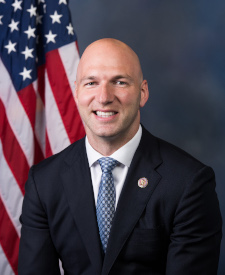
Rep. Anthony Gonzalez
Sponsored bills
Concealed Carry Reciprocity Act This bill establishes a federal statutory framework to regulate the carry or possession of concealed firearms across state lines. Specifically, an individual who is eligible to carry a concealed firearm in one state may carry or possess a concealed handgun (other than a machine gun or destructive device) in another state that allows its residents to carry concealed firearms. It sets forth requirements for the lawful concealed carry across state lines. The bill preempts most state and local laws related to concealed carry and establishes a private right of action for a person adversely affected by interference with a concealed-carry right established by this bill.
Main Street Tax Certainty Act This bill makes permanent the tax deduction for qualified business income. (Under current law, the deduction expires after December 31, 2025.) Qualified business income is defined as the net amount of qualified items of income, gain, deduction and loss with respect to any trade or business, excluding capital gains or losses, dividends, interest income, or income earned outside the U.S.
New Markets Tax Credit Extension Act of 2021 This bill makes the new markets tax credit permanent. It also modifies the credit to (1) provide for an inflation adjustment to the limitation amount for the credit after 2021, and (2) allow an offset against the alternative minimum tax for the credit (determined with respect to qualified equity investments initially made after 2020).
Living Donor Protection Act of 2021 This bill prohibits certain insurance carriers from discriminating against, and provides other protections for, living organ donors. Specifically, carriers may not deny, cancel, or otherwise impose conditions on policies for life insurance, disability insurance, or long-term care insurance based on an individual's status as a living organ donor. The bill also expressly specifies that recovery from organ-donation surgery constitutes a serious health condition that entitles eligible employees to job-protected medical leave. In addition, the Department of Health and Human Services must update educational materials on live organ donation to include information about the benefits of live organ donation and about access to insurance for living organ donors.
Food Allergy Safety, Treatment, Education, and Research Act of 2021 or the FASTER Act of 2021 This bill expands the definition of major food allergen for purposes of certain food-labeling requirements to specifically include sesame. In addition, the Department of Health and Human Services must report on certain information related to food allergy research and data collection activities.
Prostate-Specific Antigen Screening for High-risk Insured Men Act or the PSA Screening for HIM Act This bill requires private health insurance plans to cover preventive prostate cancer screenings that are not already covered under the recommendations of the U.S. Preventive Services Task Force for men with a family history of prostate cancer, without imposing any cost-sharing requirement.
Accelerating Carbon Capture and Extending Secure Storage through 45Q Act or the ACCESS 45Q Act This bill extends the tax credit for carbon oxide sequestration through 2035 and allows taxpayers an election to receive payments in lieu of the credit. The bill also permits an allowance of the carbon oxide tax credit against the base erosion minimum tax. The base erosion minimum tax is a tax on large corporation that is calculated after adding back to taxable income certain deductible payments made to related foreign persons.
This resolution urges the U.S. Postal Service to take steps to ensure the continuation of its six-day mail delivery service.
Chinese Research Funds Accounting Act This bill directs the Government Accountability Office (GAO) to conduct a study on federal funding made available to entities located in China or majority owned or controlled by the Chinese Communist Party for research in the five years prior to enactment of this bill. Not later than 120 days after the enactment of this bill, the GAO shall brief Congress on the data that is available with respect to federal funding made available to such entities for research.