

Maddy summaryHR 1002, the "Saving the Civil Service Act," restricts how federal government positions can be moved between competitive hiring (where most federal jobs are filled through merit-based exams) and non-competitive "excepted service" positions. The bill prevents agencies from moving positions out of the competitive service unless they fit specific schedules in place as of September 2020, requires Office of Personnel Management (OPM) approval for certain transfers, and mandates employee consent for any position transfer between service types. It also limits the number of employees that can be moved from competitive to excepted service during a presidential term - capping it at 1% of an agency's workforce or five employees, whichever is greater. The bill directly affects federal employees and agencies by making it harder to shift positions out of the competitive hiring system without strict oversight.
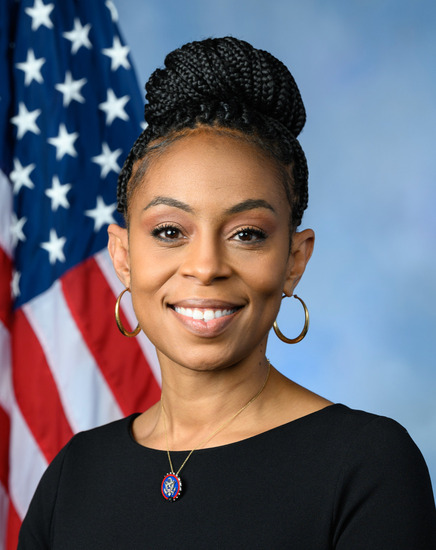
Rep. Shontel M. Brown
Sponsored bills
One Stop Shop Community Reentry Program Act of 2023 This bill authorizes grants to support community-based reentry resources for previously incarcerated individuals who return to their communities. First, the bill authorizes the Department of Justice (DOJ) to make grants for community-based nonprofit organizations to create community reentry centers. Second, the bill authorizes DOJ to make grants for states, Indian tribes, and local governments to operate reentry services assistance hotlines.
Maddy summaryHR 782 prohibits state officials from interfering with abortion services provided across state lines. It specifically blocks states from restricting: (1) out-of-state patients traveling for legal abortions, (2) providers offering such services, (3) assistance for travel or care, or (4) the interstate shipment of FDA-approved abortion drugs. The bill allows the federal Attorney General or affected individuals to sue violators for injunctions, damages, and attorney fees. It directly affects patients seeking care in other states, healthcare providers, transportation services, and pharmacies handling FDA-approved abortion medications. The law focuses on preventing state laws from blocking access to legally permitted abortion services.
Maddy summaryHR 927, the Supreme Court Ethics Act, establishes new ethics rules and oversight for Supreme Court justices. It requires the Judicial Conference to create a binding code of conduct within one year and mandates the appointment of an Ethics Investigations Counsel to receive public complaints, investigate potential violations, and issue annual public reports. The bill also requires justices to publicly disclose their reasons for recusing themselves or denying recusal motions in cases. These provisions directly affect Supreme Court justices by creating a formal process for handling ethics concerns and increasing transparency around their conduct.
Maddy summaryThe Child Care for Every Community Act establishes a federal program to provide universal, high-quality child care and early learning services for all young children not yet required to attend school. It provides 90% federal funding for most programs (100% for migrant/seasonal farmworkers and Native American children) with a sliding fee scale based on family income (maximum 7% of income). The bill requires states, tribes, and localities to develop comprehensive plans ensuring services are accessible, culturally appropriate, and meet national quality standards. It specifically focuses on serving low-income children, children with disabilities, dual language learners, homeless children, and children in foster care. The program emphasizes coordination with schools and other community services to support children's development and school readiness.
Maddy summaryHR 926 would require the Supreme Court to establish a code of conduct for justices within 180 days of enactment, along with procedures for handling ethics complaints against them. The bill mandates minimum disclosure standards for gifts, income, and reimbursements received by justices and their law clerks, and requires justices to recuse themselves when they or their family received gifts from parties in a case. It would also require parties and amici curiae to disclose gifts given to justices and lobbying contacts related to justices' nominations, and establish a judicial investigation panel to review complaints against justices. The legislation aims to increase transparency in Supreme Court ethics processes and provide clearer recusal standards for justices.
Maddy summaryThis bill makes significant changes to US corporate tax rules to prevent tax avoidance through foreign operations. It requires corporations to calculate foreign income tax liabilities country-by-country, limits interest deductions for large international financial reporting groups, and modifies rules for "inverted corporations" (where US companies move tax residence abroad). The bill also creates new rules treating foreign corporations managed primarily in the US as domestic corporations for tax purposes. These changes aim to close tax loopholes related to outsourcing and foreign tax planning.
Maddy summaryHR 882, the American Teacher Act, requires states to ensure full-time teachers in public elementary and secondary schools earn at least $60,000 annually (adjusted for inflation), with part-time teachers receiving proportional pay. It provides federal grants to states to fund these salary increases, mandating sustainability plans beyond the 4-year grant period and prioritizing schools in high-poverty areas. The bill also includes cost-of-living adjustments tied to the Consumer Price Index and funds a national campaign to promote teaching as a career. It explicitly states grant funds must supplement existing education budgets without reducing current teacher pay or state loan forgiveness programs.
Federal Police Camera and Accountability Act This bill establishes requirements for federal law enforcement officers to wear body cameras and for federal law enforcement agencies to install video cameras in patrol cars.
This resolution states that the House of Representatives (1) rejects hate, discrimination, and antisemitism; (2) stands united with the Jewish people against rising antisemitism; and (3) condemns antisemitic tropes such as claims of dual loyalty.