

Maddy summaryThis bill restores access to VA housing loans and educational benefits for Black World War II veterans who were denied GI Bill benefits due to racial discrimination, as well as for their living spouses, children, grandchildren, or direct descendants. It defines eligibility by requiring applicants to certify that their veteran relative was denied GI Bill benefits on racial grounds, with a five-year application window starting from the bill's enactment date. The VA must process these applications within 90 days and report to Congress on the number of recipients and total benefit value within one year. This addresses historical discrimination by creating new pathways to benefits for affected individuals and their families.
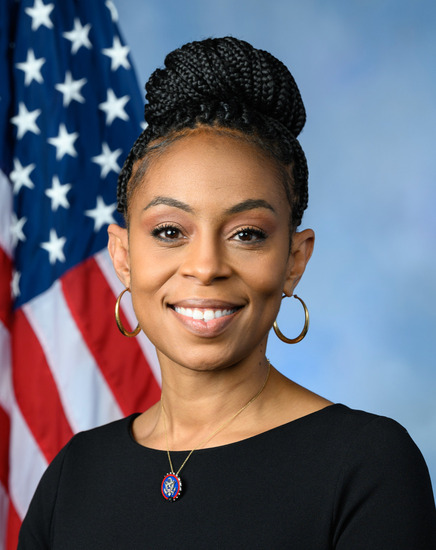
Rep. Shontel M. Brown
Sponsored bills
Maddy summaryHR 1723, the Abortion is Health Care Everywhere Act of 2023, amends the Foreign Assistance Act to remove restrictions on using U.S. foreign aid funds for abortion services. It explicitly allows U.S. foreign assistance programs to fund comprehensive reproductive health care, including abortion services, training, and equipment. This change directly affects U.S. international health programs and recipient countries, enabling them to integrate safe abortion care into broader reproductive health services. The bill aims to align U.S. policy with global health guidelines by making abortion services a standard part of reproductive health care funded through foreign assistance.
Maddy summaryHR 1619 requires schools participating in the National School Lunch Program to provide fluid milk substitutes (like soy or almond milk) upon request by a student or their parent/guardian. The bill removes the previous requirement that substitutions needed a medical authority's written statement for most dietary needs, instead allowing requests based on the student's or parent's request alone. It aligns the definition of acceptable substitutes with current Dietary Guidelines for Americans. This change directly affects students with dietary restrictions, making it simpler for schools to accommodate their needs without extra medical documentation.
Maddy summaryHR 1520 reauthorizes the Energy Efficiency and Conservation Block Grant Program through 2028 with $3.5 billion annually. It expands eligible uses to include infrastructure for alternative fuels (like hydrogen or electric vehicle charging) and projects that diversify energy supplies. State and local governments would receive grants for initiatives such as district heating systems, distributed energy resources, or fuel delivery infrastructure. The bill explicitly allows funding for projects that expand alternative fuel access, building on the 2007 Energy Independence Act framework. This represents a concrete policy update to modernize program eligibility and funding levels.
Maddy summaryThis bill (HR 1444) amends the Superfund law to require the EPA to consider climate change impacts when planning cleanups at contaminated sites. It adds new language requiring the EPA to assess how climate-related disasters - like floods or storms - might affect cleanup sites, including projected changes due to climate change. The EPA must now evaluate whether existing cleanup plans remain protective as climate conditions evolve. This applies directly to all current and future Superfund site remediation efforts managed by the EPA.
Maddy summaryHRES 231 requires all House Members, Delegates, Resident Commissioners, officers, and employees to complete annual medical emergency preparedness training. The training, provided by the Office of the Attending Physician, must cover cardiopulmonary resuscitation (CPR) and automated external defibrillator (AED) use. New staff must complete the training within 90 days of starting their position, and all staff must renew it annually. Certification of completion will be issued by the Office of the Attending Physician, and the rule takes effect 90 days after the resolution is adopted.
Maddy summaryHR 1595 establishes a federal grant program to help states improve their licensing systems for firearms dealers. It authorizes annual competitive grants (up to $2.5 million per state per year) for states to develop, implement, or evaluate their dealer licensing programs, provided they already meet minimum standards like requiring 3-year licenses, conducting inspections, and imposing penalties for violations. States receiving grants must report annually on inspections, violations, license status, and other metrics, with the Attorney General also submitting annual reports to Congress. This bill directly affects state governments that operate firearms dealer licensing programs, providing funding to strengthen oversight without changing existing state laws.
Maddy summaryThis bill authorizes a Congressional Gold Medal to honor the "Hello Girls" - female telephone operators who served in the Army Signal Corps during World War I. They provided critical battlefield communications in France (connecting 26 million calls), wore military uniforms, and faced combat risks, but were denied veteran benefits for 60 years due to being classified as civilian contractors. The medal recognizes their pioneering service, devotion, and the decades-long struggle to gain military recognition. The award follows similar recognition for other WWII women veterans and aims to correct the historical injustice they faced.
Maddy summaryHRES 219 is a symbolic resolution (not a binding bill) expressing the House’s support for inclusive public schools. It urges schools to adopt historically accurate, diverse educational materials that reflect the nation’s diversity, foster parent-educator partnerships, and eliminate discrimination based on race, disability, LGBTQ+ identity, or other factors. The resolution emphasizes creating safe, well-rounded learning environments that prepare all students for success while protecting students’ civil rights. It directly affects public school districts, educators, families, and students by encouraging practices that promote equity and inclusion.
Maddy summaryHRES 185 is a non-binding House resolution declaring racism a public health crisis in the United States. It directly affects communities of color - including Black, Latino, Native American, and Asian American populations - who experience significant health disparities like higher infant mortality rates, shorter life expectancy, and worse outcomes for conditions like heart disease and diabetes. The resolution cites evidence showing racism meets all four public health crisis criteria (widespread impact, unfair distribution, preventable, and lacking current solutions) and calls for a nationwide strategy to dismantle systemic racism and address its health impacts. It does not create new laws or funding but urges federal agencies to prioritize racial equity in health policy.