

Voters on the Move Registration Act of 2023 This bill requires the Consumer Financial Protection Bureau to develop, and specified agencies to distribute, a statement providing individuals with information on how to register to vote and their voting rights. This information must be provided to individuals upon their participation in certain rental assistance programs or application for certain residential mortgages.
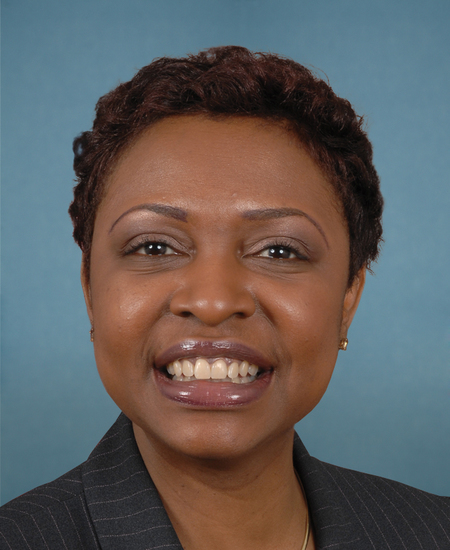
Rep. Yvette D. Clarke
Sponsored bills
Maddy summaryThe People Over Long Lines Act (POLL Act) requires states to develop public plans ensuring voting wait times don't exceed 30 minutes at polling places for federal elections, particularly addressing documented disparities where voters in communities of color wait significantly longer than others. It establishes standards for minimum voting systems, poll workers, and resources based on factors like population demographics, voter turnout, and needs of disabled or limited English proficiency voters. The bill provides $500 million annually in federal funding to help states implement these changes, creates a private right of action allowing voters to sue states for violations with penalties including $50 per hour of wait time, and mandates remedial plans for states with excessive wait times. The law applies to federal elections starting in 2025, with states required to comply by January 1, 2025.
Maddy summaryHR 5293, the Youth Voting Rights Act, would improve voting access for young people aged 18-29 through several concrete changes. The bill requires public colleges and universities to serve as voter registration agencies, establishes pre-registration for 16-year-olds, mandates on-campus polling locations for all institutions of higher education, and prohibits age-based restrictions on voting by mail. It also requires states to accept student ID cards as valid voter identification and provides grants to states for youth voter engagement programs. The bill would collect data on voting trends by age to help identify barriers to youth participation. These changes aim to address systemic barriers that have led to lower youth voter turnout and higher ballot rejection rates among young voters.
Maddy summaryThe Sustaining Our Democracy Act creates a federal program to provide states with annual funding to improve election administration and increase voting access. It allocates $2 billion each year from 2024-2033 through the State Election Assistance and Innovation Trust Fund to support activities like upgrading voting equipment, training election workers, and expanding voting access for underserved communities, people with disabilities, and voters on Indian lands. States must submit detailed plans for using funds, which cannot be used for activities that restrict voting access or target election officials. The Act establishes an Office of Democracy Advancement and Innovation to administer the program, monitor fund usage, and oversee compliance with its requirements.
Maddy summaryThe Unhoused Voter Opportunity Through Elections Act (HR 5294) protects voting rights for people experiencing homelessness by prohibiting states from denying voting access based on living in a "nontraditional abode" like shelters, public spaces, or locations where someone is considered homeless under federal law. Key provisions require election officials to make ballot drop boxes accessible to unhoused individuals, accept written attestations of residence instead of traditional proof, allow homeless shelters to be used as voting addresses, and mandate outreach to shelters about registration deadlines and election dates. The bill also creates a grant program to fund mobile voting centers and direct outreach services specifically for unhoused individuals. These changes would directly affect homeless individuals and election officials across all states, implementing concrete policy changes to improve voting access for a population often excluded from the electoral process.
Maddy summaryHR 5295, the Expanding the VOTE Act, modifies Section 203 of the Voting Rights Act to expand language access for voters. It requires states and localities to provide voting materials (including ballots and instructions) in the language of covered language minority groups, with new provisions for American Indian and Alaska Native languages requiring tribal government consultation for unwritten languages. The bill creates $15 million in grants to help jurisdictions provide voting materials in languages that don’t currently trigger Section 203 coverage, while mandating continued provision for those groups in future elections. It also directs a study to evaluate lowering population thresholds for language protections and expanding the definition of covered languages.
Maddy summaryThe Housing for All Act of 2023 allocates significant federal funding to address housing shortages and homelessness, with key provisions including $45 billion for the Housing Trust Fund, $40 billion for the HOME Investment Partnerships Program, and 500,000 new housing vouchers in 2024 that will increase to 1 million annually by 2027. The bill directly affects low-income families, people with disabilities, elderly individuals, communities of color, and those experiencing homelessness by expanding rental assistance, supporting permanent housing solutions, and creating new programs like Safe Parking Programs and Eviction Protection Grants. It establishes a Racial Equity Commission to examine structural racism in housing and requires coordination between housing and behavioral health services through new grant programs. The legislation also includes $500 million for converting hotels and commercial spaces into permanent housing and $800 million for legal assistance to prevent evictions. These provisions aim to increase housing stability, reduce homelessness, and address racial disparities in housing access across the United States.
Maddy summaryHRES 661 is a symbolic resolution honoring the 60th anniversary of the 1963 March on Washington for Jobs and Freedom. It calls on Congress to address the unmet demands of the marchers, specifically decent housing, voting rights, and a fair wage. As a non-binding resolution, it does not create new laws but serves to commemorate the event and renew focus on these longstanding civil rights goals.
Southeast Asian Deportation Relief Act of 2023 This bill prohibits the detention or removal of certain nationals of Vietnam, Cambodia, or Laos. Specifically, this protection from detention or removal shall apply to nationals of these countries who (1) entered the United States on or before January 1, 2008, (2) have continuously resided in the United States since entry, and (3) are subject to a final order of removal. Such individuals shall also receive employment authorization. The bill also directs the Department of Justice to grant motions to reconsider or reopen the case of any non-U.S. national who was ordered removed, deported, or excluded from the United States between April 24, 1996, and this bill's enactment and who otherwise satisfies the requirements for protection from detention or removal under this bill. For these individuals, the bill also waives certain requirements that typically apply to motions to reconsider or reopen, such as deadlines for filing such a motion. Further, the Department of Homeland Security must provide individuals covered by the bill with notice of the bill's provisions. The notice must include instructions for filing a motion to reconsider and reopen removal proceedings.
Maddy summaryThe Unhoused Persons Bill of Rights (HRES 634) is a non-binding congressional resolution that outlines 19 specific civil and human rights for unhoused individuals, including the right to housing, healthcare, access to public facilities, and freedom from discrimination based on housing status. It calls for the federal government to commit to ending homelessness by 2027 through specific policy changes, including $20 billion from the defense budget for housing programs, expanded rental assistance, and improved access to healthcare services. The resolution requires federal agencies to implement measures such as 24-hour shelter access, removal of hostile architecture in public spaces, and improved data collection methods to better address homelessness. It also calls for the Department of Health and Human Services to declare the unhoused crisis a public health emergency and establishes legal protections for unhoused people against discrimination and harassment.