

Maddy summaryThis bill requires the Department of Homeland Security to develop a strategy addressing untraceable firearms (ghost guns), defined as privately made or modified weapons lacking serial numbers. It mandates DHS agencies to produce annual threat reports on ghost gun use in terrorism, analyze cross-border smuggling patterns (especially U.S. firearms recovered in Mexico), and track airport security violations involving such weapons. The law also directs the Secret Service to research prevention methods and requires the Transportation Security Administration to report on firearm violations at checkpoints. These provisions focus on improving interagency coordination and data collection on ghost gun threats, without changing gun ownership laws.
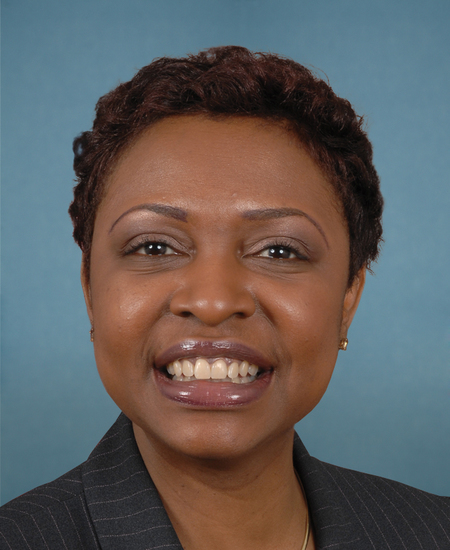
Rep. Yvette D. Clarke
Sponsored bills
Maddy summaryThe Jumpstart on College Act creates federal grant programs to expand early college high schools and dual enrollment programs, aiming to help more students earn postsecondary credentials within the normal timeframe. It authorizes $250 million annually for 6 years, with 40% of funds going directly to college-high school partnerships and 55% to states for statewide support. The grants require matching funds from recipients and mandate specific uses, such as creating college-aligned curricula, providing professional development for teachers, and ensuring students from underrepresented groups can access these programs without paying tuition for college courses. The bill also requires detailed reporting on student outcomes, including graduation rates and credential completion by demographic groups.
Maddy summaryThis bill designates an annual "African Diaspora Heritage Month" through a presidential proclamation. It requires the President to annually designate a month for observance, encouraging state/local governments and educational institutions to host related programs and activities. The bill does not create new funding or alter existing programs - it establishes a ceremonial recognition of the African diaspora community's contributions to U.S. society and U.S.-Africa relations.
Maddy summaryHR 5433, the Child Care Stabilization Act, provides $16 billion annually from 2024 to 2028 to stabilize the child care sector through grants administered by the Health and Human Services Secretary. It directly affects licensed child care providers by offering stable funding to cover operating costs, while supporting higher wages for early educators without raising family fees. Key provisions include expanding access to high-quality, affordable care - especially for infants/toddlers, rural communities, and children with disabilities - and addressing shortages in underserved areas. The funding builds on existing American Rescue Plan resources, aiming to strengthen the child care workforce and increase available options for working families.
Maddy summaryHR 5428, the No Tax Breaks for Union Busting (NTBUB) Act, prevents employers from deducting certain expenses related to influencing workers' decisions about union representation. It targets spending on tactics like anti-union meetings, workplace surveillance, or consultants during organizing campaigns, making these costs non-deductible for tax purposes. Employers must report such expenses on their tax returns, including details about the activities and amounts spent. The bill aims to remove tax incentives for employer interference in union elections, aligning with federal labor law protections for workers' collective bargaining rights.
Maddy summaryHR 3152, the "Fight CRIME Act," aims to maintain international restrictions on Iran's missile-related activities by requiring diplomatic efforts to extend these restrictions before they expire in October 2023. The bill mandates annual reports detailing U.S. diplomatic strategies, potential impacts of expiration, and measures to deter missile technology transfers to Iran. It establishes sanctions against foreign individuals or entities that knowingly support Iran's missile or drone programs, including asset freezes and visa restrictions. These sanctions apply regardless of whether UN restrictions remain in effect after their expiration, directly affecting foreign entities involved in these activities.
No Biometric Barriers to Housing Act of 2023 This bill prohibits owners of certain federally assisted rental units from using facial recognition, physical biometric recognition, or remote biometric recognition technology in any units or in any building or on any grounds containing such a unit for the purpose of surveillance or any other use that has an adverse effect on a tenant's fair access to affordable housing that is free from bias and discrimination. Within one year, the Department of Housing and Urban Development must report on any known use of such technology in federally assisted rental units in the preceding five years.
Maddy summaryHR 5351, the Nationwide Right to Unionize Act, repeals a federal law (Section 14(b) of the National Labor Relations Act) that currently allows states to enact "right-to-work" laws. This would prevent states from banning agreements requiring workers to pay union dues as a condition of employment, directly affecting workers in states with such laws. The bill's key mechanism is overriding state right-to-work statutes with federal law, ensuring union security agreements remain enforceable nationwide.
Maddy summaryHR 5322, the Time Off to Vote Act, requires most private employers (with 25+ employees) to provide two consecutive hours of paid leave for employees to vote in federal elections. Employers must grant this leave upon request, can schedule it during early voting periods if permitted by state law, and cannot include lunch breaks in the leave period. The bill prohibits retaliation against employees who take this leave and ensures it does not affect accrued employment benefits. Violations could result in civil penalties up to $10,000 per offense, enforced by the Department of Labor.
Maddy summaryThis bill expands SNAP eligibility for college students by modifying existing rules. It allows students attending higher education institutions (as defined by the Higher Education Act) to qualify for SNAP benefits if they have a zero expected family contribution (EFC) from FAFSA or meet specific criteria for independent student status under the Higher Education Act. The changes replace outdated language about "employment" with "attending school or working" and remove barriers that previously excluded many low-income students. This directly affects low-income undergraduate and graduate students who may face food insecurity while enrolled in college. The policy change takes effect 180 days after enactment.