

Maddy summaryThis resolution (HRES 1558) is a symbolic House of Representatives measure supporting October as "National Domestic Violence Awareness Month." It does not create new laws or allocate funding but formally expresses the House's support for raising awareness about domestic violence and its impacts, and urges continued backing for existing programs that address domestic violence. The resolution cites statistics on domestic violence prevalence (e.g., 24 people per minute affected by intimate partner violence) to underscore the importance of the observance. It directly affects public awareness efforts but does not change policies or directly impact individuals.
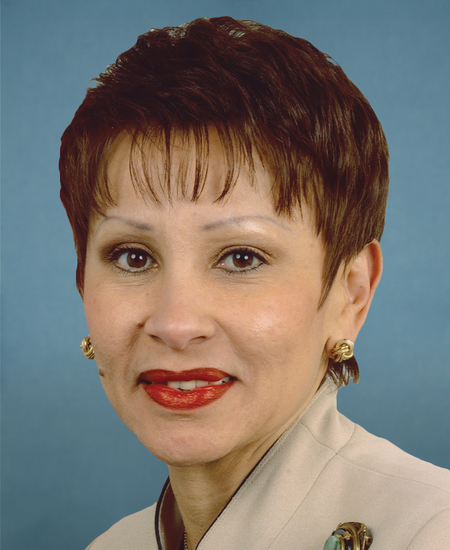
Rep. Nydia M. Velázquez
Sponsored bills
Maddy summaryHRES 1555 is a symbolic House resolution condemning the spread of false claims and malicious rumors about disaster response efforts, which have led to credible threats against FEMA personnel and disrupted aid for survivors. It specifically references incidents after Hurricanes Helene and Milton, including a pause in North Carolina door-to-door assistance due to safety threats and antisemitic targeting of officials. The resolution formally condemns those spreading disinformation for political gain and commits Congress to supporting FEMA’s efforts to combat misinformation and promote accurate recovery information. As a non-binding resolution, it does not create new laws but expresses congressional support for protecting disaster response workers and ensuring survivors receive timely aid.
Maddy summaryHRES 1553 is a resolution expressing the House of Representatives' sense that action is needed to address a federal tax exemption under Puerto Rico's Act 22. This provision allows wealthy Americans who do not reside in Puerto Rico to receive 100% exemptions from income and capital gains taxes in Puerto Rico while legally avoiding U.S. federal taxes. The resolution focuses on the tax loophole enabling this arrangement, which the bill claims contributes to housing displacement and price spikes on the island. It does not change tax law but urges the House to act on this issue. (Note: As a resolution, it is procedural and not a binding legislative measure.)
Maddy summaryThis bill expands Medicaid coverage for low-income individuals diagnosed with breast or cervical cancer. It requires Medicaid programs to cover breast reconstruction surgery after a medically necessary mastectomy, adding this as a mandatory benefit under existing Medicaid rules. The bill also modifies eligibility criteria to ensure coverage for these specific cancer patients, aligning with prior Medicaid provisions. These changes apply to all states administering Medicaid, directly affecting eligible patients seeking cancer treatment and recovery services.
Maddy summaryHRES 1545 is a non-binding resolution designating October 15, 2024, as a day to honor Hispanic cultural heritage and the contributions of Hispanic individuals in the legal profession and judiciary. It recognizes Hispanic representation in law, citing statistics such as 5.9% of U.S. lawyers/judges identifying as Hispanic and historical milestones like the first Hispanic federal judge appointed in 1961. The resolution celebrates Hispanic legal trailblazers, including Justice Sonia Sotomayor, and aims to raise awareness about ongoing efforts to increase Hispanic representation in legal roles. It does not create new laws or policies but serves as a symbolic acknowledgment of progress and goals toward reflecting the Hispanic population in the legal field.
Maddy summaryHRES 1544 designates September 22, 2024, as "National Hispanic Nurses Day" and formally recognizes the National Association of Hispanic Nurses (NAHN) as the leading organization representing Hispanic nurses. The resolution acknowledges Hispanic nurses' contributions to healthcare equity, cultural competence, and reducing disparities in underserved communities. It has no binding policy changes or funding implications - it serves as symbolic recognition to honor their work and NAHN's advocacy role. This is a ceremonial resolution, not a law with enforceable provisions.
Maddy summaryHR 9988, the AirFAIR Act, prevents airlines and ticket sellers from imposing excessive price hikes on airfares during declared disasters. It makes it an unfair practice to increase ticket prices by 30% or more when a state, district, territory, or possession has officially declared a disaster or emergency. The bill requires the Transportation Secretary to create regulations defining "excessive" increases and mandates the FAA Administrator to conduct a study on unfair pricing practices during disasters, reporting findings to Congress within one year. This directly affects airlines, ticket agents, and foreign carriers selling flights during such events.
Maddy summaryThis bill removes a key barrier preventing student loan debt from being discharged in bankruptcy. It amends the U.S. Bankruptcy Code by eliminating the exception that previously made most federal student loans non-dischargeable, meaning borrowers could not erase this debt through bankruptcy proceedings. The change applies only to bankruptcy cases filed on or after the bill's enactment date, affecting new cases where student loan borrowers may now seek relief. This is a procedural change to bankruptcy law, not a direct loan forgiveness or repayment program.
Maddy summaryThis bill disallows tax deductions for interest and depreciation on single-family rental properties owned by large-scale investors. It specifically targets owners with 50+ such properties (defined as "disqualified single family property owners"), preventing them from deducting mortgage interest or depreciation expenses for these rentals. Exceptions apply if the property is sold to an individual for their primary residence or to a qualified nonprofit organization focused on affordable housing. The policy aims to limit tax benefits for institutional landlords while preserving incentives for sales that support affordable housing.
Maddy summaryHRES 1525 is a non-binding resolution calling for the U.S. government to address policies contributing to forced migration and displacement. It urges reforms such as overhauling economic sanctions, investing in developing countries to reduce poverty and instability, and reforming trade agreements to protect workers. The resolution also calls for expanding legal immigration pathways, improving asylum processing, and creating a roadmap to citizenship for immigrants living in the U.S. As a resolution, it does not create new laws but sets policy priorities for future legislative action.