

Maddy summaryThe HELP Copays Act (HR 830) changes how health insurance plans calculate patient cost-sharing. It requires that payments made by third parties (like pharmacies, charities, or discount programs) toward medical costs count toward a patient's deductible, copay, or out-of-pocket limit. This directly affects insured individuals who receive financial assistance, discounts, or product vouchers for healthcare expenses. The law ensures these external payments reduce the patient's actual out-of-pocket costs more quickly, aligning with existing Affordable Care Act and Public Health Service Act requirements.
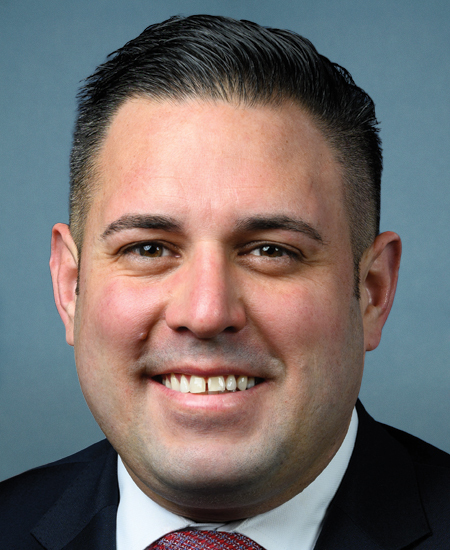
Rep. Anthony D’Esposito
Sponsored bills
Maddy summaryThis bill authorizes a single Congressional Gold Medal to honor all U.S. Army Dustoff crews who served during the Vietnam War (1962-1973). It recognizes their critical role in evacuating nearly 900,000 wounded personnel, including U.S., South Vietnamese, and allied forces, under extreme combat conditions. The medal, designed with input from the Secretary of Defense, will be presented to the U.S. Army Medical Department Museum for permanent display. Duplicate bronze medals may be sold to cover costs, but the primary action is the commemorative recognition of these crews' service.
Maddy summaryThe EAGLES Act of 2023 reauthorizes and expands the U.S. Secret Service’s National Threat Assessment Center (NTAC) to prevent targeted violence, particularly in schools. It directs the NTAC to provide training, research, and consultation on threat assessment to schools, law enforcement, and mental health professionals, with a focus on early intervention for concerning behaviors. The bill allocates $10 million annually (2024-2028) for these efforts, requiring the Center to develop state-specific training plans and report on outcomes like the number of schools trained. It directly affects school districts, educators, and community safety agencies by standardizing evidence-based prevention programs, avoiding criminal justice involvement for at-risk youth.
Maddy summaryHR 987 authorizes the U.S. Mint to produce commemorative coins honoring Golda Meir, Israel's first female Prime Minister, and the 75th anniversary of U.S.-Israel relations. It specifies three coin types: $5 gold coins (max 50,000), $1 silver coins (max 400,000), and half-dollar clad coins (max 750,000), with detailed weight and composition requirements. All coins will include Golda Meir's image, her name, and commemorative inscriptions, and will be sold during 2026. A surcharge ($35 for $5 coins, $10 for $1 coins, $5 for half-dollars) will be paid to the American Friends of Kiryat Sanz Laniado Hospital Inc. to support its hospital operations.
Maddy summaryThis bill directs federal agencies to improve mental health support for educators and school staff, including teachers, administrators, and support personnel. It requires the Department of Health and Human Services to share evidence-based practices for preventing suicide and promoting mental wellness, and to run a national awareness campaign reducing stigma around seeking care. The bill creates new grant programs for schools and colleges to fund mental health initiatives and training, with $35 million annually for 2024-2026. Additionally, it mandates a federal review of mental health challenges in the education workforce and a GAO report on existing federal grant programs addressing these issues.
Maddy summaryHR 621, the PART Act, requires catalytic converters on vehicles to be stamped with a visible vehicle identification number (VIN) using special high-visibility paint to deter theft. It creates a federal grant program to help auto dealers, repair shops, and law enforcement implement this stamping at no cost to vehicle owners. The bill also mandates that sellers of catalytic converters retain buyer identification and vehicle details for two years, and adds new federal criminal penalties for stealing or trafficking in catalytic converters.
Maddy summaryThe Retain Skilled Veterans Act (HR 939) amends federal law to restrict appointments of retired military members to specific high-level positions within the Department of Defense (DoD). It limits such appointments to roles classified at or above GS-14 (a high pay grade) in the DoD’s excepted or competitive service, removing a prior exception that allowed broader "management" appointments. This change directly affects retired veterans seeking senior DoD roles, requiring them to qualify for the highest-level positions under this rule. The bill ensures these appointments apply only to defined senior roles, not routine or lower-level positions.
This resolution condemns Iranian state-sponsored terrorist attacks against U.S. citizens and officials and Iranian dissidents. The resolution also expresses support for the people of Iran who are legitimately defending their rights for freedom against repression and condemns the killing of Iranian protesters by the Iranian regime.
Maddy summaryHR 863 prohibits publishing houses from knowingly supplying schools or school districts with sexually explicit material (including digital books), imposing fines up to $500,000 or imprisonment for executives who authorize such actions. It also blocks federal funding for public schools that obtain such material or for school districts that distribute it to schools, requiring them to destroy the material before funding resumes. Exceptions apply for material with serious literary, artistic, political, or scientific value. The bill directly affects publishers, public schools, and school districts, targeting both the supply chain and funding for sexually explicit content in educational settings.
Maddy summaryHCONRES 13 is a concurrent resolution expressing Congress's support for maintaining the current policy that prohibits imposing new fees on local radio stations for playing music. It states that Congress should not impose any performance fee, tax, royalty, or charge on local radio stations for broadcasting sound recordings over the air, or on businesses like bars and restaurants that play music publicly. The resolution argues that such fees would harm local radio stations - critical sources for emergency information and community programming - and jeopardize the economic model that has supported both radio and the music industry for decades. This resolution does not create new law but formally opposes potential legislative changes to the existing fee structure.