

Maddy summaryThis bill creates a new federal crime for assaulting law enforcement officers causing serious injury or death, with penalties up to 10 years in prison for serious injury and up to life for aggravated cases involving death, kidnapping, or attempted killing. It applies when offenses involve interstate travel, commerce, or target officers engaged in law enforcement duties. Federal prosecution requires Attorney General certification that state authorities cannot or will not handle the case, or that federal action is necessary for public safety. The law covers all law enforcement officers (state, local, and federal) who enforce criminal laws or detain individuals.
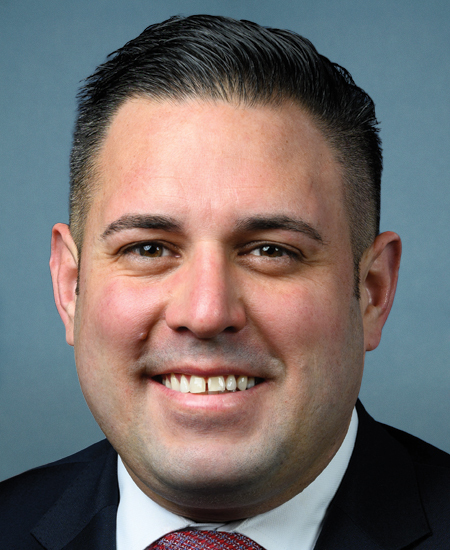
Rep. Anthony D’Esposito
Sponsored bills
Maddy summaryHR 795 amends the 1968 Crime Control Act to require federal funding for training first responders on using containment devices that prevent secondary exposure to fentanyl and other dangerous substances. It directs the Department of Justice to provide both training resources and purchase these devices for emergency personnel. The law specifically targets risks faced when handling drugs like fentanyl during arrests or medical emergencies. First responders, including police and EMTs, would directly benefit from this provision. The bill mandates these measures through existing federal programs without creating new standalone requirements.
SALT Marriage Penalty Elimination Act This bill increases from $10,000 to $20,000 the amount that a married couple filing a joint tax return may deduct as state and local taxes (thus eliminating the tax effect known as the marriage penalty with respect to the deduction).
This resolution recognizes and appreciates the dedication and devotion demonstrated by the men and women of law enforcement. It also condemns calls to defund, disband, dismantle, or abolish the police.
Maddy summaryThe HEAL Act (HR 603) requires the U.S. Holocaust Memorial Museum Director to study how public elementary and secondary schools teach about the Holocaust and related antisemitism. The study will examine curriculum requirements, teaching methods (like project-based learning), instructional materials, and assessment approaches across states and school districts. It specifically analyzes whether Holocaust education is mandatory, optional, or integrated across subjects, and how schools address antisemitism and genocide prevention. The resulting report, due within 180 days of the study or three years after enactment, will inform Congress but does not change current school policies. This is a data-gathering measure, not a policy mandate.
Maddy summaryThe Educational Choice for Children Act creates tax credits for individuals and corporations that contribute to scholarship granting organizations providing education scholarships. Individuals can claim a credit up to $5,000 or 10% of their income, while corporations can claim up to 5% of taxable income. The scholarships are available to students from households with income up to 300% of the area median income, and can be used for private school tuition, tutoring, and other educational expenses at elementary and secondary schools. The bill includes strict requirements for scholarship organizations to verify income, conduct audits, and prevent misuse of funds, while also prohibiting government control over these organizations and protecting private and religious schools from discrimination in the program. It establishes a $10 billion annual cap on the total tax credits available.
Maddy summaryThis bill renames a U.S. Postal Service facility at 620 East Pecan Boulevard in McAllen, Texas, as the "Agent Raul H. Gonzalez Jr. Memorial Post Office." It updates all federal references to the location to reflect this new name. The bill has no policy impact - it is purely a ceremonial designation honoring an individual. No other provisions or affected groups are involved.
Maddy summaryThis bill creates new federal crimes for killing or assaulting law enforcement officers, judges, and certain public safety officers (including firefighters) while they are on duty or for past duties, with penalties including minimum 10-year sentences for killing and varying assault penalties based on severity. It adds a new factor that would make the federal death penalty more likely for killing such officers, limits federal legal challenges for convictions related to these killings, and expands law enforcement officers' rights to carry firearms in certain circumstances. The bill also provides funding for grants to improve community-law enforcement relationships through transparency, accountability, and officer wellness programs. It directly affects law enforcement officers, judges, and public safety personnel across the country, establishing new federal protections and procedures for violence against these personnel.
American Workforce Empowerment Act This bill allows tax-preferred college savings plans (529 plans) to fund certain postsecondary certificate programs and apprenticeship programs.
Stop Enabling Repeat Violence and Endangering Our Communities Act or the SERVE Our Communities Act This bill authorizes the Bureau of Justice Assistance to make grants to states and local governments for mentoring, transitional services, and training to help offenders successfully reintegrate back into the community after incarceration. To be eligible for a grant, a state or local government must take steps to prevent repeat offenses by violent offenders and allow a state court or magistrate to consider the danger an individual poses to the community when determining bail or pretrial release conditions.