

Maddy summaryThis bill expands the use of 529 college savings accounts to cover career training and credentialing costs. It allows funds to pay for tuition, fees, books, and testing expenses related to recognized postsecondary credential programs (like vocational certifications) that meet specific standards under the Workforce Innovation and Opportunity Act. The change directly affects workers seeking industry-recognized credentials - such as nursing certifications or IT certifications - instead of traditional degrees. It treats these expenses the same as traditional college costs for 529 account withdrawals, making it easier to save for career-focused training. The provision applies to expenses paid after the bill's enactment date.
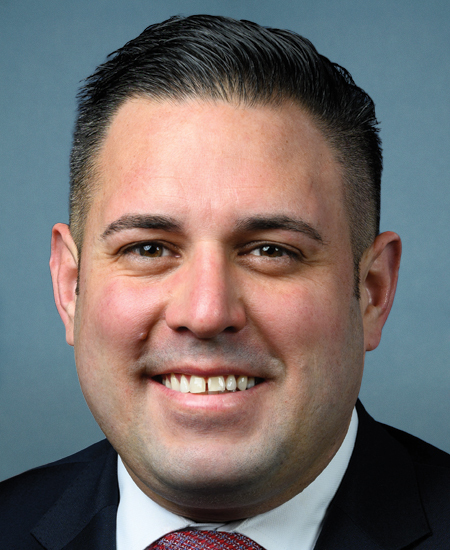
Rep. Anthony D’Esposito
Sponsored bills
Maddy summaryThis resolution, titled the "No Fame for Fraud Resolution," would amend House rules to prevent members of Congress (including delegates and resident commissioners) who face an indictment for financial or campaign finance fraud from receiving payment for biographies, media appearances, or creative works. It specifically targets offenses like violations of campaign finance laws (under the Federal Election Campaign Act) or certain financial crimes covered under federal employee ethics rules. The rule change would apply only to compensation from these non-legislative activities, not a member's regular salary. This policy directly affects members under indictment for the specified fraud-related charges, restricting their ability to profit from public-facing projects during such legal proceedings.
Sergeant Gary Beikirch Medal of Honor Act This bill allows a surviving spouse of a Medal of Honor recipient to receive a special pension concurrently with dependency and indemnity compensation.
Maddy summaryThis bill prohibits federal funding for any state, local, tribal, or private entity operating heroin injection centers that violate the federal drug law (21 U.S.C. 856, the "Crack House Statute"). It directly affects organizations running such centers by blocking all federal financial support for their operations. The key mechanism is a clear funding restriction: no federal money can be provided to entities operating centers deemed unlawful under existing federal drug law. The bill does not create new criminal penalties but prevents government funding for facilities violating current law.
Maddy summaryThe LEO Fair Retirement Act of 2023 would allow federal law enforcement officers to include unpaid overtime hours toward their retirement benefits. Currently, these officers work significant overtime that isn't compensated due to pay caps, meaning they don't receive full credit for those hours in retirement calculations. The bill would amend retirement systems to include this unpaid overtime in retirement calculations, but officers would need to make a lump-sum payment to cover the difference between what they would have contributed to retirement if paid for the overtime versus what they actually contributed. This applies to specific federal law enforcement roles including criminal investigators, federal air marshals, special agents in the Diplomatic Security Service, probation officers, and pretrial services officers. The changes would take effect one year after the bill's enactment.
Maddy summaryHR 1322 expands federal retirement benefits to include specific non-traditional law enforcement roles. It adds IRS employees focused on tax collection, U.S. Postal Inspection Service staff, Department of Veterans Affairs police officers, and U.S. Customs and Border Protection seized property specialists to the definition of "law enforcement officer" under federal retirement systems. Current employees in these newly covered positions must elect to pay deposits for past service to receive full retirement credit, while their agencies must contribute additional funds for that past service. The bill also temporarily prevents mandatory separation for current law enforcement officers for three years after enactment.
Maddy summaryThis bill establishes pay equity for federal firefighters by adjusting how their retirement benefits are calculated and setting a standard workweek. It requires retirement annuities to include overtime hours worked as part of a firefighter's regular schedule (e.g., overtime during standard shifts), rather than excluding them. The bill also mandates a maximum 60-hour regular workweek for federal firefighters, set by the Office of Personnel Management within one year of enactment. These changes directly affect federal firefighters, aiming to improve pay comparability with municipal firefighters and other federal employees while supporting recruitment and retention.
Maddy summaryHR 1247 would award a Congressional Gold Medal to the Freedom Riders collectively, honoring their pivotal role in challenging segregation in interstate travel during the Civil Rights movement. The medal, to be struck by the U.S. Mint and displayed at the Smithsonian Institution, recognizes their nonviolent protests that led to the 1961 federal ban on segregation in interstate public facilities. This is a symbolic tribute with no legal effect, as the bill does not create new policies or alter existing laws.
Maddy summaryThe STUDENT Act (HR 1125) requires lenders to disclose the total interest a borrower would pay over the life of a federal student loan under a standard 10-year repayment plan. This provision directly affects students taking out federal loans by providing clearer information about the full cost of borrowing upfront. The bill amends the Higher Education Act to add this specific disclosure requirement to loan terms. The change aims to increase transparency in student loan financing without altering repayment terms or interest rates.
Maddy summaryHR 1088, the Shirley Chisholm Congressional Gold Medal Act, authorizes a posthumous Congressional Gold Medal to honor Congresswoman Shirley Chisholm, the first African-American woman elected to Congress (1968) and the first Black candidate for a major party's presidential nomination (1972). The bill directs the Treasury Secretary to design and strike a gold medal featuring Chisholm's image, which will be presented by Congress and then permanently displayed at the Smithsonian Institution. Duplicate bronze medals may be sold to the public to cover production costs, with proceeds deposited into the U.S. Mint fund. This bill commemorates Chisholm's legacy and achievements without creating new laws or affecting any current policies.