

Maddy summaryThis bill prohibits the Department of Veterans Affairs from changing its anesthesia care policies to allow nurse anesthetists (CRNAs) to provide anesthesia independently without a physician anesthesiologist. It specifically blocks implementation of a 2016 proposed rule that would have expanded CRNAs' authority in VA facilities. The law maintains current requirements that physician anesthesiologists must oversee or provide anesthesia care for veterans during surgical procedures. Emergency orders for veteran safety during surgery remain permitted under the bill's exception clause.
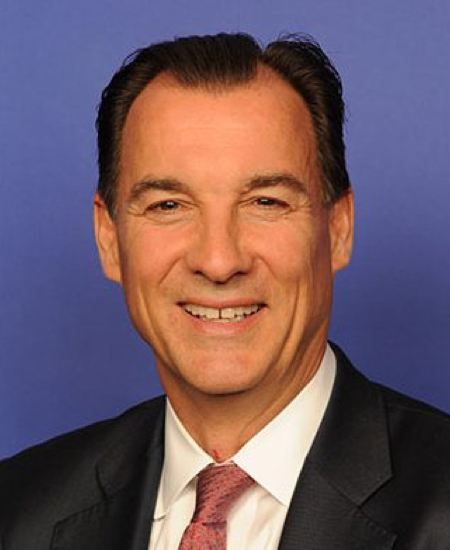
Rep. Thomas R. Suozzi
Sponsored bills
Maddy summaryThis bill standardizes voluntary date labels on most packaged foods by requiring uniform phrases: "BEST If Used By" for quality dates (indicating quality may decline) and "USE By" for discard dates (indicating when food should be discarded). It applies to manufacturers of non-infant formula foods who choose to include dates, with no requirement to use them. The law mandates clear, conspicuous placement of these phrases and prohibits states from creating conflicting labeling rules. It excludes infant formula and takes effect two years after enactment, with federal agencies required to educate consumers about the new labels.
Maddy summaryHR 3773, the Stop Anti-Semitism on College Campuses Act, requires colleges and universities receiving federal funding to prohibit any event promoting antisemitism on campus. This includes not hosting, facilitating, funding, or supporting such events. The bill adopts the International Holocaust Remembrance Alliance's 2016 definition of antisemitism - including contemporary examples - as the standard for determining prohibited conduct. The law directly affects all institutions covered by the Higher Education Act of 1965.
Maddy summaryThis bill allows the U.S. Postal Service to ship alcoholic beverages under specific conditions. It enables registered businesses (like wineries, breweries, and retailers) to mail alcohol directly to consumers, provided the recipient is at least 21 with valid ID, the shipment isn’t for resale, and state alcohol taxes are paid upfront. The Postal Service must establish rules for delivery, registration, and verification, while explicitly preserving all existing state, local, or tribal laws governing alcohol sales and shipments. The bill does not override state restrictions on alcohol delivery, and the Postal Service remains liable for violations under state law.
Maddy summaryHRES 439 is a non-binding resolution expressing the House of Representatives' support for keeping the U.S. Postal Service (USPS) as an independent federal agency, not subject to privatization. It highlights USPS's constitutional role, self-sustaining nature (relying on service revenue, not taxpayer funds), and its importance to rural communities, e-commerce, and over 600,000 employees. The resolution urges Congress to take action to preserve USPS's independence, emphasizing that privatization could raise prices, reduce services, and harm the nation's mail infrastructure. As a procedural resolution, it does not change law but formally states the House's position.
Historic Preservation Fund Reauthorization Act This bill extends through FY2033 and increases funding for the National Park Service's Historic Preservation Fund. The funding is provided from revenues from Outer Continental Shelf oil and gas leases, and awards from the fund are made to states and other entities, including tribes and nonprofits.
Maddy summaryThis bill requires that AM radio receivers be included as standard equipment in all new motor vehicles (such as cars and trucks) sold in the United States, with a rule to be issued by the Department of Transportation within one year. The rule must ensure AM radio is easily accessible on the dashboard and allows manufacturers to use digital AM radio technology instead of traditional AM. During the one-year period between the bill's enactment and the rule's effective date, manufacturers must clearly label vehicles without AM radio. The bill also directs a study to evaluate whether an alternative system could deliver emergency alerts as reliably as AM radio across the country, especially during crises.
Healthcare Extension and Accessibility for Developmentally disabled and Underserved Population Act of 2023 or the HEADs UP Act of 2023 This bill authorizes the Department of Health and Human Services (HHS) to award grants to support health centers that provide services for individuals with developmental disabilities, including dental care. Grant recipients must provide specialized treatment to individuals with developmental disabilities as necessary. The bill also provides statutory authority for HHS to designate individuals with developmental disabilities as health-professional shortage population groups for the purposes of the National Health Service Corps (NHSC). The NHSC provides scholarships and student loan repayment awards to eligible providers who agree to work with designated populations or in areas that face shortages of primary care, dental care, and mental health care providers.
Maddy summaryHR 3537 authorizes the minting of commemorative coins to mark the 100th anniversary of the U.S. Foreign Service, established by the 1924 Rogers Act. The bill specifies three coin types ($5 gold, $1 silver, and half-dollar clad) with limited mintage (50,000 gold, 400,000 silver, 750,000 half-dollars) to be issued in 2025, featuring designs honoring diplomatic history. A surcharge on each coin sale ($35 for gold, $10 for silver, $5 for half-dollars) will fund the Association for Diplomatic Studies and Training (ADST) to support its oral history program and diplomatic preservation efforts. The coins will be legal tender, sold at cost-plus-surcharge, with all revenue directed to ADST per the bill's provisions.
National Law Enforcement Officers Remembrance, Support and Community Outreach Act This bill directs the Department of Justice (DOJ) to establish a National Law Enforcement Officers Remembrance, Support, and Community Outreach Program. The bill further directs DOJ to award a grant under the program to the National Law Enforcement Officers Memorial Fund for the expenses associated with community outreach, public education, and officer safety and wellness programs operated by the of the National Law Enforcement Officers Memorial Fund and National Law Enforcement Museum.