

Maddy summaryHR 4040, the Recycling and Composting Accountability Act, requires federal agencies and states to collect and report detailed data on recycling and composting practices. It mandates the EPA to create reports on composting infrastructure capabilities, federal agency recycling/composting rates, and end-market sales of recyclables, while also developing a national inventory of materials recovery facilities. The bill directly affects federal agencies, state and local governments, and Indian Tribes by requiring standardized reporting on recycling rates, facility capabilities, and contamination rates. Key mechanisms include biannual facility inventories, standardized reporting metrics for recyclable diversion rates, and voluntary guidelines to improve labeling and public education on proper sorting. The goal is to strengthen data collection to address contamination issues and support infrastructure improvements, without imposing new regulatory requirements.
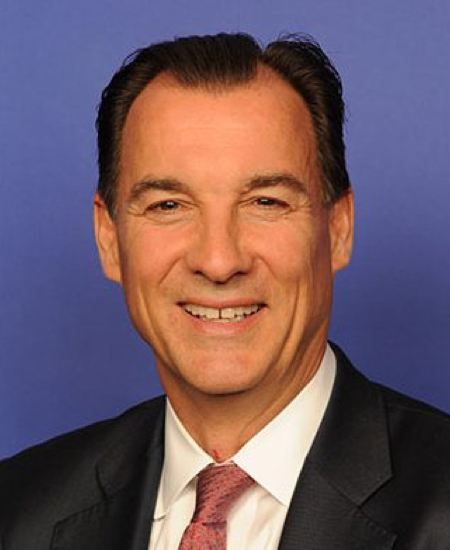
Rep. Thomas R. Suozzi
Sponsored bills
Maddy summaryHR 4184 repeals legal protections for gun manufacturers and sellers under the Protection of Lawful Commerce in Arms Act. It allows victims of gun violence to use gun trace data from the ATF's Firearms Trace System in civil court cases. This data, previously protected from discovery, can now be subpoenaed, admitted as evidence, and relied upon in lawsuits against gun sellers or manufacturers. The bill directly affects victims seeking legal recourse and gun industry defendants in civil litigation.
Maddy summaryThe American Dream and Promise Act of 2023 would create two pathways to permanent residency for certain immigrants. The "Dream Act" portion would provide conditional permanent resident status to individuals who entered the U.S. as children, have lived continuously in the U.S. since January 1, 2021, and meet educational requirements (such as completing high school, earning a degree, or enrolling in education programs). The "American Promise Act" portion would provide permanent residency to individuals eligible for Temporary Protected Status (TPS) or Deferred Enforced Departure (DED) as of specific dates (January 1, 2017, or January 20, 2021). The bill includes provisions for background checks, fee exemptions for low-income applicants, and processes for removing conditional status after meeting specific criteria like completing higher education or earning income.
Maddy summaryHR 3962 establishes an Advisory Council to support victims of gun violence, directly affecting individuals impacted by gun violence (including survivors, witnesses, and relatives of victims) and the professionals who assist them. The council, composed of federal agency heads, victims, and victim assistance professionals, will assess needs, review existing programs, and compile accessible resources covering medical, financial, mental health, legal, and housing support. It must publish a public report within 180 days of enactment detailing best practices and gaps, with a follow-up report after two years. The council’s work will be shared online and distributed to congressional offices, state agencies, schools, and local prosecutors, with no new federal funding authorized for implementation.
Maddy summaryThis bill changes the tax treatment of unused commuter benefit funds. It requires employees to include one-time distributions from transportation fringe benefit accounts (used for commuting costs) in their taxable income for the year they receive the payment. The distribution must occur within six months of the bill's enactment and cannot exceed the highest account balance since March 2020 or the current balance. This directly affects employees who had unused funds in these pre-tax commuter accounts, making those distributions taxable income instead of tax-exempt.
Maddy summaryHR 3910, titled "Dillon’s Law," amends federal public health grants to prioritize states that permit trained individuals to carry and administer epinephrine during severe allergic reactions (anaphylaxis). States receiving these grants must certify they have civil liability protection laws shielding trained individuals who provide emergency aid. The bill defines "trained individual" as someone with approved medical training in epinephrine use and clarifies it does not alter existing liability protections under other laws. This policy change directly affects state governments seeking federal public health funding by linking grant eligibility to specific state-level regulations on emergency epinephrine access.
Wild Horse and Burro Protection Act of 2023 This bill prohibits the Bureau of Land Management (BLM) from using or contracting for the use of helicopters or fixed-wing aircraft for gathering horses and burros under the Wild Free-roaming Horses and Burros Act. Further, BLM may not make contracts to use helicopters for transporting captured animals under such act.
Maddy summaryHR 3828 designates the U.S. Postal Service facility at 80 Prospect Street in Avon, New York, as the "Officer Anthony Mazurkiewicz Memorial Post Office Building." This bill directly affects the physical location of that post office and all official references to it. The key provision updates all federal documents, maps, and records to use the new memorial name instead of the address. As a naming resolution, it has no policy impact beyond commemoration and does not alter postal services or operations.
Maddy summaryHR 698, the Assault Weapons Ban of 2023, prohibits the sale, manufacture, transfer, and possession of specific firearms and ammunition devices commonly referred to as "assault weapons" and "large capacity magazines" in interstate commerce. The bill defines "semiautomatic assault weapons" to include rifles like AR-15s and AK-47s, as well as firearms with specific features such as folding stocks, pistol grips, threaded barrels, and detachable magazines holding more than 15 rounds. It exempts law enforcement, military, antique firearms, and weapons already lawfully owned before the law's enactment (known as "grandfathered" weapons). The bill also requires new identification markings on these weapons and large capacity magazines, and adds background check requirements for transfers of grandfathered weapons.
Maddy summaryThis bill requires federal agencies to incorporate bird-safe design features in public buildings during construction, acquisition, or major renovations (over 50% facade alteration). It mandates the General Services Administration to develop and update a design guide with strategies like specialized glass, lighting modifications, and maintenance practices to reduce bird collisions. The guide must be shared with all federal agencies and include input from bird conservation experts. Exemptions apply to historic sites, the White House, Supreme Court, and Capitol complex. Annual reports on compliance and bird fatality assessments must be submitted to Congress.