

Maddy summaryThis bill amends the Internal Revenue Code to change how certain insurance companies account for debt instruments (like notes or bonds). It excludes these debts from being treated as "capital assets" for tax purposes, meaning gains or losses from selling them won't be taxed as capital gains. It applies only to specific insurance companies, excluding those with certain tax elections (like Section 831(b) companies) or foreign entities. The change affects tax calculations for these insurers but does not create new family-focused policies, despite the bill's misleading title. The amendment applies to dispositions after enactment, with transition rules for existing losses.
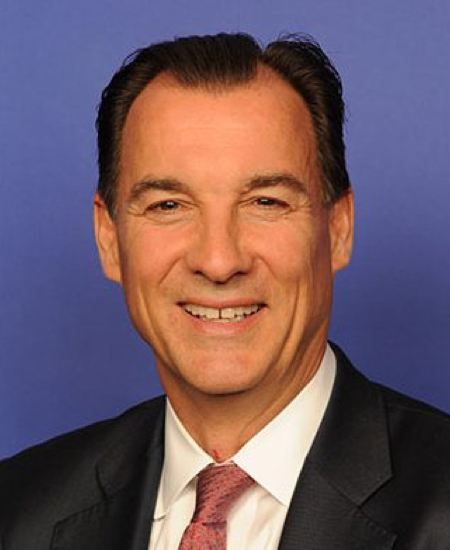
Rep. Thomas R. Suozzi
Sponsored bills
Maddy summaryThe FACTS Act (HR 5625) creates a pilot program to fund partnerships between schools and public health agencies to prevent synthetic opioid misuse among students. It authorizes $50 million annually to support evidence-based prevention programs, including professional development for school staff, student workshops, and community outreach. The bill requires schools to collect data on synthetic opioid prevalence and mandates that school health centers stock naloxone. It also amends national surveys to track youth opioid use patterns and establishes an interagency task force to coordinate prevention efforts. These provisions aim to address the growing crisis of synthetic opioid misuse among young people through education, data collection, and prevention programs.
Maddy summaryThe Better CARE for Animals Act of 2023 amends the Animal Welfare Act to strengthen enforcement of animal welfare standards. It gives the Attorney General authority to bring civil cases for violations, including seeking penalties up to $10,000 per day per violation and injunctions to remove or relocate animals. The bill also requires the Secretary of Agriculture and Attorney General to coordinate through a new Memorandum of Understanding, focusing on repeat violators. These changes directly affect dealers, exhibitors, and enforcement agencies by expanding civil enforcement tools and clarifying jurisdiction over rule violations.
Maddy summaryThe John R. Lewis Voting Rights Advancement Act of 2023 would strengthen the Voting Rights Act of 1965 by updating the criteria for which states and localities must obtain federal preclearance before changing voting practices. It would establish new standards for proving vote dilution and vote denial by requiring courts to consider historical discrimination, racial polarization in voting, and whether voting practices disproportionately burden minority voters. The bill would also require states and localities to provide public notice of voting changes and share demographic data about polling locations. These changes would primarily affect jurisdictions with a history of voting rights violations, aiming to prevent discriminatory voting practices before they take effect.
Maddy summaryThe Humane Cosmetics Act of 2023 bans cosmetic animal testing in the United States, prohibiting companies from conducting or contracting such testing after its enactment (effective 1 year later). It also bans selling or transporting cosmetics developed using animal testing conducted after that date within U.S. interstate commerce. The law directly affects cosmetic manufacturers, retailers, and suppliers operating in the U.S. market, requiring them to use non-animal testing methods for safety evaluations. Exceptions exist for foreign regulatory requirements or when no alternative testing methods are available for specific ingredients.
Maddy summaryThe No Tax Breaks for Union Busting Act would deny tax deductions for employers who attempt to influence employees' decisions about union activities, including unfair labor practices like firing workers for organizing or using captive audience meetings. It targets expenses related to union-busting tactics, such as consulting fees and other costs used to sway workers' opinions about collective bargaining. Employers would need to report these expenses on tax returns and would no longer be able to deduct them from taxable income. The bill aims to prevent employers from using tax-deductible expenses to influence union elections, aligning with existing rules that deny tax deductions for political spending. It would apply to expenses incurred in taxable years beginning 240 days after enactment.
Maddy summaryThis bill prohibits individuals convicted of a misdemeanor hate crime or who received an enhanced sentence for a hate-motivated misdemeanor from obtaining, possessing, shipping, or transporting firearms. It directly affects people convicted under state, federal, or tribal law of a misdemeanor involving physical force or credible threat motivated by bias against race, religion, national origin, gender, sexual orientation, gender identity, or disability. The law amends existing federal gun laws (18 U.S.C. §§ 922(d) and 922(g)) to add this category to the list of prohibited persons, with specific exceptions for cases where the conviction was expunged, the person had proper legal counsel, or civil rights were restored. The bill focuses on concrete policy changes to restrict firearm access for this specific group, not broader speculation.
Maddy summaryHR 5419, the Direct Seller and Real Estate Agent Harmonization Act, amends the Fair Labor Standards Act to exclude direct sellers (like door-to-door sales representatives) and qualified real estate agents from the federal definition of "employee." This change means these workers would no longer be automatically covered by federal minimum wage and overtime protections under the Fair Labor Standards Act. The bill directly affects individuals working in these specific roles by altering their legal classification under labor law. The key provision is a new definition inserted into existing law, aligning labor classification with existing tax code definitions for these professions.
Maddy summaryThis bill requires federal agencies to acquire and maintain opioid overdose reversal kits (like naloxone) and train employees annually on their use, effective within 270 days of enactment. It mandates these actions for all federal agencies - including the Veterans Health Administration - while providing non-mandatory guidance to private employers on similar practices. The law directly affects federal workplaces by making kits and training a requirement, and indirectly encourages private employers to adopt similar safety measures. Key provisions include a 270-day deadline for the Labor Department to issue regulations for federal agencies and non-binding guidance for other employers. The bill focuses on practical workplace safety measures without altering existing federal health or safety laws.
This bill increases from 20% to 25% the value of the total assets represented by securities of one or more taxable Real Estate Investment Trust (REIT) subsidiaries (thus restoring the REIT subsidiary asset test).