

Maddy summaryHRES 1133 is a symbolic resolution recognizing May as National Foster Care Month. It raises awareness about challenges faced by children in foster care, such as instability, educational disruptions, and the high number aging out without permanent connections. The resolution encourages Congress to implement policies improving outcomes for these children and acknowledges the work of foster parents, social workers, and advocates. It does not create new laws but urges legislative action aligned with existing programs under the Social Security Act focused on prevention, reunification, and support for youth transitioning to adulthood.
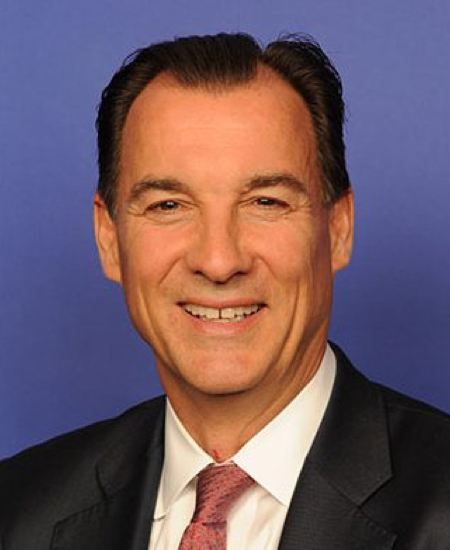
Rep. Thomas R. Suozzi
Sponsored bills
This resolution calls on elected officials, faith leaders, and civil society leaders to condemn anti-Semitism in all forms. It also calls for renewed efforts to combat anti-Semitism domestically, globally, and online.
Workforce Innovation and Opportunity Act of 2022 This bill reauthorizes through FY2028 and expands programs under the Workforce Innovation and Opportunity Act (WIOA). The bill also revises workforce investment, vocational rehabilitation, employment, training, and literacy programs for eligible individuals. For example, the bill increases workforce representation on state and local workforce investment boards from 20% to 30%; reworks one-stop center infrastructure funding by requiring costs to be covered by state allocations of WIOA funds; establishes subsidized youth employment programs that include work-readiness training and mentoring; allows states and localities to partner with educational institutions to address the skill needs for in-demand jobs; establishes grants to connect youth in communities disproportionately affected by gun violence with in-demand jobs; eliminates a requirement that the Department of Labor ensure that individuals participating in WIOA activities comply with Selective Service laws; modifies the allotment of youth workforce investment funds to states; requires Labor to prioritize providing access to certain services to girls and women and applications for assistance from minority-serving institutions; expands the Job Corps program, including by serving individuals in outlying areas and relaxing age requirements; establishes grants to expand training programs through industry or sector partnerships; expands grants for integrated English literacy and civics education to outlying areas; and expands Wagner-Peyser employment services to the Northern Mariana Islands and American Samoa. The bill also provides statutory authority for Labor to award competitive grants, contracts, and cooperative agreements to improve employment and training outcomes and reduce recidivism of justice-involved youth; and competitive grants for states to create workforce longitudinal administrative databases.
This concurrent resolution expresses the sense of Congress that the President use existing authorities under the Defense Production Act of 1950 to ensure the supply and equitable distribution of infant formula. That act confers upon the President a broad set of authorities to influence domestic industry in order to provide essential materials and goods needed for the national defense.
Michelle Alyssa Go Act This bill removes certain limitations relating to Medicaid coverage of services provided in institutions for mental diseases (IMDs). Current law generally prohibits federal payment under Medicaid for services provided in IMDs with more than 16 beds for individuals under the age of 65 (although states may receive payment through certain mechanisms, such as through a Medicaid demonstration waiver). The bill removes the age limitation and allows any institution to qualify as an IMD, regardless of the number of beds, if it primarily treats individuals with mental diseases and meets nationally recognized standards for mental health or substance use disorder programs, as approved by the Centers for Medicare & Medicaid Services.
Payment Choice Act of 2021 This bill requires retail businesses to accept cash as a form of payment for sales in amounts less than $2,000, and it prohibits them from charging cash-paying customers a higher price compared to customers not paying with cash. Such businesses are those engaged in the business of selling or offering goods or services at retail to the public that accept in-person payments at a physical location. The bill provides for enforcement through preventative relief and civil penalties.
Helicopter Safety and Noise Management Act This bill establishes a commission comprised of the Federal Aviation Administration, members of local and state government, and helicopter noise and safety advocates to develop a helicopter usage management plan to substantially reduce the number of nonessential civil rotorcraft (i.e., a helicopter) that can operate in certain airspace at any given time. The plan shall not apply any limitation or requirement to the operation of a civil rotorcraft for purposes of public health and safety, including (1) law enforcement, (2) emergency response, (3) disaster response, (4) medical services, (5) scientific research, and (6) official purposes by a news organization.
Community Services Block Grant Modernization Act of 2022 This bill reauthorizes the Community Services Block Grant program through FY2032 and otherwise modifies the program. The program supports various antipoverty activities, primarily through formula-based allotments to states, Indian tribes, and territories. In particular, the bill makes changes to the program's administration and leadership; performance measurement; and allotments to states and territories. The bill also expands eligibility for services and activities funded by the program to 200% of the federal poverty line (FPL). Under current law, eligibility is generally set at the FPL.
Rights for the Transportation Security Administration Workforce Act of 2022 or the Rights for the TSA Workforce Act of 2022 This bill modifies the workplace rights, protections, and benefits applicable to Transportation Security Administration (TSA) personnel. Specifically, the bill by December 31, 2022, eliminates personnel authorities of the Department of Homeland Security (DHS) and the Department of Transportation governing the conditions of employment for TSA employees, thus making TSA employees subject to the personnel management system applicable to other federal employees; sets forth transition rules that protect the pay rates, leave rights, and other rights of TSA employees; and requires DHS to consult with the exclusive representative of TSA screening employees to carry out the conversion of those positions. The bill also permits the TSA to consult with organizations representing federal air marshals to address concerns, including mental health and suicide rates; directs the TSA to ensure its employees are provided proper guidance regarding prevention and protections against COVID-19; requires the TSA to provide a one-time bonus payment of $3,000 to each TSA employee carrying out duties that require substantial contact with the public during the COVID-19 national emergency; and requires the Government Accountability Office to report on implementation of the bill, TSA recruitment efforts, and specified TSA personnel policies.
Alzheimer's Accountability and Investment Act This bill requires the National Institutes of Health to annually submit, beginning in FY2024, an estimate of its budget and personnel needs for carrying out initiatives pursuant to the National Alzheimer's Project. This project supports coordination of federal planning, research, and other efforts to address Alzheimer's disease and related dementias.