Pediatric Access to Critical Healthcare Act This bill requires the Health Resources and Services Administration (HRSA) to award grants to children's hospitals and other providers that predominately treat individuals under 21 for improving pediatric health care infrastructure. In awarding the grants, HRSA must prioritize recipients that serve significant numbers of patients receiving medical assistance through Medicaid or the Children's Health Insurance Program or children from other underserved groups.
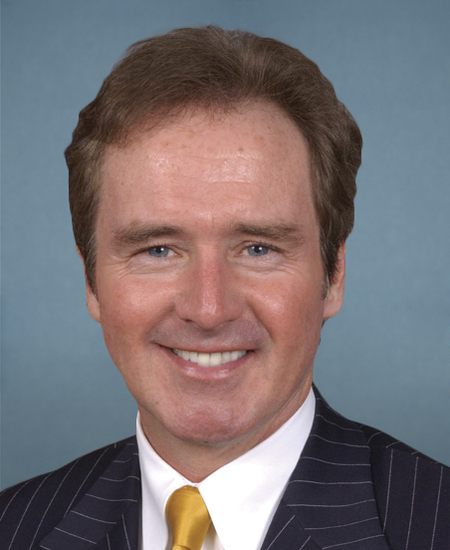
Rep. Brian Higgins
Sponsored bills
Senior Health Planning Account Act This bill allows tax-exempt senior health planning accounts that are funded using a taxpayer's gains from the sale or assignment of a life insurance contract. The bill excludes from gross income (1) the gains that are contributed to the accounts, and (2) distributions from the accounts that are used exclusively for the health care expenses of the account beneficiary or the account beneficiary's spouse.
Harlem Hellfighters Congressional Gold Medal Act This bill provides for the award of a Congressional Gold Medal to the 369th Infantry Regiment, commonly known as the Harlem Hellfighters, in recognition of their bravery and outstanding service during World War I.
Puppies Assisting Wounded Servicemembers for Veterans Therapy Act or the PAWS for Veterans Therapy Act This bill implements a program and a policy related to service dog therapy for veterans. Specifically, the bill requires the Department of Veterans Affairs (VA) to implement a five-year pilot program to provide canine training to eligible veterans diagnosed with post-traumatic stress disorder as an element of a complementary and integrative health program. Eligible veterans are those who are enrolled in the VA health care system and have been recommended for participation by a qualified mental health care provider or clinical team. The VA must seek to enter agreements containing specified elements with accredited nongovernmental entities that have demonstrated ability to provide canine training. Veterans who participate in the program are authorized to adopt the dog they assisted in training if their health provider determines it is in the best interest of the veteran. The VA must establish processes to document and track the progress of participating veterans with respect to health benefits and improvements. The Government Accountability Office must brief Congress and submit a report on the program. The bill also authorizes the VA to provide service dogs to veterans with mental illnesses, regardless of whether they have a mobility impairment.
This resolution supports the designation of National Health Care Awareness Month.
Medicaid DSH Payment Adjustment Fairness Act of 2021 This bill allows for the use of a certain prior methodology relating to the calculation of Medicaid disproportionate-share hospital (DSH) payment limits. (DSHs are hospitals that receive additional payment under Medicaid for treating a large share of low-income patients.) Under current law, effective October 1, 2021, costs and payments associated with services furnished to Medicaid-eligible individuals for whom Medicaid is not the primary payer are excluded from the calculation of DSH payment limits. However, for DSHs that provide a high volume of care to individuals who are entitled to Medicare and Supplemental Security Income (SSI) benefits, payment limits are calculated based on either the methodology in place as of January 1, 2020, or as in place on October 1, 2021, whichever is higher. The bill extends this option to all DSHs, not just those with a high volume of care for Medicare-SSI individuals.
Diversifying Investigations Via Equitable Research Studies for Everyone Trials Act or the DIVERSE Trials Act This bill requires activities to increase diversity in clinical trials. It also expands reporting by laboratories that test for and diagnose COVID-19 and requires a study on data collection and data sharing during public health emergencies. Specifically, the Food and Drug Administration (FDA) must issue guidance on decentralized clinical trials to promote meaningful demographic and geographic diversity in patient engagement, enrollment, and participation. Decentralized clinical trials include those executed through telemedicine or other digital technologies to allow for the remote collection and assessment of clinical trial data. The FDA may also work with foreign regulators to harmonize international regulations governing decentralized clinical trials and the use of digital health technology. In addition, the Department of Health and Human Services (HHS) may support community education, outreach, and recruitment activities for clinical trials of treatments for conditions that disproportionately impact populations underrepresented in clinical trials. The bill also specifies that drug or device manufacturers may provide, subject to some limits, free digital health technologies and other remuneration to patients in approved clinical trials without violating laws that address fraud and abuse in federal programs. Furthermore, laboratories that test for and diagnose COVID-19 must report additional demographic data, including information about social determinants of health. HHS must also contract with the National Academy of Medicine to study and propose a design for an interoperable platform to facilitate data sharing during public health emergencies.

Passenger Rail Pre clearance Implementation Act of 2021 This bill directs the Department of Homeland Security to implement a process for preclearance screening of passengers and baggage on rail service between the United States and Canada. The bill also reauthorizes through FY2026 funding for rail improvement grants and permits the Department of Transportation to expend a specified amount of that funding on the preclearance process.
9/11 Responder and Survivor Health Funding Correction Act This bill increases funding for and otherwise modifies a federal program that provides medical monitoring and treatment to responders and survivors who suffer from health conditions related to the September 11, 2001, attacks on the World Trade Center. Among the changes, the bill allows certain health care providers other than physicians to determine whether an individual's health condition is related to the attacks, and it establishes a research program to study the impacts of the attacks on health and educational outcomes of individuals who were 21 years of age or younger when the attacks occurred.
Children's Mental Health Infrastructure Act of 2021 This bill provides funding through FY2026 to the Health Resources and Services Administration for grants to improve the capacity of children's hospitals to provide pediatric behavioral health services, including by modernizing sites of care and enhancing telehealth capabilities.