

This bill requires the Department of Defense (DOD) to conduct outreach to build awareness among former members of the Armed Forces of the process established for the review of discharge characterizations related to sexual orientation (i.e., on the basis of Don't Ask, Don't Tell or a similar policy). DOD must also provide for specified relief for former members of the Armed Forces who were impacted by the discharge characterizations and ensure that DOD oral historians review related facts and receive testimony from affected individuals.
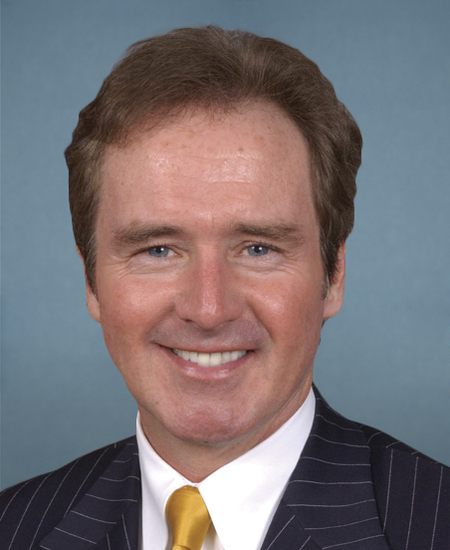
Rep. Brian Higgins
Sponsored bills
Israel Relations Normalization Act of 2021 This bill requires the Department of State to take certain actions promoting the normalization of relations between Israel, Arab states, and other relevant countries and regions. Specifically, the State Department must develop a strategy on expanding and strengthening the Abraham Accords (the term used to refer collectively to agreements between Israel and the United Arab Emirates and between Israel and Bahrain marking the public normalization of relations between the two Arab countries and Israel). The strategy must include a description of how the U.S. government will encourage further normalization of relations with Israel. In addition, the State Department must report on options for U.S. international efforts to promote the strengthening of ties between Israel, Arab states, and other relevant countries and regions. The State Department must also report on the status of the normalization of relations with Israel, including information on (1) laws that punish individuals for people-to-people relations with Israelis (i.e., anti-normalization laws), and (2) evidence of steps taken by Arab governments toward permitting or encouraging normalized relations between their citizens or residents and Israeli citizens.
Solar Energy Manufacturing for America Act This bill allows a new tax credit for the production and sale of certain solar equipment produced and sold in a taxpayer's trade or business.
Promoting Readiness and Ensuring Proper Active pharmaceutical ingredient Reserves of Essential medicines Act of 2021 or the PREPARE Act of 2021 This bill establishes the Strategic Active Pharmaceutical Ingredient Reserve. The Department of Health and Human Services (HHS) must annually publish a public list of essential generic medicines that are medically necessary to have available at all times. HHS must report and implement a plan to establish the reserve, which must be designed to minimize the impact of an interruption or reduction in imports of (1) key starting materials (including active pharmaceutical ingredients) for essential generic medicines, and (2) finished dosage forms of essential generic medicines for which key starting materials are not imported. The plan must also contain provisions to strengthen domestic capacity for active pharmaceutical ingredient production, storage, and conversion. Within one year of this bill's enactment, the plan must include at least 25 of the essential generic medicines on the required list. The plan must add at least 25 medicines each year until the full list is covered. HHS must prioritize domestically manufactured key starting materials for the reserve to the maximum extent possible. A manufacturer of an essential generic medicine that switches to an active pharmaceutical ingredient sourced through the reserve shall not have to update the approved application for that medicine. The Government Accountability Office must report to Congress on active pharmaceutical ingredient manufacturing, including the time and costs needed to develop domestic manufacturing capabilities.
This resolution expresses support for the designation of Rail Safety Week.
Expediting Assistance to Renters and Landlords Act of 2021 This bill modifies the Department of the Treasury's Emergency Rental Assistance program by extending time limits on payments, allowing landlords to seek rents and arrears from the program without renter consent, and allowing renters to prove eligibility through attestation. The program provides grants to state and local governments to assist eligible households in paying rent and utility costs and other expenses related to housing incurred due to the COVID-19 pandemic. The bill extends the availability of program assistance from 18 to 24 months for eligible households. The bill also relaxes requirements for proof of eligibility by requiring only that households attest that they meet eligibility requirements instead of requiring proof of eligibility. It also allows for direct payment of funds to eligible households where the landlord refuses direct payment. Additionally, the bill allows a landlord to apply for program funds without the consent of a renter if the landlord agrees to certain terms, including a 120-day bar on evicting the renter for nonpayment. This bill also expands the stable housing services available under the program to additional low-income households. Further, the bill requires Treasury and state and local governments to increase outreach to renters and landlords and allows for coordination with public entities to provide application assistance services.
John R. Lewis Voting Rights Advancement Act of 2021 This bill establishes new criteria for determining which states and political subdivisions must obtain preclearance before changes to voting practices may take effect. Preclearance is the process of receiving preapproval from the Department of Justice (DOJ) or the U.S. District Court for the District of Columbia before making legal changes that would affect voting rights. A state and all of its political subdivisions shall be subject to preclearance of voting practice changes for a 10-year period if 15 or more voting rights violations occurred in the state during the previous 25 years; 10 or more violations occurred during the previous 25 years, at least 1 of which was committed by the state itself; or 3 or more violations occurred during the previous 25 years and the state administers the elections. A political subdivision as a separate unit shall also be subject to preclearance for a 10-year period if three or more voting rights violations occurred there during the previous 25 years. States and political subdivisions that meet certain thresholds regarding minority groups must preclear covered practices before implementation, such as changes to methods of election and redistricting. Further, states and political subdivisions must notify the public of changes to voting practices. Next, the bill authorizes DOJ to require states or political subdivisions to provide certain documents or answers to questions for enforcing voting rights. The bill also outlines factors courts must consider when hearing challenges to voting practices, such as the extent of any history of official voting discrimination in the state or political subdivision.
This resolution expresses the sense of the House of Representatives that the United States shall recognize kind actions in our country, encourage kindness, spread love, and foster a culture of being kind to one another.
Improving Medicare Coverage Act This bill temporarily expands eligibility for Medicare. It also temporarily establishes a premium and cost-sharing assistance program for low-income beneficiaries. Specifically, the bill lowers the age of eligibility for Medicare from 65 to 60. The Centers for Medicare & Medicaid Services must establish procedures to provide for automatic enrollment of qualifying individuals. Enrollment must be completed within 11 months of the bill's enactment. The bill also establishes a program under Medicare to assist low-income Medicare beneficiaries with premiums, coinsurance, deductibles, and other costs. Currently, such assistance is provided through Medicare Savings Programs, which are administered by state Medicaid programs. The bill also establishes a related special enrollment period under Medicare, expands eligibility for assistance to beneficiaries with income up to 200% of the federal poverty line, and provides for joint eligibility determinations with respect to the bill's program and the low-income subsidy program under the Medicare prescription drug benefit. The bill's provisions generally take effect six months after the bill's enactment and terminate five years later.
Prohibition of Medicaid Funding for Conversion Therapy Act This bill prohibits state Medicaid programs from covering conversion therapy. The bill defines conversion therapy as any practice or treatment that seeks to change a person's sexual orientation or gender identity in exchange for monetary compensation.