

Directed Energy Threat Emergency Response Act This bill requires actions to address anomalous health incidents. The President must designate an appropriate senior official as the Anomalous Health Incidents Interagency Coordinator. The interagency coordinator must (1) coordinate the U.S. government's response to anomalous health incidents, (2) ensure that affected personnel and dependents get access to care, and (3) ensure adequate training and education for relevant U.S. government personnel. The President must also appoint an appropriate senior official as the Deputy Anomalous Health Incidents Interagency Coordinator. The bill also requires certain agencies, including the Department of Defense and the Office of the Director of National Intelligence, to designate an appropriate senior official to serve as the Anomalous Health Incident Agency Coordination Lead. These officials must work with the interagency coordinator to (1) achieve objectives related to anomalous health incidents, and (2) jointly provide quarterly briefings to Congress on its activities. Such agencies must also develop updated workplace guidance to address anomalous health incidents. The bill authorizes the Department of State to take certain actions, such as increasing staffing for the Health Incident Response Task Force and collecting data related to anomalous health incidents.
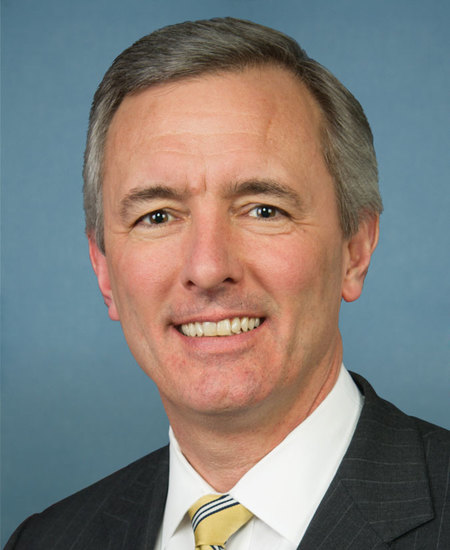
Rep. John Katko
Sponsored bills
Supporting Early-childhood Educators' Deductions Act or the SEED Act This bill expands the tax deduction for the expenses of elementary and secondary school teachers to include early childhood educators.
Collaborate in an Orderly and Cohesive Manner Act This bill requires the Department of Health and Human Services (HHS) to award grants for implementing and evaluating specified models of care that integrate the delivery of behavioral health and primary care services. Specifically, HHS must award grants to primary care providers for the initial costs (e.g., hiring staff) of implementing such models. In awarding the grants, HHS must prioritize recipients that provide care to medically underserved populations and in areas where the prevalence of behavioral health conditions exceeds the national average. HHS must also provide additional incentive payments to recipients that use appropriate billing codes and quality measures for behavioral health services. In addition, HHS must award grants to national and regional organizations for providing technical assistance to health care providers and systems to improve implementation of integrated behavioral health and primary care models. Furthermore, HHS may direct its agencies to expand efforts to evaluate current and emerging integrated behavioral health and primary care models.
This resolution calls on all Americans to observe the 20th anniversary of the September 11 attacks and honor those who lost their lives.
Linking Seniors to Needed Legal Services Act of 2021 This bill establishes a grant program within the Department of Health and Human Services for states to support linkages between health services, social services, and other supports for vulnerable older adults, including through senior legal hotlines and medical-legal partnerships. A medical-legal partnership means an arrangement in a health care or social services setting that integrates lawyers and social workers to address the needs of an individual patient related to social determinants of health (nonmedical factors such as income that influence health outcomes) and to help clinicians, case managers, and social workers address structural problems at the root of many health inequities.
Working Dog Commemorative Coin Act This bill directs the Department of the Treasury to mint and issue 50,000 $5 gold coins, 500,000 $1 silver coins, and 750,000 half-dollar clad coins in commemoration of the service that working dogs provide to society. The designs of the coins minted under this bill shall be emblematic of the contributions of working dogs to society, including in detection, military service, therapy and assistance. Treasury may issue coins only during the one-year period beginning on January 1, 2023. All sales of coins shall include a surcharge, which shall be paid to America's VetDogs for general expenses associated with the fulfillment of its mission.
CISA Leadership Act This bill establishes a term limit and specifies the appointment process for the Director of the Cybersecurity and Infrastructure Security Agency (CISA) of the Department of Homeland Security. Specifically, the bill establishes a five-year term for the director of CISA. The director shall be appointed by the President, by and with the advice and consent of the Senate.
Supporting Expanded Review for Veterans In Combat Environments Act of 2021 or the SERVICE Act of 2021 This bill expands eligibility for Veterans Health Administration mammography screenings to veterans who served in certain locations during specified periods, including those who were exposed to toxic substances at such locations. The specified locations and corresponding time periods include Iraq between August 2, 1990, and February 28, 1991, and from March 19, 2003, until burn pits (areas used for burning solid waste in open air without equipment) are no longer used in Iraq; the Southwest Asia theater of operations, including Kuwait, Saudi Arabia, Oman, and Qatar, from August 2, 1990, until burn pits are no longer used in such locations; and Afghanistan, Djibouti, Syria, Jordan, Egypt, Lebanon, and Yemen from September 11, 2001, until burn pits are no longer used in such locations; and other locations and time periods as determined by the Airborne Hazards and Open Burn Pit Registry. The bill specifies that the listed locations do not include bodies of water around or airspace above such locations.
This bill permanently extends the authority of the Department of Veterans Affairs to make grants for the transportation of highly rural veterans to health care facilities.
William Becker Promoting Careers in Aviation for America's Veterans Act This bill modifies the treatment of reimbursed flight training expenses for tax deduction purposes and in relation to educational assistance benefits for veterans. In taxable years before January 1, 1980, the determination of whether a deduction for flight training expenses is authorized as a trade or business expense must be made without regard to whether the taxpayer was reimbursed for any portion of such expenses by the Department of Veterans Affairs (VA). The bill removes the requirement that an individual must possess a valid private pilot certificate and meet certain medical requirements to utilize VA educational assistance for flight training purposes. The VA, the Department of Defense, and the Department of Labor must develop a national strategy for providing assistance to veterans in pursuing careers in aviation.