

Securing Systemically Important Critical Infrastructure Act This bill sets out a process to designate elements of critical infrastructure as systemically important. Critical infrastructure refers to the machinery, facilities, and information that enable vital functions of governance, public health, and the economy. Specifically, the Cybersecurity and Infrastructure Security Agency (CISA) must establish a methodology based on objective criteria to designate critical infrastructure as systemically important. In developing the criteria, CISA must consider, among other factors, the scale of the potential effects of a disruption to the infrastructure on domestic security, the economy, health, or safety. Using the methodology, CISA must make a preliminary designation and then provide an opportunity for the infrastructure's owner or operator to share additional information. A preliminary designation becomes final after 30 days unless, on the basis of additional information, CISA determines the infrastructure does not meet required criteria. The bill also requires CISA to maintain a list of systemically important critical infrastructure, prioritize systemically important critical infrastructure in its programs and activities, report on various matters related to the designation process, and assess processes for and benefits of enhanced risk management coordination between the federal government and the owners and operators of systemically important critical infrastructure. Additionally, the Department of Homeland Security must prioritize the security clearance applications of owners and operators of systemically important critical infrastructure.
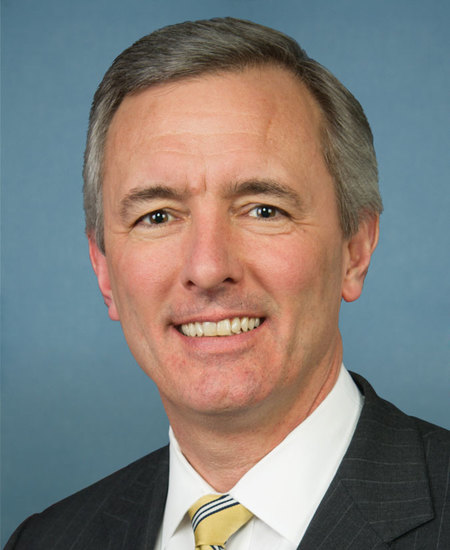
Rep. John Katko
Sponsored bills
Animal Freedom from Testing, Experiments, and Research Act of 2021 or the AFTER Act of 2021 This bill requires federal research facilities to facilitate the adoption or nonlaboratory placement of certain warm-blooded animals (e.g., dogs, cats, monkeys, guinea pigs, hamsters, and rabbits) with animal rescue organizations, animal sanctuaries, animal shelters, or individuals. In order to be adopted or placed, the animals must (1) no longer be needed for research; (2) be suitable for release; (3) not be birds, rats, or mice.
C yber Incident Reporting for Critical Infrastructure Act of 2021 This bill requires reporting and other actions to address cybersecurity incidents, including ransomware attacks. Entities that own or operate critical infrastructure must report cybersecurity incidents (e.g., ransomware attacks) within specified time frames while other entities may voluntarily report incidents. The Cybersecurity and Infrastructure Security Agency (CISA) must (1) carry out rulemaking to implement the reporting requirements, and (2) establish an office to receive and analyze such reports. To the extent practicable, CISA must align its rules with existing requirements related to the reporting of cybersecurity incidents. The bill limits the use and disclosure of reported information. The information may be shared (subject to protections and restrictions) with federal agencies or to address cybersecurity threats. However, shared information may not be used as a basis for certain regulatory enforcement. Additionally, an entity may not be liable for submitting required reports. Further, reports are not subject to laws governing release of federal or other governmental records. The bill authorizes CISA to take specified action (e.g., issuing subpoenas) if an entity fails to submit a required report. CISA may share subpoenaed information with a regulator or the Department of Justice for regulatory enforcement or criminal prosecution.
Unmanned Aerial Security Act or the UAS Act This bill prohibits the Department of Homeland Security (DHS) from operating, financing, or procuring unmanned aircraft systems (UAS) or UAS operating, detection, or identification systems that are manufactured in certain foreign countries or by corporations domiciled in such foreign countries. Applicable foreign countries include those identified as foreign adversaries in the intelligence community's latest annual threat assessment and other countries designated by DHS. DHS may waive the prohibition for (1) the national interest of the United States; (2) counter-UAS surrogate research, testing, development, evaluation, or training; or (3) intelligence, electronic warfare, or information warfare operations, testing, analysis, and training. An office or component of DHS may continue to operate a UAS or system in its inventory that would otherwise be prohibited until DHS grants or denies a waiver or until one year after this bill is enacted, whichever is later.
One-Stop Pilot Program Act of 2021 This bill authorizes the Transportation Security Administration (TSA) to conduct a pilot program at not more than six foreign last point of departure airports to permit passengers and their accessible property to bypass domestic security rescreening at a connecting airport in the United States. Screening may be bypassed if (1) the country of departure has an aviation screening agreement with the United States setting standards and protocols comparable to those in the United States; (2) passengers cannot access their checked baggage until arriving at their final destination; and (3) upon arrival in the United States, passengers do not come into contact with other arriving international passengers (or their property) or persons who have not been screened. The TSA must ensure there is no reduction in the level of security or specific aviation security standards and requirements for screening passengers and their property prior to boarding an international flight bound for the United States, including standards or requirements regarding (1) high risk passengers; and (2) weapons, explosives, and incendiaries. If the TSA determines that the foreign countries participating in the screening agreements have not maintained and implemented comparable standards and protocols to those in the United States, it must ensure that passengers and their property arriving from the foreign airports are rescreened in the United States before they are permitted into sterile areas of the airports. The pilot program shall terminate six years after the enactment of the bill.
Israel Relations Normalization Act of 2021 This bill requires the Department of State to take certain actions promoting the normalization of relations between Israel, Arab states, and other relevant countries and regions. Specifically, the State Department must develop a strategy on expanding and strengthening the Abraham Accords (the term used to refer collectively to agreements between Israel and the United Arab Emirates and between Israel and Bahrain marking the public normalization of relations between the two Arab countries and Israel). The strategy must include a description of how the U.S. government will encourage further normalization of relations with Israel. In addition, the State Department must report on options for U.S. international efforts to promote the strengthening of ties between Israel, Arab states, and other relevant countries and regions. The State Department must also report on the status of the normalization of relations with Israel, including information on (1) laws that punish individuals for people-to-people relations with Israelis (i.e., anti-normalization laws), and (2) evidence of steps taken by Arab governments toward permitting or encouraging normalized relations between their citizens or residents and Israeli citizens.
This resolution recognizes the importance of ending the stigmatization of substance use disorder.
Veteran's Electronic Transcript of Residency for Entering New Tenancies Act or the VET RENT Act This bill requires the Department of Defense to establish and implement a standard record of housing history for members of the Armed Forces who reside in housing provided by the United States.
This resolution expresses support for the designation of Rail Safety Week.
COVID-19 Vaccine Developers Gold Medal Act This bill provides for the award of a Congressional Gold Medal to recognize all those whose efforts led to the development of COVID-19 vaccines that received emergency use authorizations.