Benjamin Berell Ferencz Congressional Gold Medal Act This bill provides for the award of a Congressional Gold Medal to Benjamin Berell Ferencz in recognition of his service to the United States and the international community during the post-World War II Nuremberg trials and his lifelong advocacy for international criminal justice and the rule of law.
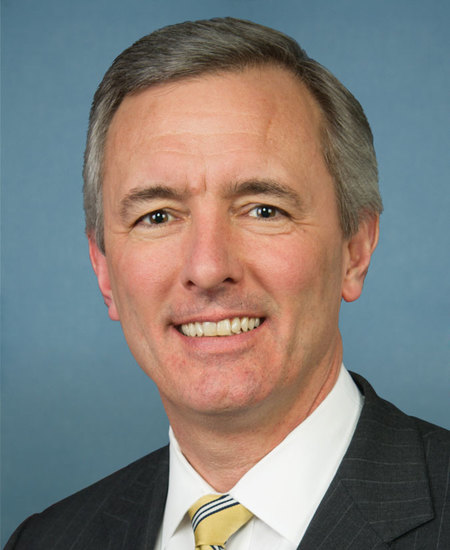
Rep. John Katko
Sponsored bills
Maddy summaryHRES 1093 is a symbolic House resolution designating May 2022 as "Mental Health Awareness Month." It expresses support for raising public awareness about mental health, emphasizes that mental well-being is as important as physical health, and encourages efforts to reduce stigma and improve access to services. The resolution does not create new laws or allocate funding but calls for recognizing mental health as a national priority and applauds existing efforts by organizations. It was introduced by multiple representatives and passed in the House on May 6, 2022, as a non-binding gesture.
Childhood Cancer Survivorship, Treatment, Access, and Research Reauthorization Act of 2022 or the Childhood Cancer STAR Reauthorization Act This bill reauthorizes through FY2028 and modifies pediatric cancer research and related programs, including to expand collection of and access to relevant biospecimens and to support the transition of pediatric cancer survivors to primary care.
Maddy summaryHRES 1073 is a symbolic House resolution expressing support for National Child Abuse Prevention Month. It does not create new laws or allocate funding but formally endorses five key areas: raising public awareness about preventing childhood sexual abuse, supporting survivors' healing, advancing justice for victims, increasing education on abuse signs, and recognizing the need for more federal resources in prevention and support efforts. The resolution acknowledges statistics on child abuse prevalence and pandemic-related risks but focuses solely on expressing congressional backing. It directly affects the public and organizations working on child abuse prevention, though it has no binding legal effect.
Shadow Wolves Enhancement Act This bill authorizes U.S. Immigration and Customs Enforcement (ICE) to reclassify officers assigned to the tactical patrol unit on Tohono O'odham Nation land, commonly known as Shadow Wolves , as ICE special agents upon completing certain required training. Officers assigned to a comparable unit, regardless of location, may also be reclassified as ICE special agents upon completing the training. The Department of Homeland Security and the Government Accountability Office shall separately study and report on the best processes for expanding the Shadow Wolves program.
Maddy summaryHR 7477, the CERTS Tax Exemption Act, ensures that grants provided under the Coronavirus Economic Relief for Transportation Services Act are tax-free for eligible transportation service providers. The bill directly affects companies and organizations providing transportation services that receive these specific federal grants. Key provisions state that grant amounts cannot be counted as taxable income, deductions related to grant-funded costs cannot be denied, and tax attributes (like basis increases) must be treated as tax-free for partnerships and S corporations. This change simplifies tax treatment for recipients by preventing unintended tax liabilities on relief funds.
Comprehensive Southern Border Strategy Act This bill requires the Department of Homeland Security to report to Congress a comprehensive southern border strategy. The strategy must include (1) an overview of current security risks along the southern border; and (2) an assessment of the barriers, technologies, and tools that are necessary to achieve and maintain situational awareness and operational control of the border.
DHS Trade and Economic Security Council Act of 2021 This bill establishes the DHS Trade and Economic Security Council, which shall provide trade and economic security advice and recommendations to the Department of Homeland Security (DHS). This includes identifying concentrated risks and setting priorities for protecting the nation's trade and economic security. The bill also establishes the position of Assistant Secretary for Trade and Economic Security within DHS's Office of Strategy, Policy, and Plans.
Postal Service Reform Act of 202 2 This bill addresses the finances and operations of the U.S. Postal Service (USPS). The bill requires the Office of Personnel Management (OPM) to establish the Postal Service Health Benefits Program within the Federal Employees Health Benefits Program under which OPM may contract with carriers to offer health benefits plans for USPS employees and retirees. The bill provides for coordinated enrollment of retirees under this program and Medicare. The bill repeals the requirement that the USPS annually prepay future retirement health benefits. Additionally, the USPS may establish a program to enter into agreements with an agency of any state government, local government, or tribal government, and with other government agencies, to provide certain nonpostal products and services that reasonably contribute to the costs of the USPS and meet other specified criteria. The USPS must develop and maintain a publicly available dashboard to track service performance and must report regularly on its operations and financial condition. The Postal Regulatory Commission must annually submit to the USPS a budget of its expenses. It must also conduct a study to identify the causes and effects of postal inefficiencies relating to flats (e.g., large envelopes). The USPS Office of Inspector General shall perform oversight of the Postal Regulatory Commission.

Ensuring Lasting Smiles Act This bill requires private health insurance plans to cover diagnosis and treatment of congenital anomalies and birth defects, such as reconstructive services and items. Coverage must include services and items that functionally improve, repair, or restore any body part that is medically necessary for normal bodily functions or appearance, as determined by the treating physician. Coverage limits and cost-sharing requirements for such services and items may not be more restrictive than those applicable to all medical and surgical benefits under the plan.