

Maddy summaryThis bill establishes the Fort Ontario National Monument in New York to preserve and interpret the history of 982 World War II refugees housed at the site from 1944 to 1946. It defines the monument's boundary using a specific map from a 2024 study and requires the Secretary of the Interior to acquire sufficient land before formal establishment. The monument will be managed under National Park System rules, with provisions for cooperative agreements to interpret the site and maintain nearby properties, while preserving existing public access to athletic facilities on the land. The law mandates a management plan within three years and emphasizes protecting the historical significance of the refugee experience.
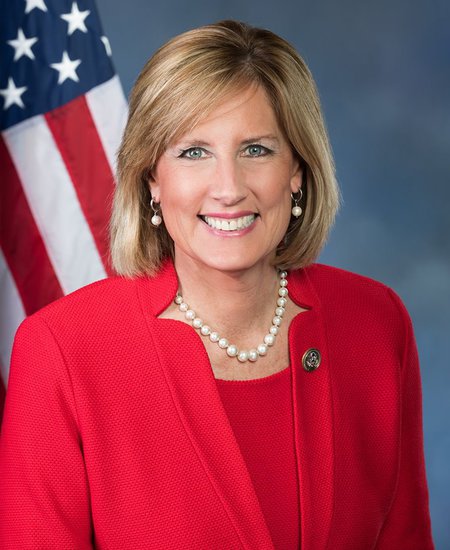
Rep. Claudia Tenney
Sponsored bills
Maddy summaryHR 9534, the National Constitutional Carry Act, would prohibit states and localities from banning or restricting the public carrying of legally owned firearms by eligible U.S. citizens. It directly affects all gun owners who meet federal and state possession requirements, removing the need for permits or licenses to carry in public spaces. Key provisions state that any state law restricting public carry - such as requiring permits or imposing financial barriers - would be invalidated, with exceptions for privately-owned businesses that clearly prohibit firearms or locations with security screening. The bill bases this on Supreme Court rulings affirming the constitutional right to carry firearms for self-defense outside the home.
Maddy summaryThe LIFT AI Act (HR 9211) provides federal funding to develop AI literacy education for K-12 students and teachers. It directs the National Science Foundation to award grants to colleges, nonprofits, or consortia for creating classroom curriculum, teacher training, and evaluation tools focused on AI skills like ethical use, critical interpretation, and problem-solving. The bill specifically targets schools (K-12) and aims to integrate AI literacy into existing lessons through project-based learning and professional development. Key provisions include developing learner-centered materials, training educators on AI proficiency, and creating tools to assess student progress in AI literacy.
Maddy summaryHR 8282, the "Illegitimate Court Counteraction Act," imposes U.S. sanctions on foreign individuals or entities supporting the International Criminal Court (ICC) in investigating or prosecuting "protected persons." Protected persons include U.S. military personnel, officials, and allied personnel (from non-ICC member countries) who are not under ICC jurisdiction. The bill requires the President to block assets and deny visas to targeted foreign persons and their immediate family members within 60 days of the ICC attempting such actions. It mandates congressional notification of sanctions and allows termination if the ICC ceases all such efforts against protected persons. The law focuses on restricting U.S. economic and travel access to ICC supporters targeting specific U.S. and allied personnel.
Maddy summaryThe SAVES Act establishes a 5-year pilot program where the VA awards competitive grants to accredited nonprofits (e.g., Assistance Dogs International or International Guide Dog Federation members) to provide service dogs to veterans with specific disabilities like mobility issues, PTSD, TBI, or visual/hearing impairments. It requires veterans with mental health conditions to undergo a VA mental health evaluation to confirm the dog is the optimal treatment, prohibits nonprofits from charging veterans fees, and mandates VA-provided veterinary insurance for the dogs. The program is funded with $10 million annually for five years and directly affects eligible veterans enrolled in VA care with qualifying disabilities and participating nonprofit service providers.
Maddy summaryThe PAW Act of 2024 amends the tax code to allow taxpayers to treat certain veterinary expenses for service animals or pets as medical care expenses deductible on their federal income taxes. It specifically covers up to $1,000 annually per pet for veterinary care (including diagnostic tests, medicine, and surgery) or pet health insurance, applying to the taxpayer, their spouse, or dependents. This affects individuals with qualifying service animals (defined by existing federal regulations) or pets meeting the Agriculture Improvement Act's definition. The provision applies to expenses paid after the bill's enactment, with the $1,000 limit adjusted annually for inflation.
Maddy summaryHRES 1425 is a non-binding resolution (not a law) passed by the House of Representatives. It states that requiring valid photo identification for voting is a "fundamental component of secure elections," citing examples where photo ID is already required for other government services (like Social Security or banking) and private activities (like buying a car or boarding a plane). The resolution does not create new voting requirements or change election laws - it only expresses the House's position. It directly affects the legislative record but has no legal impact on voter eligibility or election procedures.
Maddy summaryHR 9481 establishes a Northern Border Coordination Center within the Department of Homeland Security to improve coordination among federal, state, tribal, and international partners for border operations along the U.S.-Canada border. The center will coordinate strategy implementation, provide training for personnel, and serve as a hub for sharing information and intelligence related to border security. It must be located near existing Border Patrol, Air and Marine Operations, and Coast Guard facilities, operating separately from existing DHS authorities under the Homeland Security Act.
Maddy summaryHJRES 167 cancels a U.S. Department of Agriculture rule that would have allowed electronic eartags as official identification for cattle and bison. The resolution directs that the rule published in the Federal Register on May 9, 2024 (89 Fed. Reg. 39540), has no force or effect. This directly affects ranchers and farmers who would have been required to use electronic identification systems for livestock. The bill halts the implementation of this specific regulatory change without creating new requirements.
Maddy summaryHRES 1159 is a symbolic resolution (not a law) recognizing the existing partnership between the U.S. Department of Agriculture (USDA) and NASA. It highlights how the agencies share data - like NASA’s satellite soil moisture monitoring and USDA’s ground-based research - to improve agricultural practices, resource conservation, and food security. The resolution encourages them to strengthen collaboration, including STEM education efforts, to support farmers and ranchers who produce food, fuel, and fiber. It does not create new policies or funding but formally acknowledges their mutual benefits and urges continued cooperation.