

Maddy summaryThe SPECTRUM Act (HR 9436) creates a competitive grant program at the National Science Foundation to fund peer-led research on autism spectrum disorder specifically focused on women and girls. It directs the NSF to support studies examining characteristics like masking or camouflaging in autistic girls/women, communication dynamics between autistic and neurotypical women (including the "double empathy problem" theory), and other related topics. The grants are intended to strengthen research opportunities through participatory approaches where community members collaborate with researchers. This legislation directly affects researchers and organizations seeking federal funding for autism studies centered on gender-specific experiences, without creating new regulations or benefits for individuals.
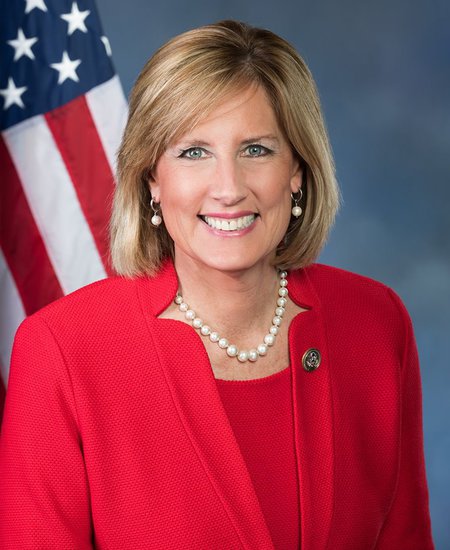
Rep. Claudia Tenney
Sponsored bills
Maddy summaryHR 7667, the MAPLE Act, amends the seniors farmers' market nutrition program to include maple syrup as an eligible product. This change directly affects seniors who receive nutrition benefits through participating farmers' markets, allowing them to purchase maple syrup with their benefits. The bill adds "maple syrup" to the list of qualifying items previously limited to herbs. It makes a specific, narrow adjustment to the program's eligibility rules without altering other program requirements. This is a procedural amendment focused solely on expanding the range of agricultural products covered.
Maddy summaryThis bill authorizes border states (adjacent to the U.S. northern or southern border) to place movable, temporary structures on federal land near the border for security purposes without needing a special use permit. States must notify the relevant federal agency (e.g., Bureau of Land Management or Forest Service) at least 45 days before placement, and structures can remain for up to one year, with possible 90-day extensions if U.S. Customs and Border Protection determines "operational control" hasn't been achieved. The bill directly affects border states and federal land management agencies by streamlining temporary border security measures on public lands.
Maddy summaryHR 9388, the Modern Firearm Safety Act, prohibits federal, state, and local governments from requiring certain safety features on handguns sold in interstate commerce. The bill specifically bans mandates for: loaded indicators, magazine insertion mechanisms, microstamping (microscopic markings on shell casings), or attachment points for such features. This directly affects handgun manufacturers and state/local governments that might have proposed or implemented such requirements. The law prevents new regulations requiring these features on handguns commonly used by the public, focusing on removing specific technical mandates rather than broader safety measures.
Maddy summaryHR 9374, the Stand with Israel Act, prohibits U.S. federal funds from being used to support the United Nations or its entities if they restrict Israel's full participation as a member state. The bill specifically blocks funding for any UN body that expels, downgrades, or suspends Israel's membership or limits its ability to participate equally with other nations. This affects U.S. government contributions to the UN, requiring the Department of State and other agencies to halt funding for such UN actions. The key mechanism is a new provision in the UN Participation Act that mandates this funding restriction whenever Israel's UN participation is impaired.
Maddy summaryThe SAFER at the Border Act prohibits the U.S. Department of Homeland Security from temporarily admitting (paroling) certain individuals at the border. It defines "known terrorists" (those arrested, charged, or convicted for terrorism), "suspected terrorists" (reasonably suspected of terrorism), and "special interest aliens" (those with potential terrorism links based on travel patterns). The bill explicitly bans parole for these individuals, even for humanitarian reasons or public benefit, and also prohibits parole for refugees. Additionally, it allows states to sue the Department of Homeland Security if they suffer financial harm exceeding $100 from the parole of such individuals.
Maddy summaryThe Save our Safety-Net Hospitals Act of 2024 modifies Medicaid payment rules to better support hospitals serving large numbers of low-income patients. It removes a restriction that previously prevented some safety-net hospitals from receiving full reimbursement for care provided to these patients. The bill allows these hospitals to count payments from Medicare and other programs when calculating their Medicaid reimbursement, ensuring they are fully compensated for services. This change applies to fiscal years beginning October 1, 2021, and prevents states from recouping past payments made under the old rules.
Maddy summaryHR 9343 prohibits federal, state, and local governments from requiring or mandating the sale of electric vehicles (EVs) or banning gas and hybrid vehicles based on propulsion type. It specifically blocks regulations that set EV sales targets, impose penalties for not meeting EV quotas, or restrict the sale of non-EV vehicles. The bill would withhold 10% of a state’s federal transportation funding if it violates these prohibitions. This directly affects state and local governments with EV mandates, preventing them from enforcing such rules while allowing market choice for consumers and manufacturers.
Maddy summaryThis joint resolution (HJRES 200) disapproves a rule issued by the Department of Health and Human Services (HHS) concerning the importation of dogs and cats. The rule, published in the Federal Register on May 13, 2024, established requirements for foreign quarantine of these animals to prevent communicable diseases. By passing this resolution, Congress directs that the HHS rule has no legal effect and cannot be enforced. The measure directly affects pet importers, breeders, and travel-related businesses handling international pet shipments.
Maddy summaryThis bill ensures that Khalid Shaikh Mohammad, Walid Muhammad Salih Mubarak Bin ‘Attash, and Mustafa Ahmed Adam al Hawsawi - detainees held at Guantanamo Bay for their alleged roles in the September 11, 2001, attacks - remain subject to military trial under Chapter 47A of Title 10, United States Code, regardless of any plea agreements they may have entered. It explicitly allows the death penalty as a sentencing option in their trials and mandates strict confinement conditions: solitary confinement at Guantanamo Bay, no contact with foreign nationals, no unauthorized psychological treatment, and no transfer to the U.S. mainland or any other country. The bill directly affects only these three individuals and modifies procedural and sentencing rules for their specific cases.