

Maddy summaryThe Maximum Pressure Act (HR 6114) is a legislative proposal that would maintain and expand U.S. sanctions against Iran. The bill would codify existing sanctions, require Iran to meet 12 specific conditions before sanctions could be lifted (including ending support for terrorism, releasing hostages, and ending nuclear enrichment), and expand sanctions on Iran's Revolutionary Guard Corps and missile programs. It also establishes new reporting requirements for the U.S. government to monitor Iran's activities and the impact of sanctions. The legislation would require congressional review before any sanctions could be lifted or modified, preventing the executive branch from unilaterally easing restrictions.
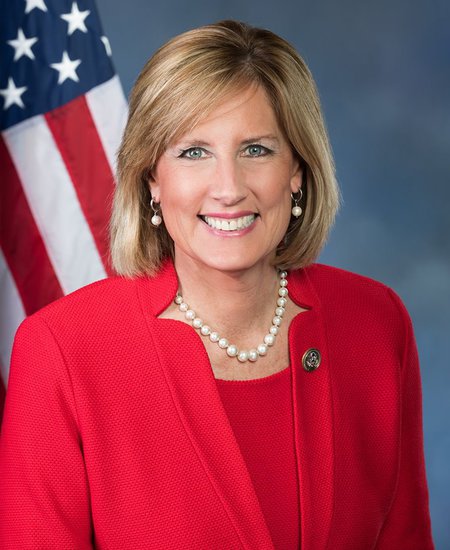
Rep. Claudia Tenney
Sponsored bills
Maddy summaryThe PILLS Act creates tax credits to encourage domestic production of generic drugs and biosimilars. It provides a production credit (up to 35% of value added for final drug production) for manufacturers producing eligible drugs in the U.S., with additional bonus credits for domestically sourced materials. The bill also establishes a 25% investment credit for qualified facilities building new production capacity, with both credits phasing out after 2029 and terminating for new construction after 2027. These provisions directly affect U.S. pharmaceutical manufacturers of generic drugs and biosimilars, aiming to increase domestic supply of these medications.
Maddy summaryHR 5967, the Unemployment Integrity Act of 2023, requires unemployment claimants to participate in job-seeking activities to maintain benefits. Specifically, it mandates that claimants respond to work-related requests, attend reemployment interviews, and comply with reasonable requests like drug testing or skills assessments. The bill also requires states to conduct a study on increasing random audits of unemployment claims and mandates that states adopt these new requirements to receive federal funds for extended unemployment benefits. These changes apply to weeks beginning one year after the bill's enactment, with adjustments for states holding biennial legislative sessions. The law directly affects individuals claiming unemployment benefits by linking eligibility to active job-seeking participation.
Maddy summaryThis bill, titled "Freezing HAMAS Act" (though it concerns Iran sanctions, not Hamas), reinstates U.S. sanctions on Iran that were previously waived or suspended under agreements with Iran. It specifically targets sanctions from the 2012 Iran Freedom and Counter-Proliferation Act and the 2012 National Defense Authorization Act, including a September 2023 waiver related to fund transfers. The bill prohibits the U.S. government from releasing funds or assets to Iran or granting further waivers related to these sanctions. It directly affects U.S. government actions regarding Iran financial transactions and enforcement of existing sanctions.
Maddy summaryThis bill, HR 5796, prohibits the Department of Health and Human Services from implementing a proposed rule requiring minimum staffing levels in nursing homes. It creates an advisory panel of 15 members - including rural nursing home staff and experts - to study workforce shortages and report on access barriers for seniors, especially in rural areas. The panel must submit an initial report within 60 days, analyzing staffing challenges and recommending solutions to strengthen the nursing home workforce. These provisions directly aim to prevent nursing home closures (like the 129 that occurred in 2022) that threaten rural seniors’ access to care.
Maddy summaryThis bill amends the tax code to allow individuals to treat medical expenses paid before opening a Health Savings Account (HSA) as qualified expenses, if the HSA is established within 60 days of starting a high-deductible health plan. It directly affects people who set up an HSA shortly after enrolling in a qualifying health plan, making it easier to use HSA funds for prior medical costs. The key provision treats the HSA as if it existed from the start date of their health coverage for expense eligibility purposes. The change applies to health coverage beginning after December 31, 2023. This is a technical adjustment to HSA rules, not a broad policy change.
Maddy summaryThis bill allows married couples to contribute to a single Health Savings Account (HSA) using both spouses' catch-up contribution limits. It directly affects married couples with family coverage under high-deductible health plans who are both eligible to make catch-up contributions (age 55+). The key provision changes IRS rules so that the annual HSA contribution limit is divided equally between spouses (unless they agree otherwise) and includes both spouses' catch-up amounts if they qualify. The changes apply to taxable years beginning after December 31, 2023.
Maddy summaryThe DRA of 2023 adjusts Medicare payment rates for specific durable medical equipment (DME) items that were part of the 2021 competitive bidding program but for which no supplier contracts were finalized. It directly affects DME suppliers and Medicare beneficiaries by establishing a new 2024 payment formula: 90% of the adjusted payment amount plus 10% of the unadjusted fee schedule for eligible items. The bill also extends a temporary transition rule for non-rural areas through December 31, 2024, while delaying a regulatory change until 2025. These provisions aim to stabilize payments for DME items that did not transition to standard pricing under prior rules.
Maddy summaryThe Maintaining Investments in New Innovation Act (HR 5547) extends the exclusivity period for certain advanced drugs from 7 to 11 years. It defines an "advanced drug product" as a drug using genetically targeted technology to change how genes work, such as drugs that suppress or activate gene function. The bill amends the Social Security Act to update the definition of "qualifying single source drug" to include these advanced therapies with the longer exclusivity period. This change directly affects drug manufacturers developing such advanced therapies and influences Medicare's drug coverage rules by delaying generic competition for these specific treatments.
Maddy summaryThis bill sets strict timelines for Medicare administrative contractors to review requests for local coverage determinations. It requires contractors to determine within 30 days if a request is complete or incomplete, and if incomplete, notify the submitter within 60 days of missing information. For complete requests, contractors must complete research, consult experts, hold a 45-day public comment period, and issue a final decision within 9 months. The bill directly affects Medicare contractors and healthcare providers or entities seeking coverage decisions for Medicare services.