

Maddy summaryThe Essential Caregivers Act of 2024 requires nursing homes and similar facilities to allow residents to designate essential caregivers who provide emotional support or assistance with daily activities. During emergencies when regular visitation is restricted, facilities must permit at least one essential caregiver access to residents daily and cannot deny access without following specific procedures. Facilities may deny access for a maximum of 7 days during emergencies (or 14 days with state approval), and must provide a written explanation and appeal process if access is denied. The bill establishes a 48-hour appeal process for residents and caregivers to challenge denials, with facilities required to prove violations during appeals. This law applies to Medicare skilled nursing facilities, Medicaid nursing facilities, intermediate care facilities, and certain inpatient rehabilitation facilities.
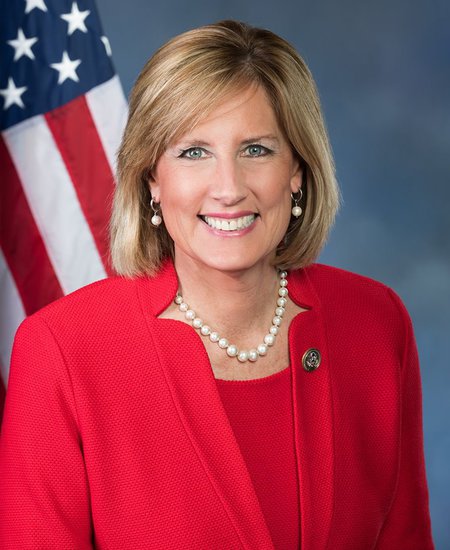
Rep. Claudia Tenney
Sponsored bills
Maddy summaryThis bill amends the tax code to prohibit 501(c)(3) organizations (like charities and nonprofits) from providing direct or indirect funding to states or local governments for election administration, such as voting systems or polling operations. It allows exceptions only for donating physical space to be used as a polling place. The restriction applies to all such funding starting in 2025, with the exception for polling place donations remaining. This change directly affects nonprofits that previously provided election-related support, aiming to limit their role in election administration through tax-exempt funding.
Maddy summaryThis bill prohibits states from using federal Temporary Assistance for Needy Families (TANF) funds to replace state or local spending that would otherwise occur without federal support. It requires states to certify to the federal government that TANF funds will supplement, not supplant, existing state funding for family assistance programs. The law also extends the current TANF program authorization through September 30, 2026, maintaining existing funding levels and program rules from fiscal year 2023. These changes directly affect states administering TANF and ensure federal funds specifically support low-income families rather than offsetting state budgetary decisions.
Maddy summaryHR 7292, the Health ACCESS Act, amends the Social Security Act to establish new rules for healthcare information platforms (like online provider directories). It prohibits these platforms from steering patients toward specific providers based on payment, making medical claims, sharing patient contact details without consent, arranging transportation, or sending unsolicited marketing. The bill requires platforms to disclose financial arrangements with providers, base provider information on objective criteria, and set compensation terms in advance that don't exceed fair market value or tie to services paid by federal health programs. This directly affects healthcare information service providers and the providers/suppliers using their platforms.
Maddy summaryThis bill removes a requirement for ambulatory surgical centers participating in Medicare to report the COVID-19 vaccination status of their healthcare workers. Specifically, it directs the Secretary of Health and Human Services to revise Medicare regulations (42 CFR §§ 416.300-416.330) within 45 days of enactment to eliminate this reporting mandate. The change directly affects ambulatory surgical centers that receive Medicare funding, removing a specific administrative burden related to employee vaccination data. The bill focuses solely on modifying existing reporting rules, with no new funding or program requirements.
Maddy summaryThis bill changes the negotiation period for small-molecule drugs under the federal Drug Price Negotiation Program from 7 years to 11 years, matching the existing 11-year period for biologic drugs. It directly affects drug manufacturers participating in the program by extending the timeframe for price negotiations with the government. The amendment applies to all small-molecule drugs covered under the program, creating a uniform negotiation timeline for both drug types. The change takes effect as if included in the Inflation Reduction Act of 2022.
Maddy summaryHR 7142 (Alternatives to PAIN Act) requires Medicare Part D plans to cover non-opioid pain management drugs with no deductible and at the lowest copay level starting in 2025. It defines "qualifying non-opioid drugs" as FDA-approved medications that don’t act on opioid receptors (like certain NSAIDs or nerve pain treatments), excluding opioids and schedule I-III drugs. The bill prohibits Medicare plans from forcing patients to try opioids first (step therapy) or requiring prior approval for these non-opioid options. It directly affects Medicare beneficiaries needing pain management, especially those seeking alternatives to opioids for post-surgical or acute pain. The policy change aims to improve access to non-addictive pain treatments while preserving doctors' authority to prescribe medically appropriate care.
Maddy summaryThis bill amends the Social Security Act to require states to establish child support obligations for the biological father of an unborn child when the mother requests it. Key provisions include allowing support to begin from the month of conception (as determined by a physician), permitting retroactive payments even if paternity is established after birth, and requiring court determination of payment amounts based on the mother's and child's best interests. It prohibits forced paternity testing for unborn children if it risks harm and explicitly bans any experimental programs from modifying these provisions. The bill directly affects mothers of unborn children and biological fathers, expanding child support enforcement to cover pregnancy.
Maddy summaryThis bill prohibits the U.S. Department of Health and Human Services from entering or renewing contracts with Medicare Part D drug plan sponsors that have contracts with pharmacy benefits managers (PBMs) owning or controlling pharmacies. It directly affects Medicare Part D plan sponsors and PBMs with financial ties to pharmacies, banning such sponsor-PBM contracts starting 5 years after enactment (with a possible 2-year delay). The key mechanism requires the Secretary to exclude these sponsors from Medicare drug plans, aiming to reduce conflicts of interest where PBMs control both pharmacy networks and drug pricing.
Maddy summaryThis bill updates Medicare physician payment rules to improve stability and accuracy. It raises the budget neutrality threshold from $20 million (pre-2025) to $53 million in 2025, with annual indexing after 2026, to prevent excessive payment adjustments. The bill requires the Medicare program to correct budget neutrality payments based on actual service utilization data (not estimates) starting in 2025, and mandates updating direct cost inputs (like staff wages and equipment prices) every 5 years. It also caps annual changes to the physician payment conversion factor at 2.5% to limit sudden payment shifts, directly affecting Medicare physicians and healthcare providers receiving these payments.