

Maddy summaryThis bill freezes federal hiring and salary increases for one year, requiring agencies to maintain current staffing levels (based on employment as of enactment). After the initial freeze period, agencies must reduce staff by 2% within two years and by 5% within three years. The law applies to all federal agencies and their employees, with limited exceptions for appointments deemed critical to law enforcement, public safety, or national security. It directly changes personnel management by mandating specific workforce reductions and prohibiting pay raises.
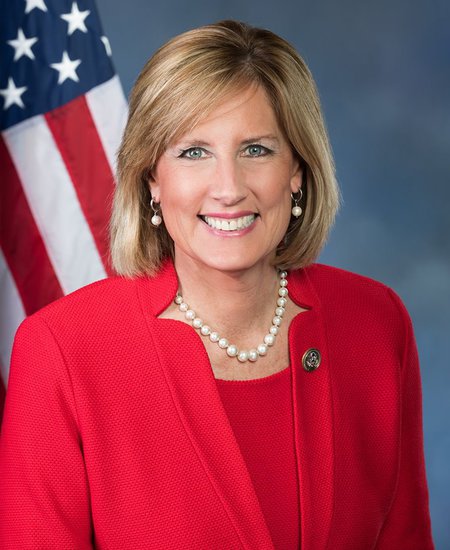
Rep. Claudia Tenney
Sponsored bills
Maddy summaryHR 196, the Family and Small Business Taxpayer Protection Act, rescinds unobligated funds previously allocated to the Internal Revenue Service (IRS) under the Inflation Reduction Act of 2022. Specifically, it directs the cancellation of unused balances from six specific funding categories within the IRS's budget as of the bill's enactment date. This action reduces the IRS's available funding without creating new tax policies or altering taxpayer obligations. The bill is procedural, focusing solely on redirecting existing, unspent government funds rather than changing tax laws or affecting individual taxpayers directly.
Maddy summaryHR 138, the Lowering Costs for Caregivers Act of 2025, expands tax-advantaged health savings by allowing taxpayers to use funds in Health Savings Accounts (HSAs), Flexible Spending Accounts (FSAs), and Health Reimbursement Arrangements (HRAs) to cover medical expenses for their parents, not just their spouse. The bill amends the Internal Revenue Code to explicitly include parents as eligible dependents under these accounts, removing prior restrictions. This change directly affects caregivers - primarily adult children supporting aging parents - who will now have greater flexibility to use pre-tax funds for their parents' medical care. The provisions apply to expenses incurred after December 31, 2024, and aim to reduce out-of-pocket costs for family caregivers.
Maddy summaryHR 202 establishes a commission to study relocating non-security federal agencies currently based in the Washington, D.C. metropolitan area to other U.S. locations. The commission, composed of senior federal officials including Cabinet secretaries and agency directors, must submit a report to Congress within one year. This report will evaluate potential relocations based on factors like cost of living, existing infrastructure, industry partnerships, and prior telework participation by agency staff. The bill itself does not move agencies or change policy - it only authorizes a study to assess relocation feasibility.
Maddy summaryThe Treat and Reduce Obesity Act of 2023 expands Medicare coverage for obesity treatment by allowing a wider range of healthcare providers - including nurse practitioners, dietitians, psychologists, and community-based counseling programs - to deliver intensive behavioral therapy for obesity, provided they coordinate with primary care providers. It also adds Medicare Part D coverage for medications used to treat obesity or for weight loss management in overweight individuals with related health conditions like diabetes or high blood pressure. These changes directly affect Medicare beneficiaries, particularly older adults (65+), who face higher obesity rates and associated costs, including $50 billion annually in Medicare spending for obesity-related care. The bill requires annual reports to Congress on implementation to improve coordination of obesity care across federal health programs.
Maddy summaryThis bill modifies how private colleges calculate a tax on investment income by excluding certain students from the tax threshold calculation. Specifically, it prevents colleges from counting students who don't meet eligibility requirements under the Higher Education Act (20 U.S.C. 1091(a)(5)) when determining if they owe the tax. Private colleges subject to this tax must also report both the pre-exclusion and post-exclusion student counts on their tax returns. The changes apply to tax years beginning after December 31, 2024.
Maddy summaryThis bill updates federal law to ensure tribal child support enforcement agencies have the same access to tax information as state agencies. It amends the Social Security Act and Internal Revenue Code to explicitly include tribal organizations receiving federal grants under Section 455(f) in provisions allowing the use of tax refund data to collect overdue child support payments. Tribal agencies will now be treated equally with state agencies for accessing tax information and receiving reimbursement for enforcement reports. This change directly affects Native American tribes operating child support programs and the parents and children they serve, enabling more effective collection of overdue support.
Maddy summaryThis bill creates a 4-year transitional coverage period for Medicare to automatically cover "breakthrough medical devices" - new FDA-prioritized devices approved after March 2021 - as "reasonable and necessary" for treatment. During this period, these devices qualify for additional payments under Medicare's hospital and outpatient payment systems without requiring separate approval. After the 4-year period, Medicare must develop regular coverage based on additional data, with automatic coverage for all approved uses if no action is taken within two years. The bill requires Medicare to assign unique codes for these devices within three months of FDA approval and to update payment systems regularly. It also includes special provisions for "specified breakthrough devices" that lack existing Medicare benefit categories, requiring reports on their impact and cost to Congress.
Maddy summaryThe Autism CARES Act of 2024 reauthorizes and enhances federal programs supporting individuals with autism spectrum disorder. It requires the National Institutes of Health to expand research to include more fields like gerontology and psychiatry, and to ensure research reflects the full range of needs of people with autism, including those with co-occurring conditions. The bill mandates regular reports to Congress on progress, mental health needs, and transition services for young adults with autism, while increasing funding for autism-related programs from fiscal year 2025 through 2029. This legislation directly affects individuals with autism, their families, caregivers, and healthcare providers by improving access to evidence-based services and research.
Maddy summaryThis bill, HR 1097 (Everett Alvarez, Jr. Congressional Gold Medal Act of 2023), authorizes the award of a Congressional Gold Medal to Everett Alvarez, Jr., in recognition of his service as a U.S. Navy pilot and Vietnam War prisoner of war. It directly honors Alvarez, who was the first U.S. pilot shot down in the Vietnam War, spent over 8.5 years in captivity, and later served in the Peace Corps and Veterans Administration. The bill’s key mechanism is directing the U.S. Mint to strike a gold medal bearing his name and image, with bronze duplicates available for sale to cover costs. It does not create new policies or affect any group beyond the honoree.