

Maddy summaryHR 6734 prohibits the use of federal funds to finalize, implement, or enforce the Bureau of Alcohol, Tobacco, Firearms, and Explosives' (ATF) proposed rule (2022R-17) defining "engaged in the business as a dealer in firearms." This bill directly affects the ATF by blocking funding for this specific regulatory rule, which was proposed in August 2023. The legislation does not create new requirements but prevents federal resources from being used to advance this particular ATF regulation.
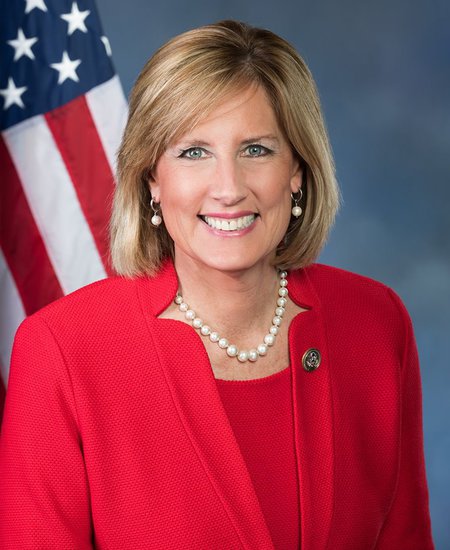
Rep. Claudia Tenney
Sponsored bills
Maddy summaryThis bill reauthorizes and extends funding for programs addressing substance use disorders and opioid addiction, including residential treatment for pregnant and postpartum women, first responder training, and community recovery initiatives. It increases funding levels for these programs, adds xylazine to Schedule III of controlled substances, and requires a study on remote monitoring for patients prescribed opioids. The bill also expands Medicaid coverage requirements for medication-assisted treatment and mandates reporting on mental health condition data alongside substance use disorder data, directly affecting individuals with substance use disorders, healthcare providers, and state and tribal governments.
Maddy summaryThis bill establishes tax relief for qualified residents of Taiwan earning income in the United States by reducing tax rates on interest, dividends, and royalties to 10% or 15% (instead of the standard 30%). It also exempts certain wages and income from entertainment activities under $30,000 from U.S. taxation. To qualify, individuals must meet specific residency requirements, and entities must demonstrate substantial business activity in Taiwan. The bill modifies withholding tax procedures to implement these new rates and requires reciprocal tax benefits from Taiwan to be in place.
Maddy summaryHJRES 88 is a resolution seeking to block a Department of Education rule that would have improved income-driven repayment options for federal student loan borrowers. The rule, published in the Federal Register on July 10, 2023, targeted the William D. Ford Direct Loan Program and the Federal Family Education Loan (FFEL) Program. This resolution uses the Congressional Review Act process to disapprove the rule, preventing it from taking effect and preserving the current repayment structure. If enacted, it would stop the proposed changes to repayment terms without altering existing loan policies.
Maddy summaryThis bill creates a 30% tax credit for owners of hydroelectric dams who make specific upgrades to their facilities. It directly affects dam operators who install qualifying improvements like fish passage systems, water quality enhancements, dam safety upgrades, or removal of obsolete river obstructions. The credit applies to property placed in service after December 2022, requires prior approval from FERC or state officials (before 2032), and covers items such as new turbines, sediment management systems, and small remote dams serving isolated communities. The tax code is amended to include this credit as a new provision under section 48F.
Maddy summaryHR 4468, the Choice in Automobile Retail Sales Act of 2023, blocks the Environmental Protection Agency (EPA) from finalizing or enforcing a specific proposed rule setting emissions standards for 2027+ light-duty vehicles. It amends the Clean Air Act to prevent future EPA regulations from mandating specific vehicle technologies or limiting the availability of new vehicles based on engine type (e.g., gasoline vs. electric). The bill directly affects EPA rulemaking authority and automakers' compliance with emissions standards, ensuring new vehicle options remain diverse without technology mandates. This is a procedural change to federal emissions regulations, not a direct consumer or industry mandate.
Maddy summaryThe PLAN for School Safety Act of 2023 creates a federal program to fund State and regional centers that help schools develop and improve individualized safety plans. These centers, established by eligible entities like state education agencies or Tribal organizations, provide tailored consulting on school safety, mental health, and violence prevention using research-backed methods. The program requires centers to cover 5% of activity costs and prioritizes support for schools in rural, Tribal, or low-resourced communities. Annual reports to Congress will track implementation progress, effectiveness, and how centers assist schools in accessing funding for safety initiatives.
Maddy summaryThis bill designates the United States Postal Service facility at 298 Route 292 in Holmes, New York, as the "Sheriff Adrian 'Butch' Anderson Post Office Building." It updates all federal references (including laws, maps, and documents) to use this new name for the location. The bill has no policy changes or financial impact - it solely commemorates Sheriff Adrian "Butch" Anderson through a building designation.
Maddy summaryHR 2988 requires the Department of Energy (DOE) and NASA to formally coordinate their research and development efforts through memoranda of understanding. The bill directs them to collaborate on specific areas like nuclear propulsion systems, quantum computing, environmental science, and data analytics, while ensuring competitive awards follow merit-based processes. It mandates that DOE and NASA share data and infrastructure where practical, and report to Congress within two years on their coordination progress and achievements. This legislation primarily affects DOE and NASA, facilitating joint projects without creating new funding but streamlining existing agency collaboration.
Maddy summaryThis bill requires the Department of Energy (DOE) and Department of Agriculture (USDA) to coordinate joint research projects on shared priorities like biofuels, AI for farming, energy-water systems, and carbon storage. It mandates a formal agreement between the departments to fund collaborative projects through competitive grants open to universities, labs, and industry. The departments must report to Congress within two years on their coordination efforts, research achievements, and future opportunities. This affects how DOE and USDA manage their research partnerships, not direct public policy or regulations.