

Maddy summaryHR 6910, the "BACKING the 2013 Brussels Agreement Act," would require the U.S. to withhold all foreign aid to Kosovo until Kosovo meets five specific conditions tied to the 2013 Brussels Agreement. These conditions include creating an Association/Community of Serb-majority Municipalities, removing special police from northern Kosovo, holding new mayoral elections in northern Kosovo, halting the seizure of Kosovo Serbs' property (like cars with Serbian plates), and respecting freedom of political expression for all ethnic groups. The bill states Kosovo has failed to implement the agreement and discriminated against Kosovo Serbs in areas including justice, property rights, and labor markets. U.S. aid to Kosovo, totaling over $2 billion since 1999, would remain suspended until these conditions are fulfilled.
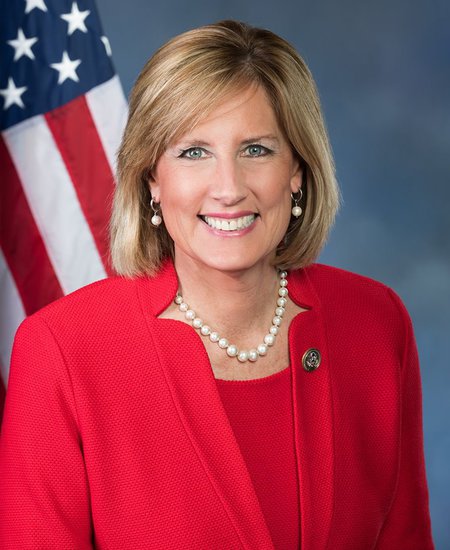
Rep. Claudia Tenney
Sponsored bills
Maddy summaryHR 6911, the ROBERT MALLEY Act, requires executive agency heads to explain to Congress within 15 days why an employee was furloughed or suspended without pay, including relevant evidence from investigations. It applies to most furloughs/suspensions but excludes those due to budget lapses or specific legal actions. The bill mandates unclassified written explanations (with optional classified annexes) to congressional committees overseeing the agency. It directly affects agency employees facing such actions when Congress requests an explanation, aiming to increase transparency in workforce decisions.
Maddy summaryThis bill designates the U.S. Postal Service facility at 86 Main Street in Haverstraw, New York, as the "Paul Piperato Post Office Building." It updates all official references in federal law, maps, and documents to reflect this new name. The bill does not change postal services, funding, or affect any specific group of people; it solely modifies the facility's official designation. This is a routine naming resolution with no substantive policy provisions.
Maddy summaryThe Bipartisan Workforce Pell Act creates a new grant program providing financial aid to students enrolled in short-term, career-focused educational programs (150-600 clock hours, 8-15 weeks) that prepare students for high-demand jobs. To qualify, programs must meet specific standards including alignment with industry needs, minimum job placement rates of 70%, and median earnings that exceed local wage benchmarks. The bill requires institutions to collect and publicly report data on program outcomes including completion rates, job placement, and student earnings through the College Scorecard website. It also establishes new accreditation standards for agencies evaluating these workforce programs, with $40 million authorized for fiscal year 2025 and $30 million for each of the next four years.
Maddy summaryThe TRANQ Research Act of 2023 requires the National Institute of Standards and Technology (NIST) to coordinate research on illicit drugs containing xylazine, novel synthetic opioids, and other concerning substances. The bill mandates NIST to develop faster detection methods, create data tools for identifying these substances, and consult with agencies like the DEA, CDC, and National Institute on Drug Abuse to establish safe handling practices. NIST must also form partnerships with universities, federal labs, and the private sector to improve detection capabilities. Within one year, NIST must report to Congress on its implementation, and the Comptroller General must conduct a study on federal capabilities to respond to new psychoactive substances, reporting within two years.
Maddy summaryHR 1147, the Whole Milk for Healthy Kids Act of 2023, allows schools participating in the National School Lunch Program to offer whole milk as an option during lunch. It amends the school lunch law to explicitly permit schools to serve flavored and unflavored whole milk alongside reduced-fat, low-fat, and fat-free milk choices for students. The bill also requires the Secretary of Agriculture to adjust meal regulations to account for saturated fat from whole milk, ensuring it doesn't count against meal fat limits. This change directly affects participating schools and the students who receive school lunches, expanding their milk beverage options.
Maddy summaryThis bill expands eligibility for government-furnished headstones, markers, or medallions for Medal of Honor recipients. It directly affects veterans who have received the Medal of Honor but were previously excluded from this benefit due to a specific rule. The key change modifies eligibility rules to remove an exclusion (previously applying to certain recipients), ensuring all Medal of Honor recipients qualify for these headstones or markers. The bill also corrects a reference to the wrong section of law in the existing statute.
Maddy summaryThis House resolution (HRES 933) symbolically opposes New York’s Clean Slate Act, which automatically seals certain criminal records (misdemeanors after 3 years, some felonies after 8 years) for eligible individuals. It argues the law would prevent employers from accessing background checks during hiring, though the resolution itself has no legal effect. The resolution urges New York to prioritize crime prevention and public safety over this policy, citing concerns about employer access and recent crime statistics. (Note: This is a non-binding expression of opinion, not a legislative change.)
Maddy summaryThe Defense of Property Rights Act (HR 6758) would allow property owners to seek compensation in either U.S. District Court or the U.S. Court of Federal Claims when government actions - such as regulations or physical takings - deprive them of property rights without "just compensation." It repeals a law that previously forced owners to choose between courts, clarifies that "just compensation" includes full market value and business losses (with interest), and shifts the burden of proof to the government to justify regulatory actions. The bill directly affects individuals and businesses owning real estate, water rights, mineral rights, or other property protected under the Fifth Amendment, particularly when government rules significantly restrict property use or value. It sets a 6-year statute of limitations for claims and requires courts to award attorney fees to successful plaintiffs.
Maddy summaryThis bill modifies retirement savings rules to help caregivers who temporarily leave the workforce. It allows eligible individuals to make "catch-up" contributions to retirement accounts (like IRAs or 401(k)s) as if they were age 50, even if they're younger, based on how long they've been out of work providing care. Specifically, the age threshold is reduced by the number of years spent in "qualified unemployment periods" (defined as at least one year caring for dependents with no earned income, after age 18). To qualify, individuals must self-attest under penalty of perjury that they meet these conditions. The change applies to taxable years after the bill's enactment.