

Maddy summaryHRES 899 is a resolution recognizing the Suicide Awareness and Remembrance (SAR) Flag as a national symbol to honor military and veterans who died by suicide and promote mental health awareness. It designates the SAR Flag - created by veteran Kevin W. Hertell - as the official emblem for raising public awareness about military and veteran suicide, which affects over 20 veterans daily. The resolution requires the SAR Flag to be displayed year-round alongside U.S. and POW/MIA flags at all federal buildings. This procedural measure aims to reduce stigma around mental health care for service members and veterans without creating new laws or funding.
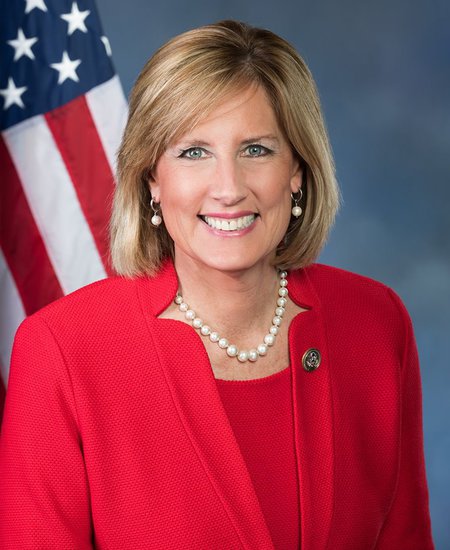
Rep. Claudia Tenney
Sponsored bills
Maddy summaryThis bill requires Congress to authorize any U.S. vote to allocate IMF funds (Special Drawing Rights) or support quota increases for eight specific countries: China, Russia, Iran, North Korea, Cuba, Venezuela, Nicaragua, and Afghanistan under Taliban control. It directs the U.S. Treasury to oppose IMF proposals that would benefit these nations through funding or policy changes. The law applies directly to U.S. representation at the International Monetary Fund, preventing automatic U.S. support without legislative approval. It targets countries designated as adversaries or subject to U.S. sanctions.
Maddy summaryHR 6131, the Commercial Space Act of 2023, establishes a new certification system for U.S. commercial space companies to operate spacecraft, replacing some existing licensing requirements. The bill requires companies to submit space debris mitigation plans and liability insurance as part of their certification application, with the Department of Commerce's Office of Space Commerce handling the process within 60 days. The law aims to reduce regulatory burdens while maintaining U.S. compliance with international space law obligations. This certification system directly affects commercial entities seeking to launch or operate spacecraft in outer space.
Maddy summaryHR 4670, the Small Business Contracting Transparency Act of 2023, requires the Small Business Administration (SBA) to submit annual reports starting May 1, 2024, to congressional committees on three categories of small businesses: women-owned, HUBZone-owned, and service-disabled veteran-owned. The reports must detail certification rates, contract awards (including dollar amounts and percentages), decertifications, and other specific metrics for each category. These reports aim to increase transparency around federal contracting practices for these businesses, using existing SBA funding without new appropriations. The bill directly affects the SBA, federal agencies awarding contracts, and congressional oversight committees by mandating standardized data collection and disclosure.
Maddy summaryHRES 888 is a non-binding House resolution introduced on November 21, 2023, by multiple representatives. It formally reaffirms the State of Israel's right to exist, states that denying this right constitutes antisemitism, and rejects calls for Israel's destruction. The resolution also condemns the Hamas-led terrorist attack on Israel. As a symbolic statement, it does not create new laws or affect any specific group directly.
Maddy summaryHRES 793 is a resolution passed by the U.S. House of Representatives calling on Hamas to immediately release all 199 hostages taken during Hamas' October 7, 2023 attack on Israel. The resolution condemns Hamas for the attack, the taking of hostages, and threats against hostages, while stating that holding hostages violates international humanitarian law under the Geneva Conventions. It demands the immediate release of all hostages and expresses sympathy for victims and their families. As a symbolic resolution, it does not create legal obligations but formally expresses the House's position.
Maddy summaryHR 6479 prohibits plea deals for Khalid Sheikh Mohammed and other individuals directly responsible for the September 11, 2001, terrorist attacks that would avoid a public trial or a death penalty sentence. The bill requires the Attorney General to refuse any such plea agreement, ensuring these defendants cannot secure a resolution that skips a public trial or capital punishment. It directly affects only the 9/11 case defendants named in the legislation. The measure mandates that all legal proceedings for these individuals must proceed to trial or result in a death sentence.
Maddy summaryHRES 889 is a symbolic resolution passed by the U.S. House of Representatives expressing strong disapproval of Hamas's October 7, 2023, attack on Israel, which resulted in approximately 1,200 deaths and over 240 hostages taken. It calls directly on Hamas to immediately surrender, stop attacks, and release all hostages, referencing Hamas's designation as a U.S. Foreign Terrorist Organization. The resolution has no legal force or new requirements - it solely states congressional condemnation and urges Hamas to comply with international norms. It does not impose sanctions, direct military action, or alter U.S. policy toward Israel or Gaza.
Maddy summaryHR 6300, the Veterans Education is Timeless Act of 2023, removes expiration dates for all Department of Veterans Affairs (VA) education benefits. It directly affects veterans and their dependents who use programs like the Post-9/11 GI Bill, Survivors' Benefits, and others, allowing them to access education benefits at any time without a deadline. The bill amends multiple sections of Title 38 to state that benefits "shall be afforded... at any time and are not subject to any delimiting date." It also requires the VA to refund veterans for contributions if they apply for a refund, and applies retroactively to all eligible individuals.
Maddy summaryThis bill establishes a competitive grant program to improve recycling access in underserved communities - defined as areas lacking full recycling services due to cost, distance, or insufficient processing capacity. It allocates $30 million annually (2023-2027) for grants to eligible entities like states, local governments, tribes, or public-private partnerships to fund projects such as expanding transfer stations, adding curbside collection, or creating hub-and-spoke infrastructure networks. Grants range from $500,000 to $15 million per project, with 70% of funds reserved for single or multiple underserved communities, and require 90% federal cost coverage (with possible waivers for financial hardship). The program prohibits grant use for education and mandates a congressional report on implementation and outcomes within two years.